Generation X (born 1965 – 1980)
- Gen X is the first to rely primarily on their own individual savings through 401(k)-like plans. As the “401(k) experiment” generation, Gen X saw the implementation of automatic plan features, financial education, and simplifying plan design.
- Now, as the industry prepares for the next major phase — retirement income — Gen X will again lead the way.
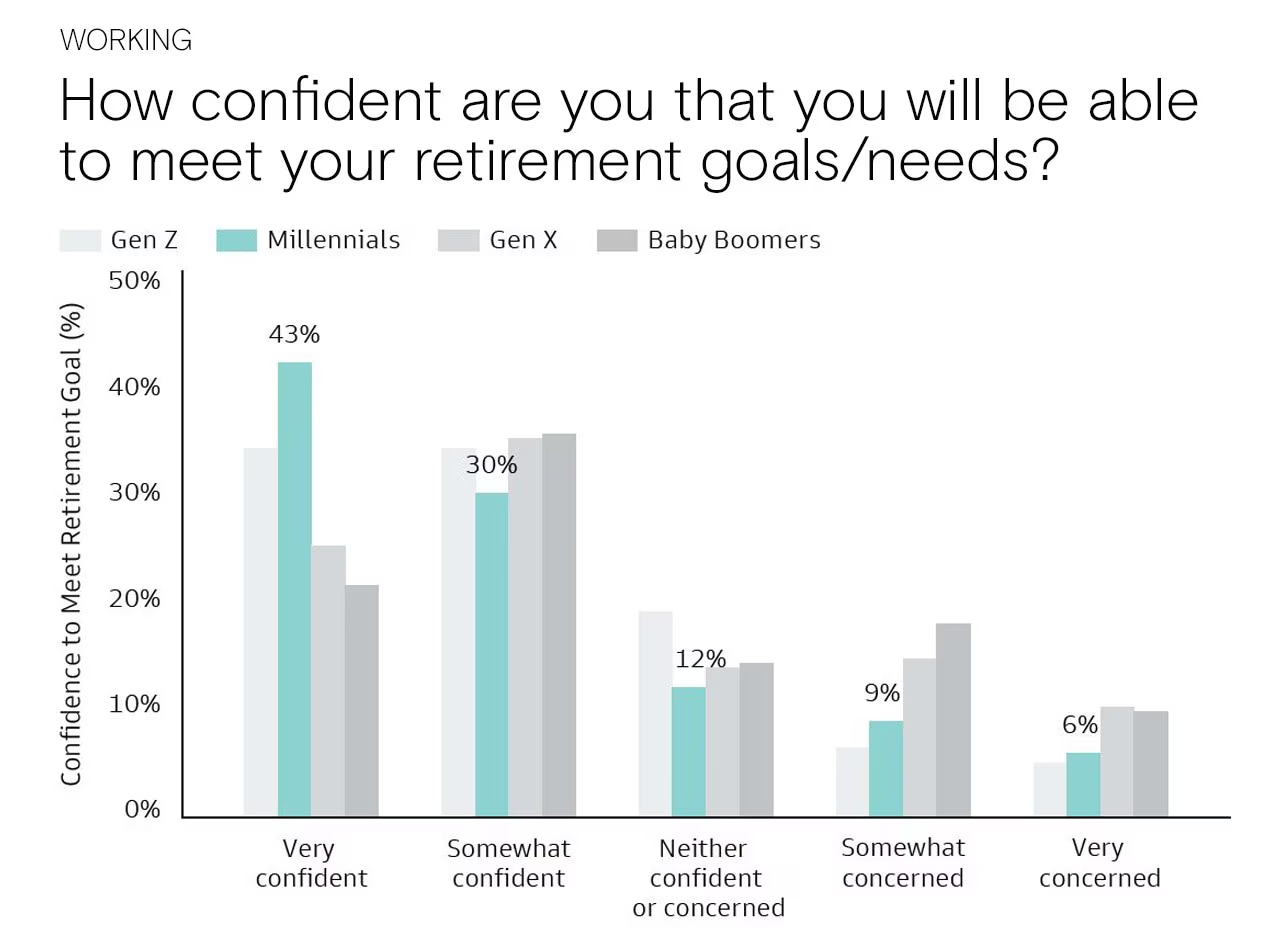
- Almost half believe they are behind schedule when it comes to retirement savings. Despite this concern, only 55% have a personalized plan for retirement.
- Key considerations as they near retirement:
- Maximizing retirement savings and tax-deferred opportunities3
- Developing a personalized retirement strategy
- Factoring in future healthcare costs
- Considering professional advice to address financial complexities
- Top retirement-related services or features they want from their employer:
- Professional financial planning and advice services (38%)
- Emergency savings (37%)
- Guaranteed income (35%)
Baby Boomers (born 1946 – 1964)
- Baby Boomers are retiring later, with most targeting between age 65 to 69 (vs 60-64).
- Many still feel unprepared, as only half feel they are on schedule.
- Future healthcare spending is the top concern.
- Half believe part-time work will be an important part of their retirement income strategy.
- Though inflation is a concern for working Baby Boomers (30%), it is outpaced by future healthcare costs (37%) and having sufficient savings (31%).
46% of working Baby Boomers want guaranteed retirement income options from their employer.2
Addressing the Retirement Bubble Before it Becomes a Crisis
Goldman Sachs Asset Management’s 2023 Retirement Survey & Insights Report outlines the multitude of obstacles employees face as they prepare for retirement. In our conversations with leading CHROs, it is clear these challenges keep them up at night. At Leadership Exchange | An InnerCircle Roundtable, we convened a small group of CHROs for a collaborative discussion on how Corporate America can better prepare employees for retirement. Key themes from the dialogue included increasing financial education initiatives and empowering employee resource groups to facilitate important conversations on uncomfortable topics.
Partnering with an organization to provide financial planning, retirement tools and other educational resources can help employees better understand how all aspects of their financial wellness contribute to long-term goals. By serving as an extension of your HR team, Goldman Sachs Ayco can help your employees navigate the vortex of competing financial priorities — while helping them understand, appreciate and maximize the retirement benefits your company offers.
Interested in learning how Goldman Sachs Ayco can work to meet your organizational goals and support your employees? Contact us to learn more.
This presentation is for educational purposes only and is not a substitute for individualized professional advice. The information provided should not be construed as personal financial planning, investment, tax or legal advice.