

Q&A with Brittany Bagley, COO and CFO of Axon
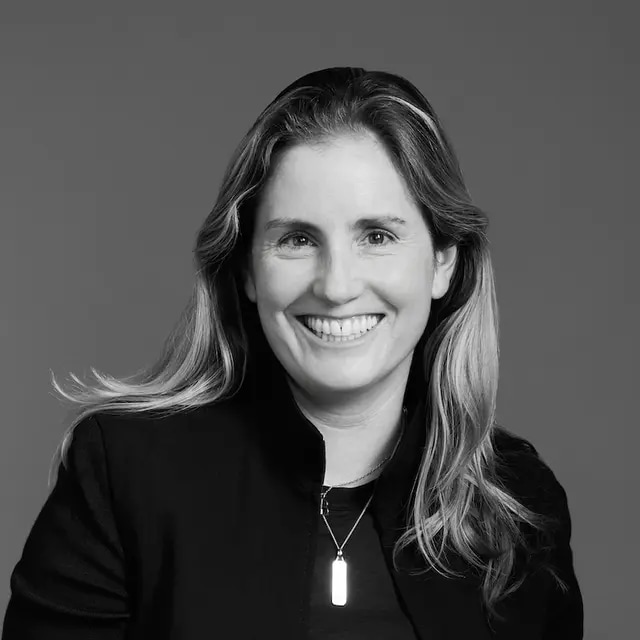
Brittany Bagley started her career at Goldman Sachs in 2005 as an Analyst in Investment Banking in San Francisco. Since leaving the firm, Brittany worked at KKR as an investor, became CFO at Sonos, and currently serves as COO and CFO at Axon. Brittany shares about her transition from investor to operator and her continued connection to the firm and fellow GS alumni.
How did you start your career at Goldman Sachs and what did you learn during your time here that helped you in the next phase(s) of your career?
I started at GS as a technology investment banking intern in San Francisco before my senior year at Brown. Over those eight weeks, I met lifelong friends and mentors and, though I had a lot to learn, worked hard enough to be invited back full-time. My years in the program (’05–’07) were incredibly busy for tech, and I worked on deals that stayed with me long after I left, like the Freescale Semiconductor LBO. When I joined KKR, I was staffed on NXP — another LBO and a competitor to Freescale. The analyst program gave me best-in-class technical skills, an understanding of capital markets and M&A, a strong sense of responsibility, and the critical skill of spotting an extra space in a sentence (also known as attention to detail!). I credit much of my success to the rigor of those years and how well they prepared me for the roles that followed.
After leaving the firm in 2007, you were an investor at KKR for over a decade, became CFO at Sonos, and currently serve as COO and CFO at Axon. How did you manage the transition from investor to operator?
The transition from investor to operator felt like a natural evolution, given how hands-on we were with portfolio companies, how deeply we got to know markets and industries, and how much time we spent on capital allocation and talent — all valuable skills as a public company executive. My experience as a Sonos investor, board member, and customer gave me a deep understanding of the business, allowing me to step into the CFO role and focus on building that skillset. I’m grateful to the board and CEO for that opportunity. I brought those learnings to Axon, where I was empowered to take on our global operations team in addition to the CFO role. As an investor, you think about the entire business, and that perspective makes me a stronger thought partner as we shape Axon’s strategy.
What are the key lessons you've learned about scaling with discipline - particularly in a high-growth environment like Axon's - and how do you balance innovation with financial rigor?
I view financial rigor as finding the sweet spot between moving fast and being thoughtful about the future, so you're not stuck making tough calls later. Being at a growing company helps a lot; instead of mostly saying 'no', you often get to say 'yes', or sometimes, 'not yet'. At Axon, our customers are our north star and help us prioritize our decisions. Whether it’s a strategic acquisition, like our acquisitions of Fusus and Dedrone last year, or designing and launching a new product like TASER 10, we challenge ourselves to ask: Does this align with our Mission? Will our customers use it? Is it scalable? Can we go faster, responsibly? Financial discipline isn’t just about saying no, it’s about saying yes to the right things, at the right time.
What are you most excited about for Axon's future and what's your role in that?
Axon’s history is rooted in providing less-lethal solutions to law enforcement. Today, we’re seeing a growing number of opportunities for our technology in new markets. I’m especially excited by the Enterprise space which aligns more closely with my experience and has the potential to outpace public safety. It’s energizing to see that kind of greenfield and think about how we go after it. Like any start-up it’s been both challenging and rewarding to craft a strategy for a new customer base, win deals, and address challenges we see every day, like retail crime. Working for a company and with a team that wants to move fast, make a difference, and be at the cutting edge of new technology like AI and robotics, what could be more fun?
Have you leveraged your GS network since leaving the firm? If so, how?
Absolutely! I’ve stayed connected to the GS network in many professional and personal ways since leaving the firm. At KKR, I was often across the table from former colleagues on deals, and over the years I’ve hired great people from GS to join my teams. In San Francisco’s tight-knit tech circle, you’ll find GS alumni everywhere — from executives to founders to city government. Personally, I’m still close with many of the people I met during my analyst years and love catching up at conferences or alumni events — GS alum are a pretty impressive group.
Subscribe to Briefings
Our weekly newsletter delivers the latest insights on economic forces shaping markets—from Goldman Sachs leaders, economists, and investors around the world.
You can unsubscribe at any time. For information about how your personal data will be used, visit Privacy Information and Resources.