
Macroeconomics
The Outlook for Fed Rate Cuts in 2026
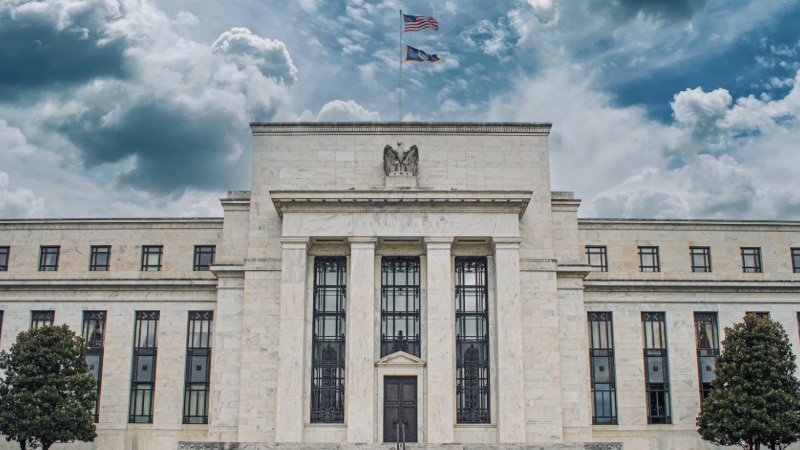
While it’s likely the US Federal Reserve will cut rates in December, the outlook for monetary policy in 2026 is harder to discern. Goldman Sachs Research’s “working assumption” is that the policymakers will slow the pace of easing in the first half of next year as economic growth reaccelerates and inflation cools.
The much-delayed jobs report for September showed signs of a cooling labor market, and may have sealed a 25-basis-point cut at next month’s meeting of the Federal Open Market Committee (FOMC), writes Jan Hatzius, Goldman Sachs Research’s chief economist, in the team’s latest “Global Views” report.
With the next jobs report scheduled for December 16 and the next consumer price inflation print due on December 18, he adds, “there is little on the calendar to derail a cut on December 10.”
How many Fed rate cuts are expected in 2026?
The outlook for rate cuts next year is less clear. Goldman Sachs Research forecasts that US economic growth will accelerate to 2-2.5% in 2026 because of reduced impact from tariffs as well as tax cuts and easier financial conditions.
Our economists expect these factors to boost job creation and stabilize the unemployment rate at a level only modestly above the 4.4% recorded in September this year.
Hatzius expects the Fed to pause its cutting cycle in January before delivering cuts in March and June, pushing the funds rate down to a terminal level of 3-3.25% (compared with 3.75%-4% currently).
How will inflation influence Fed policy?
Our economists think there’s limited risk that rising US inflation will derail their forecast for the fed funds rate.
Year-on-year core personal consumption expenditures (PCE) inflation remained steady at 2.8% in September, based on the Fed staff’s estimates. That’s despite an increase in inflation as a result of tariffs and some effects from equity gains.
This implies that underlying inflation has fallen to around 2%, Hatzius writes, and actual core PCE inflation should recede once the tariff pass-through ends in mid-2026. That’s assuming that there are no large second-round effects from tariffs—of which there are no signs—and that equity markets are stable.
Is the US job market weakening?
The chances of the fed funds rate falling further than Goldman Sachs Research’s forecast look more significant than the risk from rising inflation. Although nonfarm payrolls grew by a stronger-than-expected 119,000 in September, Goldman Sachs Research estimates that the underlying job growth trend is only 39,000 (as of September). Alternative indicators show renewed job losses in October.
And while initial jobless claims are low, other components of Goldman Sachs Research’s layoff tracker have risen notably in recent months. “This could mean that the weakness in the labor market is becoming too entrenched to be checked by a modest cyclical growth acceleration,” Hatzius writes.
The weakening in the job market for college-educated workers is particularly notable, he writes. As of September, the unemployment rate for college graduates aged 25 or older stood at 2.8%. While this may not sound too serious, it’s about 50% higher than its 2022 low. Meanwhile, the unemployment rate for college graduates aged 20-24 has climbed to 8.5%—up 70% from its 2022 low.
College graduates account for more than 40% of the US labor force and an estimated 55-60% of US labor income. “A further deterioration in employment opportunities for this key demographic—perhaps reflecting artificial intelligence (AI) and other efficiency-enhancing measures—could have a disproportionate negative impact on consumer spending and prompt further rate cuts over time,” Hatzius writes.
This article is being provided for educational purposes only. The information contained in this article does not constitute a recommendation from any Goldman Sachs entity to the recipient, and Goldman Sachs is not providing any financial, economic, legal, investment, accounting, or tax advice through this article or to its recipient. Neither Goldman Sachs nor any of its affiliates makes any representation or warranty, express or implied, as to the accuracy or completeness of the statements or any information contained in this article and any liability therefore (including in respect of direct, indirect, or consequential loss or damage) is expressly disclaimed.
Subscribe to Briefings
Our weekly newsletter delivers the latest insights on economic forces shaping markets—from Goldman Sachs leaders, economists, and investors around the world.
You can unsubscribe at any time. For information about how your personal data will be used, visit Privacy Information and Resources.