

Global Institute Dialogues
Edward Fishman on Economic Chokepoints

Edward Fishman is a Senior Fellow and Director of the Maurice R. Greenberg Center on Geoeconomic Studies, Council on Foreign Relations. He is also the author of Chokepoints: American Power in the Age of Economic Warfare.
In this edition of Global Institute Dialogues, Edward Fishman discusses economic statecraft with Wilson Shirley, Vice President, Goldman Sachs Global Institute.
The views stated herein are those of the interviewee and do not necessarily reflect the views of Goldman Sachs or its affiliates. Goldman Sachs is not responsible for any statements made by the interviewee.
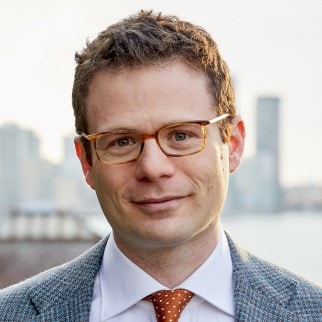
- Global Institute DialogueEdward Fishman on Economic Chokepoints
Wilson Shirley: Economic power has always been important to national security. But the 21st century has seen a rapid increase in the uses and scope of economic security tools. What are the defining features of this new focus on economic security, and why does it matter for global businesses?
Edward Fishman: It’s true that states have always used economic power to advance their national security interests. But for most of history, imposing truly devastating economic harm on a rival required one—and ideally both—of two things: a broad international coalition and the use of military force. Unilateral economic warfare was usually ineffective since targeted states could simply reroute trade and capital flows to those countries. And absent military enforcement—say, a naval blockade or a siege—embargoes were typically too porous to matter. This is why, as recently as the 1990s, when the United States sought to prevent Saddam Hussein’s Iraq from selling oil, it did so with full UN backing and enforced the policy through round-the-clock naval patrols in the Persian Gulf.
Yet during those same years in the 1990s, the character of the world economy changed amid the process we now call hyperglobalization. The world’s major economies became deeply integrated with one another. The dollar-centric international financial system spread from advanced industrial economies to China, Russia, and beyond. Supply chains stretched across the globe, and countries grew comfortable relying on foreign producers for critical inputs. With the Cold War over, geopolitical rivalry appeared to be ending, too. We spoke of a “unipolar moment” and a “liberal world order,” and the new economic system was built on the assumption that strategic competition was largely behind us.
Over the past decade or so, those assumptions have collapsed. Geopolitical competition has returned with a vengeance, and the very features that made globalization so efficient have created powerful economic chokepoints—areas where one country holds a dominant position and there are few, if any, substitutes. These chokepoints have become potent tools of economic warfare precisely because they can be wielded unilaterally and without military force. Just as air power transformed warfare by allowing states to inflict damage without incurring battlefield casualties, hyperglobalization has enabled a more forceful form of economic coercion that operates below the threshold of armed conflict.
The results are visible in the data. Every US president in the 21st century has imposed sanctions at roughly twice the rate of their immediate predecessor, and over the past five years this trend has gone global. The underlying driver is a structural mismatch: The world economy is still designed for the benign geopolitical environment of the 1990s, not the far more contested world we live in today. Until that mismatch is resolved—through deeper changes to how the global economy is organized—economic warfare is likely to intensify. For global businesses, this is no longer a tail risk. It is the macro environment they are operating in today and the one they will need to navigate for years to come.
Wilson Shirley: What is the United States trying to accomplish with economic pressure on adversaries and competitors, and how do those goals fit into broader strategic frameworks?
Edward Fishman: Contemporary US economic warfare traces its origins to the mid-2000s, when Iran began rapidly expanding its nuclear program. With the United States already fighting wars in Afghanistan and Iraq—and little appetite for another military conflict—officials in the George W. Bush administration developed new ways to exert pressure on Tehran. The most consequential innovation was leveraging the centrality of the US dollar to compel global banks to sever ties with Iran. From the outset, economic warfare was conceived as an alternative to military force, and its growing appeal was no accident: It followed two wars widely regarded as costly failures.
More broadly, 21st-century US presidents have viewed economic warfare as a way to achieve strategic objectives without risking a shooting war. Like any form of coercive statecraft, economic pressure is a means to an end. The means is economic harm; the end depends on the specific problem policymakers are trying to solve. For much of the 2000s and 2010s, the goal was usually to provoke some kind of behavior change. Sanctions aimed to coerce Iran’s leaders into relinquishing their nuclear ambitions, and they sought to pressure Vladimir Putin to restore Ukraine’s sovereignty over the Donbas. The baseline assumption was open trade and capital flows, and if you were under sanctions, it was supposed to be a temporary condition that would end when you complied with Washington’s demands.
In recent years, however, the United States has increasingly used economic warfare as a tool of attrition—not to change behavior but to weaken adversaries’ power. Since Russia’s full-scale invasion of Ukraine in 2022, Western sanctions have focused less on changing Putin’s mind and more on degrading Russia’s military-industrial base. In this context, economic harm has become, at least in part, an end in itself. A similar logic underpins US export controls on China, which seek to limit the country’s access to advanced semiconductors and chipmaking equipment. These measures are not designed to coerce Beijing into changing a specific policy; they are intended to preserve US and allied advantages in technologies that are foundational to both economic dynamism and military might.
This shift—from policies aimed at behavior change to ones aimed at attrition—helps explain why economic warfare is now reshaping the global economy itself. When the goal is behavior change, there is at least an implicit expectation that restrictions will eventually be lifted and the system will revert to the status quo ante. When the goal is attrition, the assumptions are the opposite: that restrictions will be durable, and that the global economy will have to adjust around them.
Wilson Shirley: What have the targets of US economic statecraft learned from the last two decades of economic competition and coercion? How have their own tool kits changed as they apply economic pressure to the United States and its allies and partners?
Edward Fishman: Once countries feel vulnerable to economic warfare, they take steps to insulate themselves. This is why China has poured hundreds of billions of dollars into building a domestic semiconductor industry in response to US export controls. It is also why the US government has begun investing heavily in domestic rare-earth companies, buying a sizable equity stake in MP Materials and extending a $700 million loan to Vulcan Elements and ReElement Technologies. The proliferation of economic warfare has triggered a scramble for economic security, in which countries all over the world are racing to identify and shore up their most dangerous external dependencies. In this sense, industrial policy, onshoring, and friendshoring represent the defensive side of economic warfare.
At the same time, while the United States pioneered this modern approach to economic statecraft, other countries have learned and adapted. When the Trump administration first imposed tariffs and export controls on China in 2018, Beijing was caught flat-footed. Its initial response—retaliatory tariffs—was a losing strategy, since the United States imports far more from China than China buys from the United States. But Beijing learned its lesson. Over the ensuing years, it built its own economic arsenal, including the legal authorities, regulatory frameworks, and bureaucratic machinery needed to deploy targeted sanctions and export controls of its own.
As a result, when Trump returned to office and imposed 145 percent tariffs on China last April, Beijing was prepared to respond asymmetrically. Rather than relying primarily on tariffs, it sanctioned US drone companies and imposed export controls on rare-earth minerals—areas where China holds genuine chokepoint power. The counterpunch was so effective that it forced Washington to back down and accept a truce.
We are now clearly in the midst of an economic arms race. China has shown the world that the United States is also vulnerable to economic coercion, and other countries are undoubtedly studying whether they can apply pressure against the United States in similar ways.
Wilson Shirley: How has sanctions evasion changed in the last five years, and what should executives understand about the networks that move around economic control measures?
Edward Fishman: From the US perspective, the virtues of financial sanctions are structural. The global banking industry is relatively concentrated, and it is extremely difficult to move large sums of money across borders without touching the US financial system. Once the world’s major banks were compelled to take US sanctions compliance seriously in the 2000s and early 2010s, Washington acquired a geoeconomic weapon of the first order. The Treasury Department could issue new restrictions, and much of the global financial system would rapidly fall into line.
As the United States has increasingly relied on chokepoints beyond the dollar—most notably, advanced semiconductors—enforcement has become far more challenging. High-tech value chains are devilishly complex, involving suppliers, intermediaries, and resellers that create numerous opportunities for evasion. Most importantly, the US government has not yet compelled major technology firms to comply with export controls as rigorously as global banks have been forced to comply with financial sanctions. We have not yet seen an analogue to the $9 billion fine imposed on BNP Paribas imposed on a tech company for export control violations. And it’s fair to ask whether some firms have gotten so big and strategically important that no plausible penalty could materially change their behavior.
A second major development is the rise of digital currencies. We may be on the verge of a fundamental shift in how money moves around the globe, from a system centered on correspondent banking and foreign exchange transactions to one based on stablecoins and central bank digital currencies. Russia’s experience is illustrative. A7A5, a ruble-pegged stablecoin launched last January, has quickly emerged as a key vehicle for Russian sanctions evasion. This summer, President Trump signed the GENIUS Act, which establishes a regulatory framework for the primary issuance of stablecoins. But if the United States wants to prevent digital assets from becoming a systemic loophole in its sanctions regimes, it will need to promulgate regulations that extend well beyond primary issuance to encompass the entire market infrastructure that supports their use.
The upshot is that compliance risk increasingly runs through complex technology supply chains and emerging digital payment networks that are evolving much faster than the relevant regulatory frameworks.
Wilson Shirley: What are the biggest unintended consequences and risks from economic coercion?
Edward Fishman: States typically deploy economic weapons as discrete responses to specific problems. The United States has sanctioned Iran to try to curtail its nuclear program. China has wielded economic pressure on Lithuania to try to coerce Vilnius to scale back its ties with Taiwan. Russia cut off gas supplies to Europe in an effort to fracture the EU’s political support for Ukraine. Each of these actions is discrete and situational. Yet taken together, they contribute to a powerful cumulative effect: breaking the trust that underpinned globalization.
The most significant unintended consequence of the Age of Economic Warfare, therefore, is that it has undermined the foundations of the global economy. We are living through the emergence of a new global economic order, but unlike Bretton Woods—where the world’s major powers negotiated shared rules and institutions—the new system is taking shape in a haphazard way, driven by unilateral acts of economic coercion.
This is why we urgently need a compelling vision for a new global economic order. The current process of disjointed fragmentation is unlikely to lead to one that is conducive to either prosperity or security.
Wilson Shirley: Does the United States’ current naval quarantine of Venezuelan oil represent a new phase in the Age of Economic Warfare?
Edward Fishman: It does—but more accurately, it’s back to the future. The Venezuela quarantine resembles the oil blockade the United States imposed on Iraq in the 1990s, with one crucial difference: it lacks the backing of the United Nations, raising questions about its legality and increasing the risk that the U.S. could butt heads with other major powers over enforcement. The key point is that the United States is now relying on military force to control Venezuela’s oil exports. That approach can work, but it puts US service members in harm’s way and runs the risk of unintended military escalation, not just with Venezuela but with Russia, which has provided naval escorts to Venezuelan tankers, and any other country involved in the Venezuelan oil trade.
For the past two decades, US presidents have generally preferred nonviolent economic sanctions that exploit chokepoints such as the dollar, largely because they can produce substantial economic harm without risking war. Naval blockades, on the other hand, are not really sanctions or a substitute for war; they sit on the same spectrum as full-fledged kinetic warfare. After all, they are administered by military officers, not by civilians at the Treasury and State Departments.
What I find particularly interesting is that the Trump administration did have another option— pressuring Chinese banks and refineries with the threat of secondary sanctions if they continued to buy Venezuelan oil. The fact that the White House chose military confrontation with Venezuela rather than threatening secondary sanctions on China sheds light on how the administration calculates risk: it appears more willing to accept the dangers of military escalation than to pursue a sanctions strategy that could inflame economic tensions with Beijing.
Wilson Shirley: Looking out at 2026 to 2030, which tools of economic statecraft will matter most? How will these tools evolve?
Edward Fishman: For the United States, defense will matter more than offense. Washington already possesses a formidable economic arsenal. No other country controls chokepoints as powerful as America’s, and no other government has the experience, legal structures, or bureaucratic capacity to wield sanctions and export controls at scale. That advantage, however, should not breed complacency. The United States needs to modernize how it plans for and executes economic statecraft. But it has a significant head start in the economic arms race.
By contrast, on economic security, the picture is far less favorable. The United States lags behind its competitors, particularly China. Washington has limited recent experience with industrial policy, and even successful initiatives like the CHIPS Act have faced political headwinds. This matters because China now wields economic weapons capable of inflicting real and immediate harm on the US economy. Its export controls on rare-earth minerals are a case in point. Within weeks, they disrupted supply chains and forced factories to shut down. The impact was so great that it has led many analysts to believe that China now possesses escalation dominance over the United States.
To reestablish deterrence, Washington needs to show that it can play defense effectively. In practical terms, that means breaking China’s chokepoint on rare earths as quickly as possible, which is achievable only through a focused combination of industrial policy and friendshoring.
Wilson Shirley: What do you see as the next major emerging chokepoints, and what does that mean for corporate strategies?
Edward Fishman: The scramble for economic security will probably weaken some of today’s most prominent chokepoints. Unless the United States makes major policy missteps, it’s plausible that within five years, China’s grip on rare-earth minerals will be less potent as alternative supplies come online. The same may eventually be true for the US dollar. Even if the dollar retains its position as the world’s dominant currency—which I consider highly likely—China and others are almost certain to build a parallel cross-border payments infrastructure that could be scaled up rapidly in a crisis.
But that doesn’t mean economic warfare will peter out. States will just exploit new chokepoints. Cloud services are a leading candidate, as US firms currently control roughly three-quarters of the global market. If a single AI lab were to achieve artificial general intelligence before its competitors, its models and algorithms could also become a powerful chokepoint. And as the world accelerates the transition to clean energy and electric vehicles, China is positioned to wield chokepoints across critical segments of the energy value chain. Government policy can influence where chokepoints emerge and who controls them. But in practice, the most consequential chokepoints tend to arise organically, driven by business innovation and technological diffusion.
For companies, it will be important to develop informed views on where new chokepoints are likely to form, especially within their own industries and supply chains. And if you control one, it can give you tremendous leverage—but it could also expose you to significant risk, as you could find your company caught between market incentives and government efforts to deploy your assets as instruments of geoeconomic power.
Wilson Shirley: How should companies think about economic statecraft when geopolitical risk is a first-order concern, rather than a secondary issue?
Edward Fishman: Economic statecraft is actively reshaping the commercial environment. Choices around supply chains, capital structures, and technology platforms that made sound business sense five or ten years ago can now carry unacceptable risk. The challenge for companies is that we are in a prolonged period of transition. The old economic order has broken down, but a stable new one has yet to take shape. As a result, many key decisions involve a higher degree of geopolitical uncertainty than firms are accustomed to managing.
The biggest mistake, in my view, would be for business leaders to bury their heads in the sand and pretend this transition isn’t happening. Continuing to rely entirely on China for critical inputs while betting on a durable rapprochement between Washington and Beijing may work in the short term, but it is unlikely to be a viable strategy over a 10-year horizon. The companies best positioned to succeed will be those that develop their own independent assessments of how the global economy is evolving and then make deliberate, calculated bets based on those judgments. There are risks to moving early, but the risks of standing still are greater.
This document has been prepared by the Goldman Sachs Global Institute and is not a product of Goldman Sachs Global Investment Research. The opinions and views expressed herein are as of the date of publication, subject to change without notice, and may not necessarily reflect the institutional views of Goldman Sachs or its affiliates. The material provided is intended for informational purposes only, and does not constitute investment, legal, or tax advice, a recommendation from any Goldman Sachs entity to take any particular action or be used as a basis for any other investment decision, or an offer or solicitation to purchase or sell any securities or financial products. Any forward-looking statements, case studies, computations or examples set forth herein are for illustrative purposes only. Past performance is not indicative of future results. Neither Goldman Sachs nor any of its affiliates make any representations or warranties, express or implied, as to the accuracy or completeness of the statements or information contained herein and disclaim any liability whatsoever for reliance on such information for any purpose. Each name of a third-party organization mentioned is the property of the company to which it relates, is used here strictly for informational and identification purposes only and is not used to imply any sponsorship, affiliation, endorsement, ownership or license rights between any such company and Goldman Sachs. This material should not be copied, distributed, published, or reproduced in whole or in part or disclosed by any recipient to any other person without the express written consent of Goldman Sachs.
© 2026 Goldman Sachs. All rights reserved.
Subscribe to Briefings
Our weekly newsletter delivers the latest insights on economic forces shaping markets—from Goldman Sachs leaders, economists, and investors around the world.
You can unsubscribe at any time. For information about how your personal data will be used, visit Privacy Information and Resources.