

Global Institute Dialogues
Heidi E. Crebo-Rediker on Critical Minerals
Heidi Crebo-Rediker is a Senior Fellow in the Center for Geoeconomic Studies at the Council on Foreign Relations.
In this edition of Global Institute Dialogues, Heidi Crebo-Rediker discusses critical minerals with Wilson Shirley, Vice President, Goldman Sachs Global Institute.
The views stated herein are those of the interviewee and do not necessarily reflect the views of Goldman Sachs or its affiliates. Goldman Sachs is not responsible for any statements made by the interviewee.

- Global Institute DialogueHeidi E. Crebo-Rediker on Critical Minerals
Wilson Shirley: Critical minerals became a central focus of global affairs last year, although this isn’t a new issue. What were the most important lessons about critical minerals in 2025, and what is the state of the critical mineral competition in 2026?
Heidi Crebo-Rediker: Critical minerals moved to the center of geopolitics in 2025 due to a heightened focus on China’s choke hold over global supply chains, exposing what had previously been a quiet fault line in global power. While the issue of overdependence on China was not new, the immediacy of risks of China’s dominance caught many companies around the world off guard. In October 2025, China’s near-total control over key segments of critical mineral supply chains—and its willingness to weaponize that dominance—became impossible to ignore when Beijing sharply expanded its export control regime in response to a Trump administration decision to expand the application of US export controls to capture a wider range of Chinese entities. China’s sweeping response restricted global access to rare earth elements—along with related products, processing technologies, and technical know-how—and imposed new reporting requirements on end use, nearly bringing large parts of the global economy to a standstill.
Ever since 2010, when China used Japan’s dependence on rare earths as leverage during a geopolitical dispute, governments and companies acknowledged the risks—but few took meaningful steps to insulate themselves. In 2025, that complacency abruptly ended. China demonstrated that its real leverage runs not only through mining but, more importantly, through processing, refining, and downstream manufacturing—especially in permanent magnets and other midstream chokepoints. By applying export controls and licensing delays, China made clear how quickly industrial supply chains could be turned into instruments of state power.
So the first lesson of 2025 was that China indeed holds significant leverage through its choke hold on certain rare earths and processed critical minerals. The second lesson was the time it will take for everyone else to build resilience, which is a binding constraint that magnifies public and private vulnerabilities to geopolitical supply shocks in 2026. New mines and processing facilities can often take decades to build. Even at warp speed and with significant government support, it will take the United States and its allies years to compensate for past neglect. It is hard to out-mine, out-process, or out-fund China.
A third lesson of 2025 was that markets alone cannot counter China’s commodity pricing power. It is an entirely different game when the dominant state-backed supplier can move prices strategically to deter competitors. Cheap supply is not the same as secure supply. Although this was understood long before this past year, governments and companies increasingly turned to creating public-private demand signals—off-take agreements, guaranteed procurement, price floors, and blended public-private finance—to make alternative capacity financeable.
A fourth lesson was that no country can build resilient critical mineral supply chains on its own. The resource base, the processing capacity, and the capital requirements are too widely distributed. Coordination among allies and “like-minded countries” is therefore not optional.
The competition to de-risk likely will accelerate exponentially into 2026 and 2027. The focus is now on financial engineering as much as geology: building public-private capital stacks that can support innovative new mining technologies and finance large-scale projects, creating public-private strategic reserves, negotiating safe allied trading blocs, and using industrial policy tools that look more like old-school merchant banking.
The decisive battleground is the midstream—processing, separation, and refining—and downstream manufacturing of magnets, where China’s incumbency advantage is strongest and where substitution and recycling can move fastest.
One bright spot in 2026 is the potential to leapfrog China’s dominance by unlocking and scaling disruptive mining technology innovation, recovery, and recycling at scale. The longer-term goal is to create entire industrial and innovation ecosystems and collectively insulate from coercion. And in that race, trust among partners may prove to be the scarcest—and most strategic—resource of all.
Wilson Shirley: Critical minerals are used as inputs in consumer applications and defense systems, making them vital to economic and national security. But not all critical minerals are equally critical. How and why should markets and policymakers prioritize certain critical minerals over others? What is the most important chokepoint in global critical minerals supply chains?
Heidi Crebo-Rediker: Not all critical minerals and metals are equally important. Policymakers should prioritize minerals that combine three features: They are technically hard to substitute, they sit at chokepoints in high‑value defense and commercial technology applications, and their supply chains are highly concentrated in or controlled by strategic rivals such as China. For markets, added priorities are scarcity and projected increased demand, including for critical metals such as copper.
As a chokepoint, heavy rare earths used in permanent magnets stands out. China and Myanmar dominate heavy‑rare‑earth mining, China does the overwhelming share of processing and magnet manufacturing, and demand for permanent magnets is projected to outpace heavy‑rare‑earth supply even under optimistic assumptions. These magnets are embedded in precision weapons, drones, radar, turbines, vehicles, and countless consumer devices, making the exposure both pervasive and strategically sensitive.
Prioritization, therefore, should proceed along two tracks. First, identify minerals where Beijing has durable leverage—heavy rare earths and certain processing technologies—and where export controls or pricing power can be used as geopolitical tools, as China has already demonstrated. Second, focus on applications where failure to secure supply would create outsize national security risks. High‑performance magnets in defense systems, electronics, and advanced manufacturing are the clearest examples.
The most effective response for the United States is not just to replicate that entire supply chain one‑for‑one but also to de‑risk it. That means combining targeted build‑out of domestic and allied heavy‑rare‑earth supply and magnet manufacturing capacity with an innovation‑led strategy. That includes materials engineering to reduce or eliminate heavy‑rare‑earth content, and utilizing precision bioengineered and chemically engineered mining technology to harvest rare earths and other critical minerals from mine waste and e‑waste to create a secure circular supply chain of magnets.
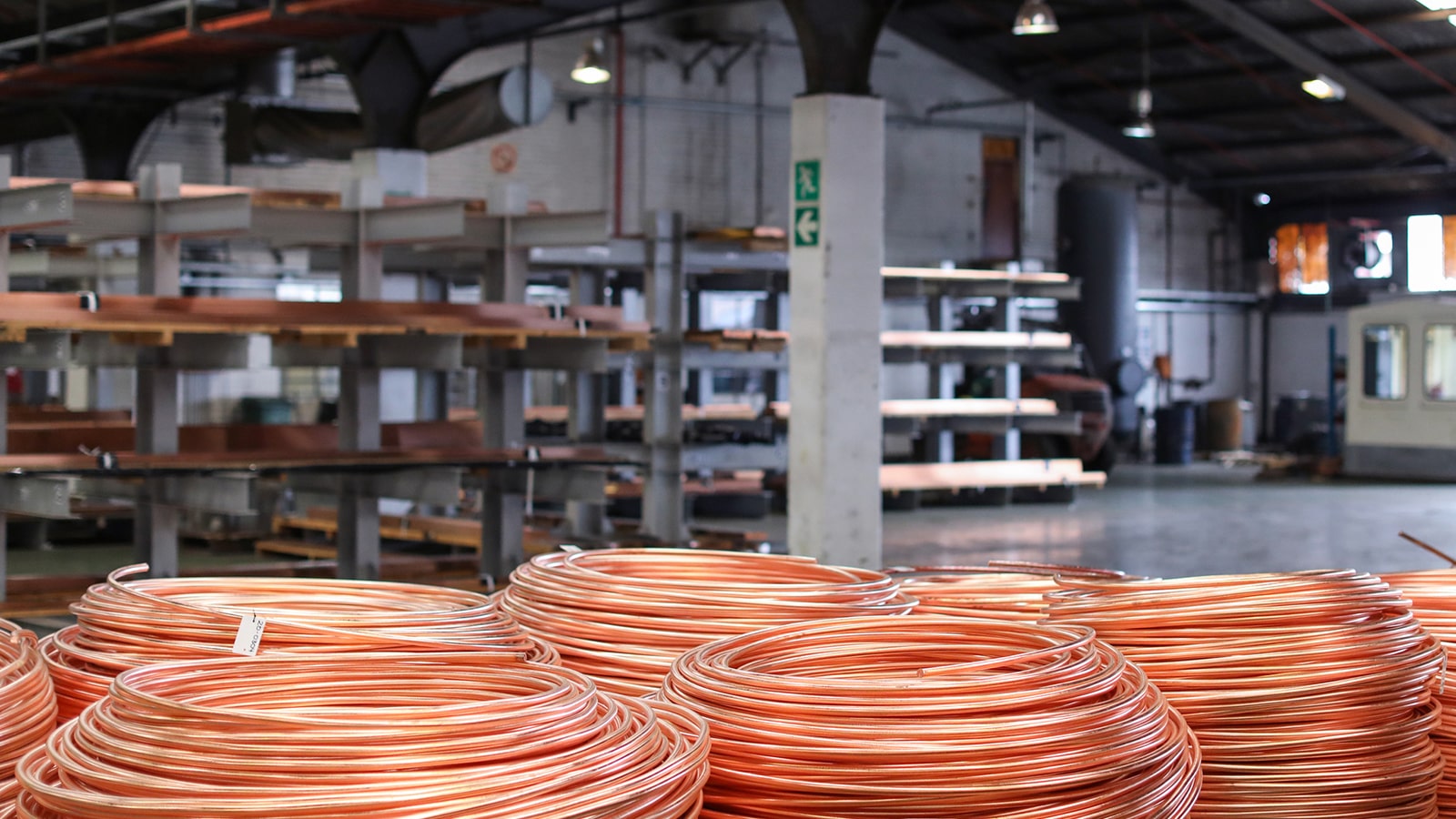
Copper fits in a slightly different category: It is less of an acute geopolitical chokepoint than are rare earths or certain battery metals, but it is systemically critical for the energy transition and advanced manufacturing, and long‑run underinvestment makes it a growing strategic concern. Markets should prioritize copper because it is a volume‑driven bottleneck for electrification and data infrastructure, so pricing signals, long‑term contracts, and project finance will be central. Policymakers, by contrast, should treat copper as a second‑tier strategic priority: not as acute a national security chokepoint as are heavy-rare-earth magnets, but too important to leave fully to short‑term market cycles, given long project lead times and permitting risks.
Wilson Shirley: The United States and partner countries are focused on building more resilient critical mineral supply chains, including through expanded mining and processing capacity outside of China. Which of these new efforts and partnerships are most promising, and what time horizons are realistic for them to have a meaningful impact?
Heidi Crebo-Rediker: Efforts in 2025 and 2026 to build more resilient critical mineral supply chains reflect the hard lesson that supply diversification cannot be left to markets alone when China dominates both mining and, more critically, processing and refining. To address this, the United States and partner countries have pursued a mix of strategic stockpiling, coordinated industrial policy, and targeted bilateral and plurilateral frameworks designed to reduce exposure to supply shocks and create investable pathways outside of China’s orbit.
Among the most promising near-term measures in the United States is Project Vault, a new public-private strategic reserve backed by a historic $10 billion Export-Import Bank loan and $2 billion in private capital. By creating a 60-day commercial stockpile of critical minerals accessible to participating companies in times of disruption, Project Vault aims to absorb short-term shocks and provide companies with resilience while longer-term capacity is built. This kind of risk-management tool acknowledges that diversification takes time and that mitigation of supply shock risk must begin now.
Beyond shock absorbers, policymakers are building demand-side mechanisms to make non-China capacity financeable. The Trump administration’s new FORGE concept aims to align price floors, off-take guarantees, and coordinated financing so investors can commit capital without fear of being undercut. The G7’s Critical Mineral Production Alliance has already unlocked billions for allied projects and off-take arrangements across nine countries and partners, including the United States, Canada, Australia, Japan, and the EU. These frameworks seek to standardize markets and reduce fragmentation across jurisdictions while reinforcing shared norms.
Bilateral engagements, such as those with Australia and Japan, also advanced concrete pipeline development. Under the United States–Australia critical mineral framework, priority mining and refining projects—including partnerships in rare earths and gallium—have moved forward with proposed shared capital commitments and preferential access arrangements. Similarly, the United States–Japan framework aims to mobilize joint investment to secure supply, address Chinese nonmarket policies, and streamline permitting for mining and processing.
Industrial partnerships further reinforce this architecture. A flagship example is Korea Zinc’s planned $7.4 billion critical minerals smelter in Tennessee, undertaken with the US Departments of Defense and Commerce. This project aims to restore large-scale domestic smelting capacity and produce 13 nonferrous metals, 11 classified as critical, underpinning advanced manufacturing and defense supply chains.
In terms of time horizons, strategic stockpiles and demand-signal frameworks can measurably improve resilience within one to three years, while new processing plants and midstream capacity can begin to shift trade flows in three to seven years. However, greenfield mining and fully diversified supply networks likely will take five to fifteen years, underscoring the fact that durable resilience must be built in layers through both near-term risk management and long-term industrial collaboration.
Wilson Shirley: Executives and policymakers have proposed a variety of defensive tools when it comes to critical minerals competition, including off-take agreements, price floors, or stockpiling for when supplies may be reduced. How should such measures fit into the economic statecraft tool kit?
Heidi Crebo-Rediker: As competition over critical minerals intensifies, you are correct that tools such as off-take agreements, price floors, and strategic stockpiles should be seen not as ad hoc market interventions but as core instruments of modern economic statecraft. The problem they address is structural: Companies that rely on private debt and equity markets must clear commercial hurdles—cost of capital, price risk, and return thresholds—that state-backed competitors do not face. When a dominant producer can use subsidies, export controls, or strategic overproduction to depress prices or redirect supply, market-based firms can be driven into chronic unprofitability even when their projects are technologically sound and strategically essential.
These tools are most effective when embedded in coordinated frameworks among allies. In today’s competition, the real question is whether market-based economies will equip themselves with the instruments needed to compete against systems that treat industrial capacity as a strategic weapon.
Wilson Shirley: You argue that the United States should pursue a complementary approach to mining and processing that emphasizes innovation. Innovation could allow it to leapfrog China’s dominance in the critical mineral ecosystem. What innovations are, in your view, most promising in the immediate term, and how should those innovations be resourced and prioritized?
Heidi Crebo-Rediker: If the United States is serious about securing critical mineral resilience, it must leapfrog China’s dominance. The fastest and most geopolitically resilient gains will come not from digging more holes in the ground but from treating waste as a strategic resource. Waste is America’s next mine.
Waste-based recovery—extracting critical minerals from e-waste, mine tailings, industrial byproducts, coal ash, and other legacy waste streams—offers a uniquely powerful combination of speed, security, and scalability. Unlike greenfield mining, these approaches avoid decade-long permitting cycles, reduce environmental risk, and sidestep many of the chokepoints where China exerts the greatest leverage. The United States has vast opportunities to use its own waste. Key to this strategy is not exporting valuable e-waste—computer hard drives, cell phones, batteries, and defense waste—containing significant amounts of the critical minerals and rare earths most susceptible to coercion.
Several new technologies enabling extraction from waste are far faster to scale and far cleaner than extracting from traditional mining. Some are even approaching cost competitiveness with Chinese sources. Engineered protein “robots” can be designed to selectively bind and extract specific critical minerals or rare earth elements from complex waste streams, dramatically improving recovery rates while lowering energy and chemical inputs. Phytomining, which uses hyperaccumulator plants to draw metals out of soils and tailings, turns biological systems into low-cost, low-carbon extraction platforms. New ion exchange technology enables lithium extraction from the one trillion gallons of oil and gas fracking wastewater the United States produces each year. And microbial processes that harvest minerals from tailings and “spent” mines offer a way to reopen old sites as modular, distributed sources of supply. These are just a few examples, but together, these technologies are faster to deploy, cleaner to operate, and increasingly cost-competitive with Chinese production, especially once transport, environmental compliance, and geopolitical risk are priced in.
Beyond speed and sustainability, these approaches are strategically resilient. They rely on domestic or allied waste streams rather than geopolitically exposed primary supply, and they can be scaled in distributed fashion rather than concentrated in a few vulnerable facilities. That makes them harder to disrupt—and harder to weaponize. Mining waste cannot replace the need for traditional mining, but it can and should be a powerful complement.
Materials engineering remains a critical second pillar, particularly in reducing or eliminating rare earth content in permanent magnets through redesigned chemistries and substitute materials. AI-enabled discovery and process optimization can further compress development timelines across both recovery and substitution pathways.
To make any of this matter at scale, however, these innovations must be resourced like strategic infrastructure: with sustained funding for demonstration and scale-up, risk-sharing capital to bridge the commercialization gap, and demand-side commitments that pull successful technologies into the market. The goal is not simply to outproduce China but to change the technological terrain of competition itself—in ways that are faster, cleaner, and far harder to coerce.
Wilson Shirley: Much of this strategy assumes that critical minerals will remain central to advanced manufacturing, defense technology, and the consumer economy for the foreseeable future. What technological breakthroughs could reduce the strategic importance of critical minerals, and which are the closest to commercial viability?
Heidi Crebo-Rediker: The current strategic calculus around critical minerals certainly assumes these inputs will remain indispensable—and for now, that is largely true. High-performance magnets, semiconductors, and energy-dense batteries depend on specific elements with constrained supply chains. But breakthroughs in materials science and battery chemistry are beginning to reduce reliance on the most geopolitically sensitive minerals.
In batteries, the most immediate progress is in reduced-cobalt and cobalt-free cathodes. Cobalt, long a strategic vulnerability, is being phased down in nickel-rich lithium-ion chemistries. More significantly, lithium iron phosphate (LFP) batteries—already widely commercial—eliminate both cobalt and nickel, offering lower cost and improved safety for grid storage and many electric vehicles. Sodium-ion batteries go further by replacing lithium with abundant sodium and are already being deployed in Asia for stationary storage and entry-level EVs. Although their energy density remains lower, rapid improvements in anodes and electrolytes point to broader automotive use.
As I mentioned earlier, rare-earth-free and rare-earth-reduced magnets are becoming commercial and scaling fast, and across all these pathways, artificial intelligence is accelerating materials discovery, compressing development timelines from decades to years or even months.
None of this will make critical minerals irrelevant overnight. But the technologies closest to scale—those in battery and magnet technologies—show how substitution could materially change demand this decade while AI reshapes what comes next.
Wilson Shirley: One of the reasons the United States and other countries have become dependent on China for critical minerals and downstream products is that persistent financing gaps make commercialization challenging. What are the most promising opportunities to encourage further commercialization and attract private capital at scale, and what policy interventions could have the most immediate impact?
Heidi Crebo-Rediker: The financing gap that locks in dependence on China is not a single problem—it is two. Traditional mining and processing struggle with long timelines, environmental risk, permitting risk, and commodity-price volatility. Frontier mining technologies—waste recovery, novel separation, and redesigned materials—face a different barrier: They can prove performance in pilots but often stall in the “valley of death” between demonstration and first commercial scale, where neither venture capital nor project finance fits well. Filling this market failure to scale technologies quickly is in the national interest but not always in a venture capital fund’s commercial interest until a much later stage.
For traditional mining and processing, the core challenge is bankability. These are capital-intensive, long-cycle projects whose economics depend on stable prices and predictable demand—conditions that do not hold when a dominant producer can strategically flood markets or restrict supply. Here, the most effective tools to ensure are off-take agreements, price floors, and coordinated allied demand commitments, which turn strategic priorities into financeable revenue streams. Public credit support and guarantees can further lower the cost of capital, but without demand-side certainty, even well-endowed deposits struggle to attract private investment. This is especially true for rare earth deposits, which are not necessarily rare but are usually uncommercial to mine.
Frontier mining technologies, by contrast, face a commercialization and scaling problem. Many have working pilots but cannot finance first-of-a-kind plants because their risk profile is too high for venture capital. Yet they could fundamentally reshape or even replace traditional mining, so it is in the national interest to take that risk. The US Department of Energy already does some of this through existing programs. But what these ventures need to scale is patient, equity-based seed and early-stage capital paired with strategic guidance. These would be smaller, faster, more flexible public investment programs that are led by seasoned frontier investors like In-Q-Tel. They would be able to crowd in additional private capital and help these technologies cross the valley of death to commercial scale.
Reducing dependence on China requires both tracks to move at once but with different financial tools for different problems: market-shaping instruments for mining and processing and scale-up finance for the technologies that can change the system itself.
Wilson Shirley: Many of these innovations have great potential and are at various stages of development and deployment. But when many of these technologies have not yet been tested at scale, why is this a more promising route to address current and potential challenges facing critical minerals supply chains? How do the timelines for these proposals compare to potential timelines for additional mining and refining capacity, given the current policy focus on this sector?
Heidi Crebo-Rediker: To be clear, a US innovation strategy should complement, rather than replace, investment in traditional mining and processing projects. But many of these innovations in mining technology are already scaling fast, especially those supported by the US Departments of Defense and Commerce, as well as those supported by venture arms of mining companies and OEMs. The United States—through investment in national labs and research universities—already funded investments in breakthrough materials science and in bioengineered and other precision mining, as well as in novel processing technologies, after 2010, when Japan faced China’s cutoff of rare earths. Those early public bets are paying off today. For many mining technologies, we are at the same inflection point we were at 15 years ago, when advances in fracking changed the energy game and by extension the geopolitical chessboard for the United States almost overnight. So the challenge is to ensure that no great innovation is left on the shelf because of lack of risk capital.
Wilson Shirley: While governments have had real successes in supporting research and development and in boosting certain strategic sectors, their state-directed investments often produce costly misallocations and mixed results. Where should the private sector lead in rebuilding critical minerals capacity, and what principles should guide government interventions?
Heidi Crebo-Rediker: The crown jewels of US innovation are the national labs and research universities, supporting R&D across many fields, including critical minerals innovation. The Department of Energy has many programs to move innovations from “lab to fab,” and state-directed investment in new technology has had many more success stories than we appreciate. Several large mining companies and OEMs are working together more often with labs and entrepreneurs to seed, commercialize, and scale mining technologies. This gives me cause for optimism.
For large mining, separating, and processing investments, ideally there would be no need for government interventions, but for too many decades, companies driving demand prioritized efficiency and profits, as their shareholders expected. That meant sourcing from and processing in China. National security was not part of the calculus, and even now, making the case to pay more for company resilience falls far short of shareholder priorities. Private companies should lead in short-, medium-, and long-term strategies to tackle this shared resilience. But they will likely need to do so alongside government—whether collaborating on stockpiling, providing independent or collective off-take agreements, prioritizing waste-based purchases, or sharing underutilized smelters with new mining and processing technology ventures to pilot and commercialize their innovation. For financial firms, there are opportunities to lend or invest across company capital structures without government de-risking, or if necessary, with all the public mechanisms discussed earlier.
But market failures that threaten national and economic security are where governments must be more muscular and take greater risk. There is a good chance we see countries around the world allocating and misallocating significant taxpayer funds to address the time and scale of China’s critical mineral and rare earths challenge. The more we can find common cause in taking risk and accepting failure along the way to tackle national emergencies—such as those we face with critical minerals—the better. Guardrails usually come from congressional input and oversight. Good principles for industrial investment tend to involve solving for market failures with the aim to crowd in private investment, rather than displace it.
Since 2025, the US Defense and Commerce Departments in particular have been using their existing authorities in expansive ways to acquire direct equity, equity-like stakes, and financial warrants in public and private companies—domestically and with foreign governments and companies—though often without a great deal of transparency. How capitalist systems compete with China in the years ahead will depend less on Beijing’s choices than on whether countries like the United States are willing to wield their own state power—strategically, transparently, credibly, and with guardrails that keep markets free but not defenseless.
About the Interviewee
Heidi Crebo-Rediker is a Senior Fellow in the Center for Geoeconomic Studies at the Council on Foreign Relations (CFR), specializing in international political economy, US economic competitiveness, economic security, and international finance. She directs the Roundtable Series on Global Political Economy. Crebo-Rediker served in the Obama Administration as the State Department’s first Chief Economist. Previously, she was chief of international finance and economics for the Senate Committee on Foreign Relations, following nearly two decades in Europe as a senior investment banker.
This document has been prepared by the Goldman Sachs Global Institute and is not a product of Goldman Sachs Global Investment Research. The opinions and views expressed herein are as of the date of publication, subject to change without notice, and may not necessarily reflect the institutional views of Goldman Sachs or its affiliates. The material provided is intended for informational purposes only, and does not constitute investment, legal, or tax advice, a recommendation from any Goldman Sachs entity to take any particular action or be used as a basis for any other investment decision, or an offer or solicitation to purchase or sell any securities or financial products. Any forward-looking statements, case studies, computations or examples set forth herein are for illustrative purposes only. Past performance is not indicative of future results. Neither Goldman Sachs nor any of its affiliates make any representations or warranties, express or implied, as to the accuracy or completeness of the statements or information contained herein and disclaim any liability whatsoever for reliance on such information for any purpose. Each name of a third-party organization mentioned is the property of the company to which it relates, is used here strictly for informational and identification purposes only and is not used to imply any sponsorship, affiliation, endorsement, ownership or license rights between any such company and Goldman Sachs. This material should not be copied, distributed, published, or reproduced in whole or in part or disclosed by any recipient to any other person without the express written consent of Goldman Sachs.
© 2026 Goldman Sachs. All rights reserved.
Subscribe to Briefings
Our weekly newsletter delivers the latest insights on economic forces shaping markets—from Goldman Sachs leaders, economists, and investors around the world.
You can unsubscribe at any time. For information about how your personal data will be used, visit Privacy Information and Resources.