

Q&A with Wendy Walker, Author
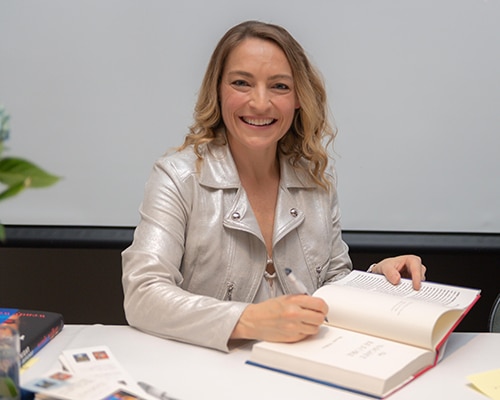
Wendy Walker is an international bestselling author. Wendy worked at Goldman Sachs from 1989 to 1991 in the firm's Investment Banking Division in New York.
You wrote four books including All is Not Forgotten, Emma in the Night, The Night Before and your most recent release, Don’t Look for Me. What led you from working on Wall Street and law to writing psychological suspense novels?
Wendy: I never thought I would be a writer. Even back in high school, I focused on careers with established paths to success. I was good at math and economics, so I decided to pursue investment banking. After two years working as an analyst in M&A, I attended law school and again followed a well-traveled path into corporate litigation. It wasn’t until I got married and had the first of my three sons that the idea of writing a novel entered my mind.
After years of pursuing career goals, I was suddenly a stay-home mom in the suburbs. All of my energy immediately turned toward being the best parent a child could have. I made my own baby food. Studied every early childhood development book. Sat on the floor watching my son try to figure out that the blue ball had to go in the blue hole of the Baby Einstein toy, physically restraining myself from helping him along. After several months, I knew I needed to find a goal for myself (or start saving for my kids’ therapy sessions). Suddenly, there it was - this idea that I could figure out how to write a novel!
I think now that the desire to pursue a creative career had been hidden inside me all along. But I was part of an “American Dream Family” – the second generation born in the US and the first to attend college. My parents and grandparents had all made sacrifices so that I could have opportunities like working at Goldman. It was not until I had achieved some professional success that this other desire found its way to the surface.
It was a very long road from that first thought to selling my career-making novel, All Is Not Forgotten. The road included two unpublished novels, two published but unsuccessful novels, five years working again as a family law attorney and a lot of banging my head against a wall. In fact, that book was going to be my last. I knew I had to stop trying to be a lawyer and a writer (and by then a single mother to three kids). I needed the Universe to tell me if I would ever succeed in this fickle world of fiction. But I didn’t have time to wait. Not after seventeen years. So I created my own Universe. I asked my agent what kind of book she could sell and then I gathered every tool I had at my disposal – writing skills, knowledge of psychology from family law and the diligence to study this exploding new genre of psychological suspense. I wrote the book in two months, just in time to catch the crest of the Gone Girl wave. The Universe I created for myself spoke and I have been a full-time writer ever since!
Your books are translated into 23 languages and on top bestseller lists nationally and overseas. What does it mean to you to be internationally recognized for your work?
Wendy: It’s incredible. Having international success, and also optioning my work for film and television, has enabled me to sustain my career and (hopefully) will secure my readership well into the future. However, after struggling for so many years to get to this place, I never take anything for granted. Unlike my prior careers, writing does not have a clear path to achieving or maintaining success. Yes, there are the Grishams and Pattersons, but the number of authors who eventually see declining sales and then reluctant publishers topples those who have become household names. Commercial suspense is incredibly competitive. There are always shiny new objects coming onto the field, newcomers with fresh voices and different twists on the genre. The pressure to turn out a book every year or two is intense, as is the imperative to stay current, relevant and highly visible. What I find so fascinating as I begin my fifth thriller, is how difficult it is to achieve all of this in a creative field. Being creative under the pressure to be creative simply does not work. I have many days staring at a blank screen when I wish I worked as an accountant. Not knowing if the day’s work-product will be deemed acceptable by the subjective eye of a reader can be maddening. And yet, somehow it always comes. The idea. The twist. The perfect ending.
Your novels have been selected by the Reese Witherspoon Book Club, the Today Show and the Book of the Month Club, as well as proposed for both television and film. Has this media coverage and perception in the public eye changed the way you write?
Wendy: Absolutely! All four of my thrillers have been stand-alone novels, which means they are not a series that follow one character. Each has been different, and the response to each has informed my decisions about pacing, structure and tone for the one that came next. The first two were more complex and driven by backstory. The second two were written to be highly suspenseful, page-turning reads with most of the plot engaged in forward action. I loved writing all of them! Before my latest release, I felt more freedom to explore any and all options for telling my story, and to try to create new ones as well. But the response to Don’t Look for Me has been overwhelmingly positive, and the message coming through loud and clear is that my readers want a combination of fast-pacing, emotional depth and originality. As I begin to write my next novel, this weighs heavily on my decision making. I am still building my brand and like any business, it would be foolish not to pay attention to consumer response.
James Patterson is arguably the most successful author in the commercial suspense space. He employs numerous co-authors to publish dozens of novels every year, each one reaching the New York Times Best Sellers list. I believe his enduring success has resulted from the combination of a winning structural formula, which he oversees with every book, and originality, which is infused by having authors around the world writing the novels under his brand. Like Patterson, I write in this commercial space and I pay close attention to reader response not just to my own work, but to authors who have risen to the very top of our field. I did learn some things from my time at Goldman Sachs!
You hold degrees from Brown University and Georgetown Law School and have worked in finance and several areas of the law. As a former family law attorney with training in child advocacy, how does work with trauma and psychology help you craft your characters?
Wendy: My work as a family law attorney was life changing. Not only was it a family-friendly career option as a single parent, it provided me with the knowledge and insight to write the books that eventually put me on the map in the psychological thriller genre. Many of the cases that wind up in contentious custody litigation involve family dysfunction that has caused trauma. Both in continuing legal education courses and certification training to be a child advocate, I learned from professionals across many fields about the psychological illnesses that are often present in these cases, and how they can manifest in the children of these families. This classroom training, combined with the time spent observing family dysfunction and children who have suffered family trauma, inform every single one of my books.
In your opinion, what is the secret sauce to writing an enticing story?
Wendy: I learn more with every book, even the ones that don’t make it to publication. I learn from the pages and proposals I write that my agent or editor rejects. I learn from the ideas that I try to plot only to realize they won’t work. The sum of my knowledge at this point in my career is that I have to create a product – both the story and the way it is told – that forces readers to put down every device and turn off every app and shut the door and tell their kids to get lost and their spouses to make dinner because they simply have to find out what happens. And to do that, to obtain that level of engagement, I have to find the right combination of character development (which usually requires some backstory) and forward action that is full of twists and turns. Emotion combined with page-turning suspense. That is the secret sauce that makes a book truly engrossing. How to get that recipe just right while also keeping each book fresh and original – that’s what keeps me up at night!
Has the global pandemic sparked any creative storylines that we might see in the future?
Wendy: This is a topic being discussed at great length within the author community right now. The consensus seems to be that unless the pandemic is part of the storyline or somehow important to the plot, then it should not be woven into the narrative. For example, if the plot has nothing to do with the current stress and anxiety and loss that is being felt around the world, then a scene with a character walking down the street does not need to include people wearing masks and social distancing. First, this will date the book. Second, it pulls readers out of the story and puts them back into a moment in time that is hard to remember. Instead of enjoying the plot of the book, the reader will suddenly be swept away with personal memories and feelings, most of which will likely be negative.
That said, I’m sure there will be stories told that utilize the pandemic in creative ways. For example, mask wearing makes it difficult to identify people from camera surveillance and even from eye witness accounts of a crime. I imagine these things will pop up in next year’s thrillers and suspense novels. I don’t have any plans myself to use the pandemic in a plot. However, the first draft of the novel I am working on now was written in March and I think the extreme anxiety that was sparked when the pandemic began is in there somewhere!
What was one of your fondest memories of working at Goldman Sachs?
Wendy: Our class of analysts was asked to make a video to present at the annual M&A dinner. We worked together on skits that riffed on partners, late night hours, food delivery, clients, the word processing staff – pretty much everything in our shared experience. Making this video in the late night hours brought us all closer together. I still have a copy on a VCR tape and I can remember vividly the laughter we all shared filming our scenes. When we had a reunion a few years back, it was as if no time had passed. While we have all done vastly different things since our analyst program, our personalities hadn’t changed and the bonds that were formed were still firmly in place.
The firm's Office of Alumni Engagement is focused on supporting and engaging the alumni community. If you have any questions or need assistance, please email alumni@gs.com.