

Energy
Accelerating Power Demand from Data Centers Is Poised to Boost New Energy Technologies
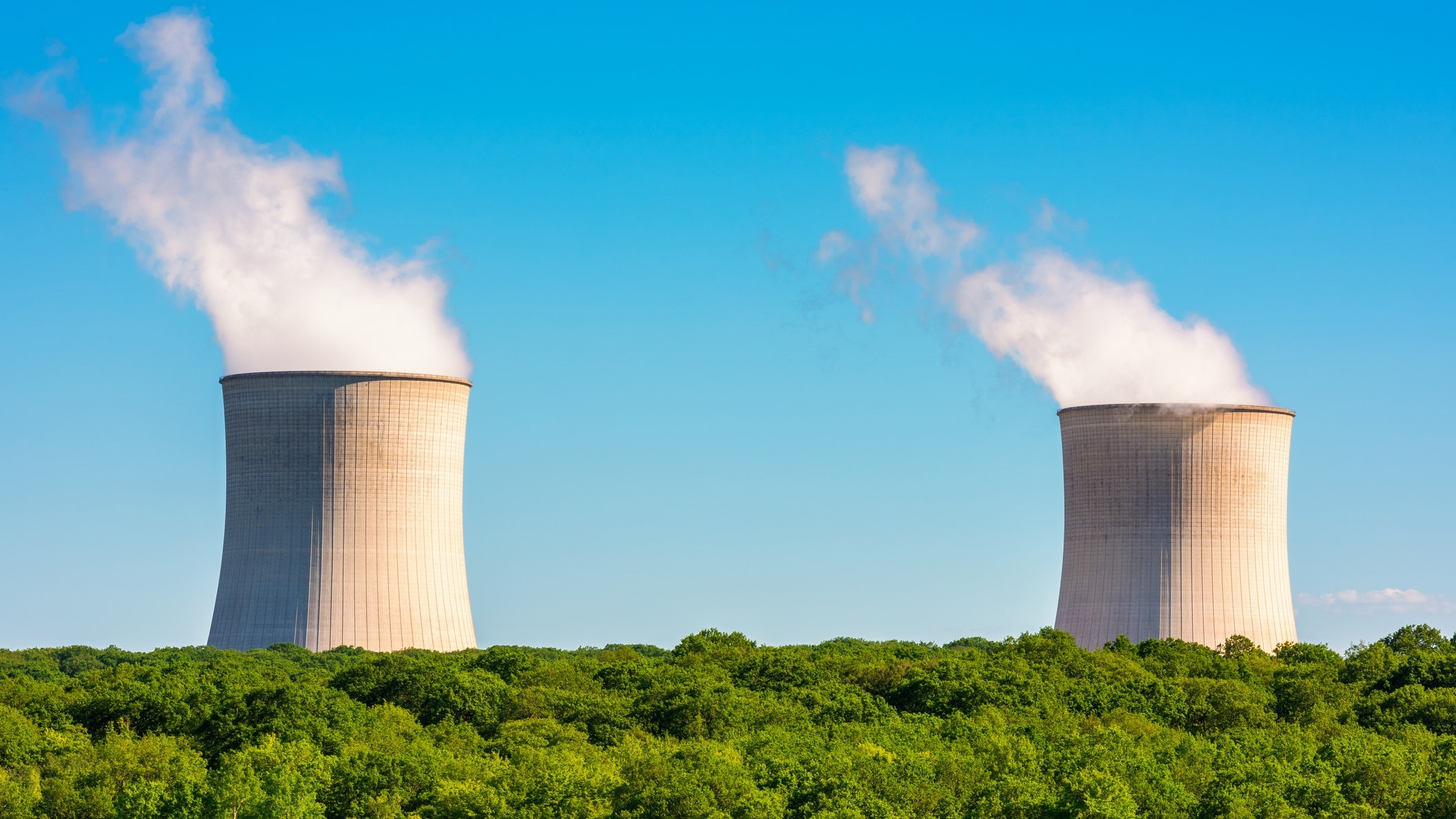
- The rapid expansion of AI and new data centers is driving up global power demand. The shift is a potential boon for nuclear, geothermal, fuel cells, battery storage, and other innovative technology solutions set to provide reliable, low-carbon energy.
- Financing solutions in the public and private markets are increasingly critical to support this ‘significant growth’ and scale innovative technologies.
- Hyperscalers and governments are taking a diversified approach to procuring energy from a range of sources.
The artificial intelligence (AI) boom is having a major impact on the energy industry, as cloud-computing giants race to build data center capacity to support the burgeoning AI sector.
After being roughly flat for years, data centers’ demand for power is expected to accelerate 175% by 2030 (from 2023 levels), according to Goldman Sachs Research. This is the equivalent of another top 10 power consuming nation coming online.
“This is a moment of significant growth in power demand,” says Kara Succoso Mangone, the head of the Sustainable Finance Group at Goldman Sachs. “At the same time, we continue to hit record levels of global investment in the energy transition, which includes renewable projects as well as newer, innovative technologies.”
This megatrend is bringing fresh urgency to the development of groundbreaking energy technologies and longstanding alternatives such as nuclear and geothermal power. It also underscores the critical need for significant investment in the grid, both to address aging infrastructure and to support load growth from a variety of energy sources, including renewables.
Rising power demand is also driving the need for financing solutions to support the rollout of projects up and down the supply chain. We spoke with Mangone about the opportunities and challenges in this new era.
What types of energy sources are being procured to meet the accelerating demand for power?
We are seeing a broad range of approaches to sourcing energy. For many of our clients, there is an opportunity to support this rise in energy demand with traditional sources. That could be existing resources like natural gas in some markets.
Yet there is also an expectation that this acceleration in energy demand can be met with innovative technologies that produce less greenhouse gas emissions. This may include established renewable sources like solar and wind, or technologies that are higher on the cost curve, such as clean hydrogen and biofuels. A lot of this is dependent on the market and the region. Across the board, we see the benefits of developing a diverse strategy to sourcing energy or taking an all-of-the-above approach.
Is rising demand a boon for nuclear and geothermal power?
Yes, it is driving a higher level of engagement on technologies that a few years ago were viewed as too expensive or too far out.
We’re seeing momentum in nuclear power with clients across our business. There have been a number of deal announcements from hyperscalers committing to the procurement of nuclear fusion and fission power from newly planned and existing plants. The deals are driven by the need for reliable, baseload power, and have led to increased investments in advanced nuclear technologies such as Small Modular Reactors (SMRs). Fusion energy, in particular, is showing signs of progressing towards commercial production, with potential for commercialization in the 2030s.
We are supporting clients in this space, including through the raise of approximately $1 billion in the public markets for a nuclear power company developing next-generation fission technology. To support the buildout of nuclear capacity, you are also going to need a lot of uranium. This makes its supply chain, including everything from uranium mining to manufacturing the fuel for different SMR designs, really important. In the US specifically, we are doing a lot of work to finance critical supply chains of minerals related to uranium.
There are additional tailwinds for nuclear right now. You have the US government focused on nuclear development and deployment. Washington sees it as a real solution to the demand problem and is working to de-risk projects which have historically been challenged by delays and cost overruns. This renewed interest in nuclear’s potential is also evident from other governments, which are prioritizing energy security and decarbonization. Nuclear power is largely emissions-free. While it has seen periods of resurgence before, this time may be different because you have all these tailwinds coming together.
As for geothermal power, it, too, may be a beneficiary of rising demand. Today it makes up a fraction of global electricity generation but is a proven technology that has the potential to scale. For next-generation systems, both continued innovation to de-risk projects and significant investment are crucial for widespread, cost-effective deployment. We helped raise $244 million in capital in 2024 to help a client accelerate deployment of next-generation geothermal technology.
Which energy technologies will be the fastest to develop and bring to market?
This depends on the market and the region. Governments face the challenging task of balancing energy affordability and reliability with climate objectives. As such, they are focused on building power systems and infrastructure with a level of resiliency and responsiveness that can adapt to an evolving landscape.
So, I do think this concept of fastest to develop is really dependent on what the natural or available resources are in a particular country, and what their competitive advantage may be. In many markets today, traditional sources like natural gas will be the fastest to market.
This may also be renewables, which set a record for deployment globally in 2024 for the 23rd year in a row, according to the International Energy Agency. In some countries—Thailand, Vietnam—it is cheaper to produce solar power than it is to procure fossil fuel power. It’s important to consider supply chains as well since they provide critical components, including rare earths for batteries which remain heavily concentrated in China.
In some cases, there is also significant opportunity to leverage better efficiency and grid solutions that can curtail demand and optimize resource use. This includes investments to better integrate diverse energy sources and enhance grid resilience, such as smart grid technologies and infrastructure upgrades.
Beyond traditional energy sources and renewables that are at commercial scale, there are other technologies, such as fuel cells, which are quickly ramping in their speed to market. Fuel cell systems, which convert chemical energy into electricity, can be rapidly deployed. These systems are often designed as modular units that can be installed in less than a year to provide reliable power for critical infrastructure like data centers. This is a key advantage.
Which emerging technologies are shaping up to be the most affordable?
There are a few forces at work in terms of affordability. Adoption of new innovations has really jumped. Look at electric vehicle (EV) sales, which increased by 3.5 million units sold last year, to 17 million globally. This increase year over year is more than all of the EVs sold in 2020. China has obviously ramped up significantly in the space.
On the other hand, hydrogen and carbon capture have historically faced slower adoption, largely due to their higher current costs and less mature technology.
Even so, carbon capture is viewed as a technology that is very important to fulfill decarbonization goals. If you imagine we’re in a world in which energy demand is growing and therefore power production is growing and greenhouse gas emissions may grow, carbon capture could be an important tool for governments and corporations that want to maintain their commitment to the reduction of emissions.
Over time, further innovation can help drive down the cost of these technologies and there are also ways to encourage adoption vis-à-vis policy incentives. These can either help on the supply side to reduce production costs or catalyze demand by making the technologies more accessible and cheaper for end-users.
And which energy technologies are poised to be the most reliable?
This is a really important consideration given the confluence of megatrends we see. There is the onshoring of manufacturing, a heavy focus by governments on energy security, the rapid adoption of artificial intelligence, and the rapid buildout of data centers to support it. Reliable power is critical.
There are traditional energy sources that provide reliability today like natural gas. At a lower emissions profile you have renewables like solar and wind, but they come with challenges related to intermittency. This is where long-duration energy storage technologies become crucial, offering solutions to store excess renewable power and dispatch it when needed. This improves grid stability and reliability while mitigating price volatility. Nuclear is also a source of low-carbon, reliable power.
How will financing play a role in the development of new energy innovations, particularly decarbonization-related technologies?
We’re seeing a broad range of ideas and capital flowing through public and private markets. For instance, private capital raises for advanced nuclear have surged 13 times compared to 2023. And for geothermal, we've seen roughly $900 million in private capital directed towards next-generation technologies and projects over the last five years. Financing is essential for scaling solutions like power storage and grid modernization, where we are also spending time with clients, especially when you consider the massive opportunity: Goldman Sachs Research estimates that the cumulative market for digital infrastructure and power funding on a global basis is about $5 trillion.
Beyond new energy technologies, what additional themes are clients focused on with respect to the energy transition?
Along with resilience, resource scarcity—including water scarcity—is a theme that is definitely top-of-mind for many of our clients. They are trying to think through how to evaluate the potential risks associated with climate change. This is true whether you are an asset manager or a corporation with an integrated supply chain around the world.
There is an opportunity side to this as well given private finance for nature-related investments and natural capital assets has increased 11-fold between 2020 and 2024, to more than $102 billion. Nature-based solutions have emerged as an important financing mechanism to restore, protect, and manage landscapes that can sequester carbon and improve biodiversity.
Scaling commercial solutions in this area requires a sophisticated approach to measuring impacts. As a result, we are working with clients and non-profit partners to look at ways to advance AI models that can help improve nature-related insights. While the natural capital market is still in nascent stages, it’s certainly an area where we are seeing increasing engagement from our clients.
Read more about how Goldman Sachs is delivering market-based solutions to clients in our recent Sustainability Report.
This article is being provided for educational purposes only. The information contained in this article does not constitute a recommendation from any Goldman Sachs entity to the recipient, and Goldman Sachs is not providing any financial, economic, legal, investment, accounting, or tax advice through this article or to its recipient. Neither Goldman Sachs nor any of its affiliates makes any representation or warranty, express or implied, as to the accuracy or completeness of the statements or any information contained in this article and any liability therefore (including in respect of direct, indirect, or consequential loss or damage) is expressly disclaimed.
Subscribe to Briefings
Our weekly newsletter delivers the latest insights on economic forces shaping markets—from Goldman Sachs leaders, economists, and investors around the world.
You can unsubscribe at any time. For information about how your personal data will be used, visit Privacy Information and Resources.