

Artificial Intelligence
South Korea's Growing Role in Humanoid Robot Development
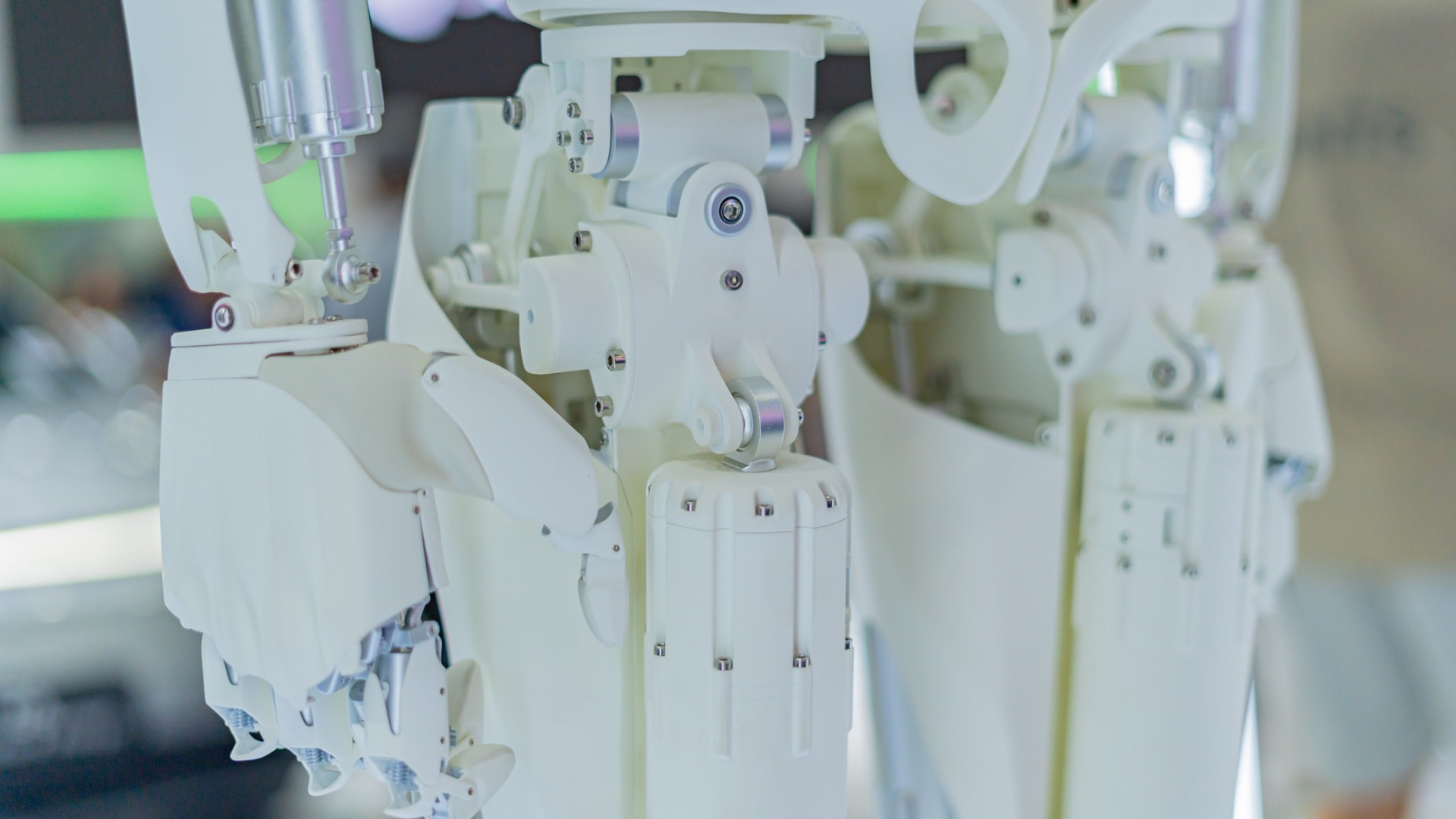
- South Korea’s auto industry expertise, in areas such as power steering systems and autonomous vehicles, translates into a leading position in humanoid key components like actuators, according to Goldman Sachs Research.
- Our analysts estimate that Korean companies will command a 30% direct and indirect share of global humanoid robot production by 2035, with approximately 74,000 units produced using Korean supply chains by 2030.
- The capabilities of humanoid robots still fall short of humans on simple tasks, but improvements are ongoing.
- Having data for training is key—as robots in the field create more data, and the data helps to improve capabilities—and South Korea is likely to be an early adopter of humanoid robots.
South Korea is emerging as a leading supplier of parts and technology for robots, according to Goldman Sachs Research. The country is well positioned in part because of its strong ecosystem for auto-part supplies.
Why South Korea has an edge in humanoid robot components
South Korea has deep expertise in electric motors, sensors, control units, and precision engineering for the automotive industry that translate well to robotics. Humanoids rely on actuators, the components that mimic human muscles and joints. These components share similarities to existing auto parts technology in, for example, electric power steering, braking systems, and autonomous vehicle technology.
Several Korean auto parts makers have already leveraged this know-how to gain a position among the leading non-Chinese suppliers of critical actuators for robotics, Do Hyoung Kim, an analyst in Goldman Sachs Research, writes in a report.
“Korea will eventually see a greater role in becoming the key supplier for ex-China related humanoids,” Kim writes. Among the positives for Korean companies is the fact that they are “on the radar” of US companies that are developing humanoid robots. Other advantages include the country’s extensive use of industrial robotics in its modern manufacturing economy and a strong early-adopter culture.
The outlook for humanoid robot production in South Korea
Korean companies are estimated to account for 30% of global humanoid production by 2035, both through direct manufacturing and by supplying critical components like actuators, according to Goldman Sachs Research.
The team forecasts that Korean supply chains may support around 74,000 humanoid units by 2030 and 412,000 by 2035. The Korean government is supporting this trajectory, aiming to produce 1,000 humanoids per year by 2029 and investing 700 billion won (roughly $500 million) in 2026 through a national manufacturing alliance.
One of the most difficult robot hardware challenges lies in making a hand that can emulate the complexity of the movements and capabilities of a human hand. “Interestingly, South Korea has a notable number of start-ups and listed companies that have developed dexterous hands for humanoids,” Kim writes. He attributes this strength to Korea's extensive industrial use of grippers in manufacturing.
How humanoid robots compare to humans on basic tasks
Goldman Sachs Research also assesses the status of so-called human embodied reasoning—the ability of humanoid robots to perceive, understand, and act in the physical world. They find that the artificial intelligence (AI) vision language models (VLMs) needed for humanoid robots still fall short on simple tasks.
Our analysts examine recently published research on how better-known VLMs perform on several basic humanoid robotics tasks. These include object localization (the ability to identify relevant objects in a scene), and task-driven grounding (the ability to figure out how to interact with those objects and complete a task). Studying these metrics can tell you how well a robot might, for example, break down the task of finding a coffee pot in a room, identifying the handle on the pot, and figuring out how to pour.
Why training data is the biggest bottleneck in humanoid robotics
One of the key hurdles to making these models better, and ultimately deploying humanoid robots more broadly, is the lack of physical data on which robots can train, the report explains. “This is why we still see a big gap relative to human capabilities despite progress in AI models,” Kim writes.
Indeed, a specialized VLM outperformed the models from the big US companies that have developed the most powerful foundational AI models. The team suggests this could be due to its having access to better and more extensive relevant data. It may not translate into leadership for a specific model, they write, but it does suggest that the relative lack of data is holding back humanoid robot development.
“The bottleneck remains the scarcity of physical AI training data,” Kim writes. This is an area where China has built an advantage because humanoid robots are being deployed more extensively. As of 2025, there were some 10,000 to 15,000 humanoid robots already deployed in China, while that number is in the hundreds in the US and Korea.
How deployment, data, and AI drive humanoid robot development
As humanoid capabilities develop and adoption becomes more widespread, these robots are expected to improve in a “self-reinforcing cycle.” With more humanoid robots in use, more usable training data becomes available, and the robots have a better ability to learn new capabilities.
South Korea has the foundational elements to be an early adopter of humanoid robotics, according to Goldman Sachs Research. It already has the highest density of industrial robots in its manufacturing facilities, as measured by robots per employee. And in part due to this experience with automation, public acceptance of robotics is quite high. The country also has shown a tendency to adopt new technologies early. Other suppliers of key hardware components for humanoid robots include Japan and Germany.
Still, China is moving quickly and opening a lead in the race to develop humanoid robots. Robot producers elsewhere may have to speed up their adoption plans if they hope to be able to participate in the cycle of improvement that comes with deployment, data collection, and the capabilities that can then be developed.
“This is especially true for US companies, given they have one of the best capabilities in software, but need an execution partner in terms of hardware,” Kim writes.
This article is being provided for educational purposes only. The information contained in this article does not constitute a recommendation from any Goldman Sachs entity to the recipient, and Goldman Sachs is not providing any financial, economic, legal, investment, accounting, or tax advice through this article or to its recipient. Neither Goldman Sachs nor any of its affiliates makes any representation or warranty, express or implied, as to the accuracy or completeness of the statements or any information contained in this article and any liability therefore (including in respect of direct, indirect, or consequential loss or damage) is expressly disclaimed.
Subscribe to Briefings
Our weekly newsletter delivers the latest insights on economic forces shaping markets—from Goldman Sachs leaders, economists, and investors around the world.
You can unsubscribe at any time. For information about how your personal data will be used, visit Privacy Information and Resources.