

Markets
The Outlook for India’s Stock Market Amid the Middle East Conflict
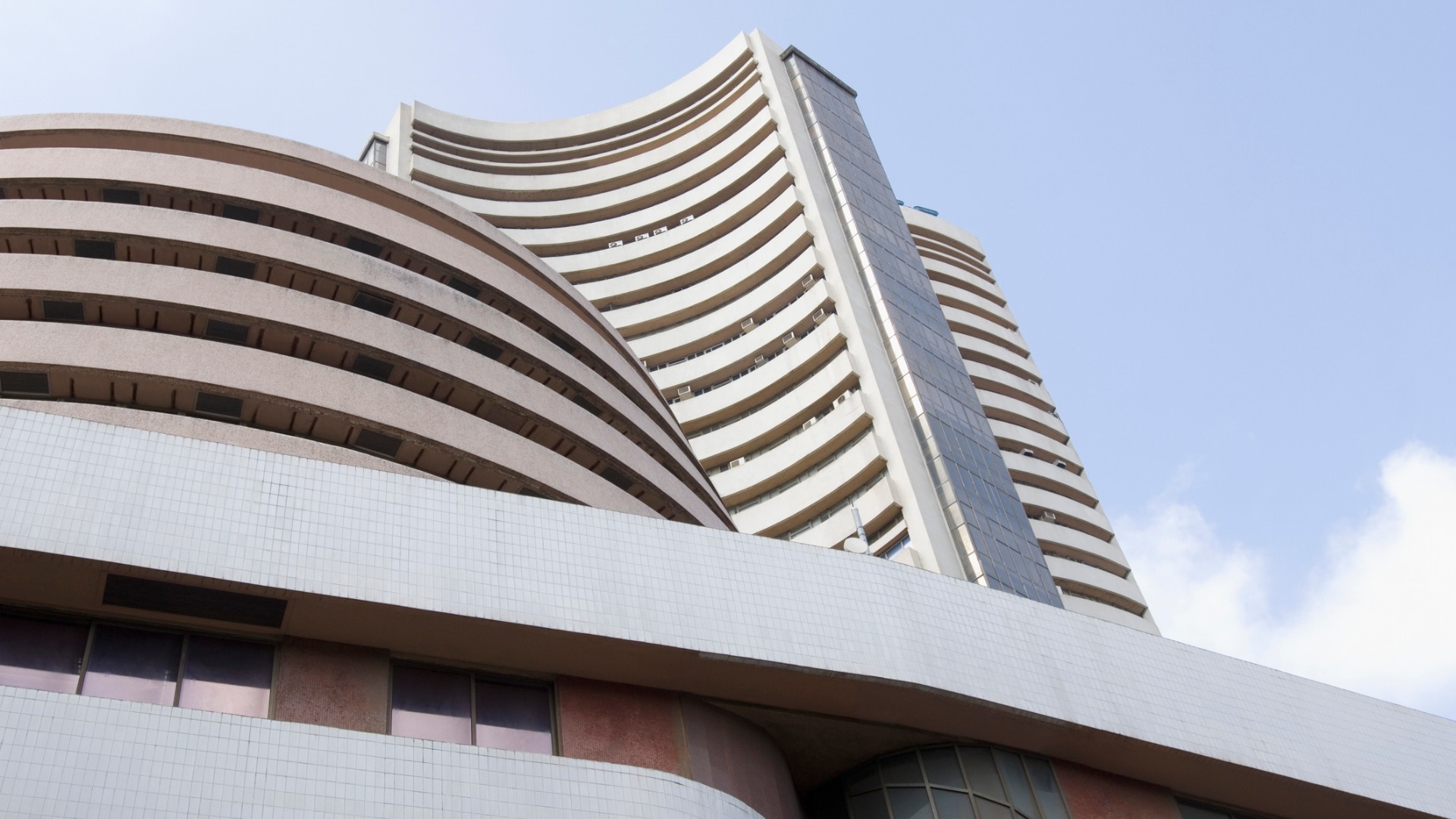
- Indian energy costs have risen and the rupee has depreciated in response to the war in the Middle East.
- But historically, Indian markets have rebounded well after episodes of stress, often on the back of new reforms.
- As a result, the current moment may provide an attractive entry point for long term investors into Indian markets.
Concerns around domestic growth, commodity volatility, and overall geopolitical tension have pushed investors in Indian markets into a wait-and-see mode after equity declines earlier this year. While such caution is understandable, similar periods of discomfort have, in the past, often gone on to become rewarding entry points for long-term investment into India, according to Goldman Sachs Asset Management.
In crises that emerged over the past three decades, Indian equities have rebounded after an initial period of stress, write Goldman Sachs Asset Management’s Aman Batra, head of India equities, and Basak Yavuz, co-chief investment officer of fundamental equity and head of emerging markets equities. We spoke to Batra and Yavuz about their expectations for Indian equities.
How has the Indian equity market reacted to the recent crisis in the Middle East?
The playbook is not very different from what we have seen in previous geopolitical crises. We see a depreciation of the rupee, a flight of capital back to US dollar assets, spiking energy costs, and a correction in the equity markets. The quarter ending in March turned out to be, for Indian markets, one of their worst quarters in recent years, comparable to the kind of corrections we saw during the Great Financial Crisis in 2008 or during the outbreak of Covid-19.
Why could this moment offer a potentially attractive entry point for investors in Indian equities?
Eventually, energy prices cool down, and after absorbing the increased cost of imported energy, India’s economic growth and corporate earnings both bounce back to their longer-term trend—or, as economists like to call it, their potential growth trajectory. At that point, investors recognize the resilience in earnings and begin returning to the markets as the geopolitical crisis passes. As a result, such crises have often turned out to be good points of entry into the Indian markets.
You write that India has a history of transforming external shocks into catalysts for structural reforms and subsequent market outperformance. Could you give us some examples of this?
It started, you could say, with the balance-of-payments crisis in the early 1990s, which led to the reforms of economic liberalization in 1991. The “taper tantrum” in 2013, when market volatility ensued after the Federal Reserve announced a slowdown of quantitative easing, led the Indian government to launch a massive cleanup and capitalization of the balance sheets of public-sector banks. The Reserve Bank of India also adopted formal inflation targets.
More recently, India responded to the Covid-19 pandemic not with cash dole-outs, which led to higher inflation elsewhere, but reforms to energise manufacturing and job creation. India cut corporate tax rates to attract manufacturing investment and rolled out production-linked incentive schemes. Thanks in part to those measures, India has gone from being a large importer of electronic products to a large exporter of smartphones to the US.
Why do Indian markets seem to overreact to crises—and why do they recover so well?
India runs a current account deficit—its payments for imported goods and services exceed the revenues from exports. So whenever energy prices shoot up, so does the import bill—which stretches the current account deficit further and hurts the rupee. Also, globally, these crises lead to an aversion to risk among investors, leading to capital flight back into the dollar, which makes the rupee’s depreciation worse.
Earlier this year, India was going through a phase of lower investor interest due to its lack of AI plays, so foreign institutional investors continued to sell Indian markets as the Strait of Hormuz crisis struck. But commodity prices historically revert to the mean, and so does corporate earnings growth. Moreover, India’s foreign exchange reserves today are robust, standing at $697 billion, which, coupled with a more diversified export base, may provide a comfortable buffer against global volatility.
What has the reaction of India’s information technology (IT) sector been to the other ongoing disruption, artificial intelligence (AI)?
It is undeniable that IT services, a key pillar of the economy, is being affected by the AI disruption. But in the longer term, we believe the country will position itself as critical in operationalizing AI globally, particularly through talent and services. One area of strength is enterprise integration, as the sector is transitioning from “back office” to front-office innovation partner and embedding itself in clients’ strategic workflows. Overall, the spending on IT services is going through a cyclical slowdown, but it will likely pick up as more and more enterprises adopt AI.
What are the primary risks that remain, if any, in Indian equities? And what are your forecasts for corporate earnings growth in India?
Geopolitical shocks and the associated spike in energy costs are typically key risks to Indian markets. The likelihood of that is already factored into valuations. The execution of government reforms, or lack thereof, is another potential risk. India has a young population, but employment creation to capitalize on this demographic divided has become slightly more challenging in a world that is more inward-looking and protectionist than it used to be.
Before the Middle East crisis hit, India was looking at an acceleration in corporate earnings growth. Economic growth had also been picking up, as India absorbs the cost of higher energy, we now expect the earnings to grow at a slower 12-13% for the 2027 financial year, as against an earlier expectation of 16%. Small and mid-cap companies were expected to grow earnings at rates in the high teens, and that will also likely see some moderation.
This article is being provided for educational purposes only. The information contained in this article does not constitute a recommendation from any Goldman Sachs entity to the recipient, and Goldman Sachs is not providing any financial, economic, legal, investment, accounting, or tax advice through this article or to its recipient. Neither Goldman Sachs nor any of its affiliates makes any representation or warranty, express or implied, as to the accuracy or completeness of the statements or any information contained in this article and any liability therefore (including in respect of direct, indirect, or consequential loss or damage) is expressly disclaimed.
Please click here for additional disclosures from Goldman Sachs Asset Management.
Subscribe to Briefings
Our weekly newsletter delivers the latest insights on economic forces shaping markets—from Goldman Sachs leaders, economists, and investors around the world.
You can unsubscribe at any time. For information about how your personal data will be used, visit Privacy Information and Resources.