

Exchanges
The AI Investment Boom: When Will It Pay Off?
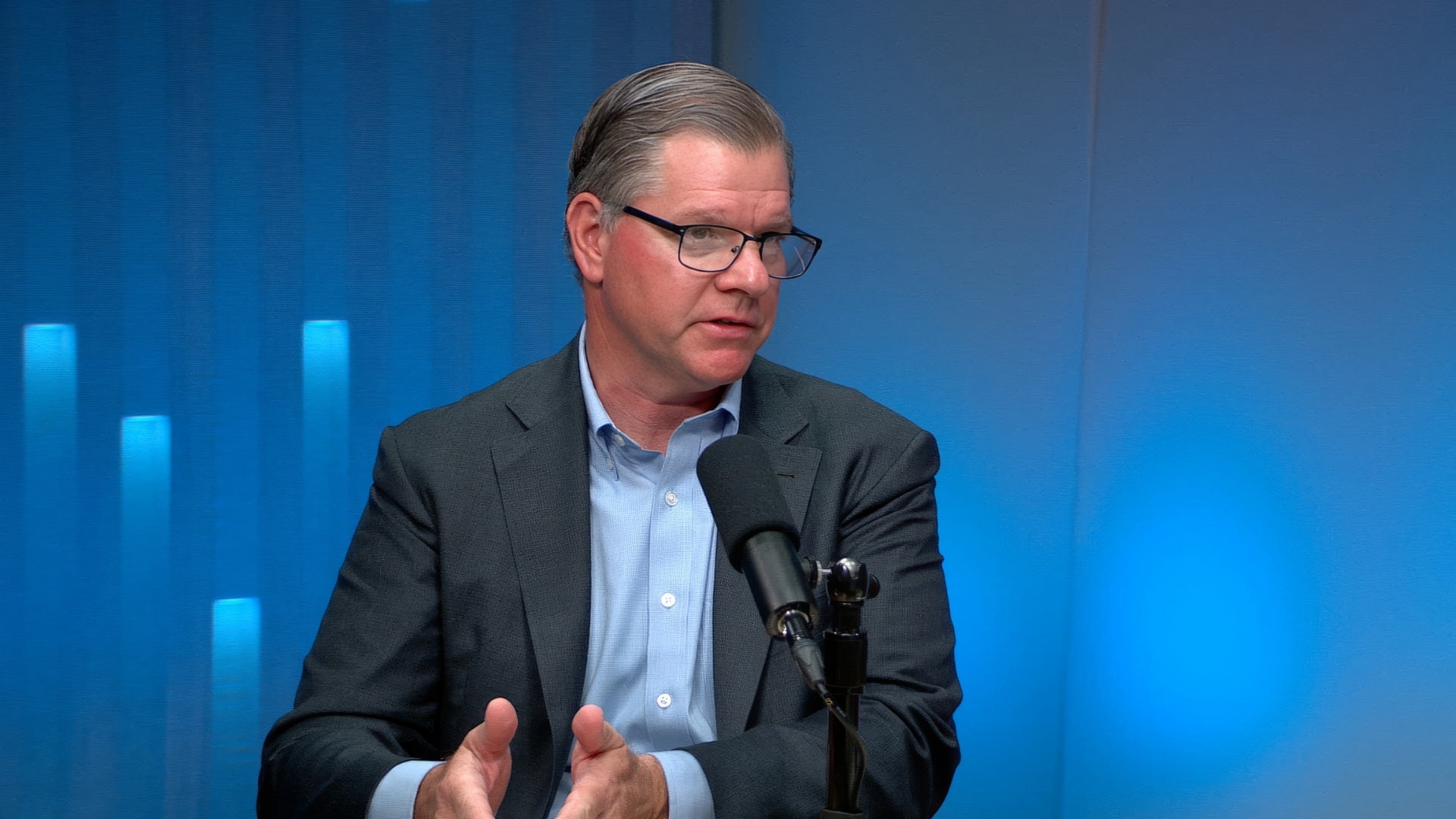
The economics of artificial intelligence are more questionable today than two years ago, says Goldman Sachs Research's Jim Covello, as enterprise buyers, model companies, and hyperscalers have yet to show returns on their spend. In a conversation with Alison Nathan and George Lee on Goldman Sachs Exchanges, Covello discusses where we've seen economic value accrue to date and why semiconductor companies can't continue to be the sole beneficiaries of the AI buildout.
Transcript:
Jim Covello: Look, at some point you got to make money. You make investments in a business so that you can generate returns and make money. And we've gotten further away from that over the last couple years instead of closer to it. That doesn't mean it's never going to happen. It just means the stakes are higher.
Allison Nathan: Welcome to another episode of Goldman Sachs Exchanges. I'm Allison Nathan and I'm here with George Lee, co-head of the Goldman Sachs Global Institute. Together we're co-hosting a series of episodes exploring the rise of AI and everything it could mean for companies, investors, and economies.
[MUSIC INTRO]
George, great to see you again.
George Lee: Great to be here.
Allison Nathan: And this should be fun, George, because today we are talking to someone who at least in the past several years has really disagreed a fair amount, I think, or taken a different view than you on AI. Our guest is Jim Covello, head of global equity research here at Goldman Sachs. And again, you've had many debates with Jim about this topic.
George Lee: Well, first of all, it's great to have Jim here. He is both a great friend and a great thinker. And while we differ on some matters related to AI, actually there's much we agree on. And it's been very fun to have this dialogue over multiple years.
Jim Covello: Yeah, for sure.
George Lee: So, welcome Jim.
Jim Covello: Yeah, no, it's great to be here. Thank you. And I agree. Geroge is everything that makes Goldman Sachs great to me. And it's been incredible going on this journey with you. And here we are again.
George Lee: Here we are again. Exactly.
Allison Nathan: So, Jim, as we mentioned, a couple of years ago you came out with what I would characterize as a pretty skeptical, somewhat out of consensus view of generative AI. And you've particularly questioned the economics of the technology. You had a lot of doubts about whether the returns the technology would generate would ever really justify all of this capex we have seen pouring into the technology over the last couple of years.
So, two years on, where do you think you've been right?
Jim Covello: Yeah.
Allison Nathan: And where have you been wrong?
Jim Covello: Yeah. So, I like to start off with where we've been wrong. And so, we just published another report most recently where we started off with where we've been wrong. And we called it "The Mark to Market - Two Years Later" versus the report that you and I worked on together.
So, firstly, consumer adoption of AI has been magnificent. Much greater than I expected. George accurately predicted that spot on. So, we've been wrong about that.
One of the things that we talked a lot about in the original report and we talk about in this report is most consumers are still using a free version of AI. So, really to get to the heart of the economic issue, we still really need to focus on the enterprise. But I do really think it's important to acknowledge how great consumer adoption has been and just how accurate George has been about that.
The second thing we talk about in the most recent report where we've been wrong was, we predicted two years ago that if the hyperscaler stocks underperformed for a significant period of time, we would expect that they would scale back on the capex. And they have underperformed because of the significant investment in capex and the negative impact on their free cash flow. But instead of cutting the capex, they've actually raised the capex. So, I think that calls into question the economics even more going forward. But the reality of it is that they've massively increased the capex despite the stocks underperforming, which is not what we expected.
And then I would add that I think the technology itself has made incredible progress, very consistent with George's predictions. And I think any conversation has to really emphasize that and acknowledge that.
All of that said, I think the economics are still very much in question. And if anything, I'm probably as or more skeptical on the economics today than I was before, despite how incredible the technology is.
Allison Nathan: Before George weighs in, let me just ask you, why do you think we have continued to see all of this capex?
Jim Covello: Yeah. I think there's a tremendous amount of FOMO at every level of the supply chain. And it doesn't mean that it's not justified. I just think that we're spending well in advance of where the economics are right now. And I think it's because everybody is afraid of what happens if the technology really takes off and finds significant positive economic use cases. And your competitors have that figured out and you don't. And I think that's everything from the enterprise level to the model layer to the hyperscaler layer.
And one of the things that we talk a lot about in our report is all of the value, all of the economic value has continued to accrue to the semiconductor companies. It's been incredible economic value that's accrued to the semiconductor companies. And we do talk a lot in the report that we've really never seen anything like that. Right? I covered semiconductor stocks directly for 16 years. And in every cycle, the semiconductor stocks thrive when their customers thrive. Here in this cycle, the semiconductor companies are thriving at the economic expense of everybody above them in the chain.
And so, at some point that has to rectify itself. Either everybody above them in the chain needs to start to generate a profit as well. Or they're going to have to eventually scale back on the semiconductor spending. And that's where we make the focus of this report.
Allison Nathan: So, George, is Jim right to be concerned about these economics?
George Lee: Yeah, I think this is actually one of the areas where we agree. And we published a paper recently out of the Goldman Sachs Global Institute that talked about the scale of this investment, just how high the bar will be, how high the hill is that we have to climb to generate sufficient payback. And, you know, the nub of our analysis is pivoting off some of the work that Jim's done is that you have to move beyond the traditional notion of disruption of existing profit pools.
Jim and his team did a great piece about the advertising business and how much of that could be intervened by AI players, etcetera. And I think if you go profit pool by profit pool and sum up the opportunity, you'd still fall short of a significant enough payoff from what we think will be $7 to $8 trillion spent here.
Now, that to me is not the end game. I think the opportunity and in fact the imperative for this technology is to help create net new economic activity, breed new TAMs. Create new affordances that we can't imagine. And this has been the history of major technological waves, whether it's agricultural revolution, industrial revolution, computer revolution, etcetera.
But I certainly would stipulate, to Jim's point, that there's a big hill to climb for this payoff.
The second thing I think we agree on, though I think we differ in terms of time scale on this, is enterprise adoption is really important to this. It has been slower than we might have hoped or expected. And yet, I try to anchor back to the fact that we are three and a half years into this. And this is a technology that is both novel, it's paradigmatically different than old technologies because it's probabilistic versus deterministic. There's a brand-new stack of technologies required to deploy it in the enterprise. And there's an entirely new set of control planes necessary to use it responsibly, effectively, and compliantly.
And so, all of that just takes time. I continue to be very optimistic about the potential for this technology to reshape the way businesses work. It's just going to take a little bit longer than the avid consumer adoption that Jim referenced.
Allison Nathan: Aren't there all these tools? But that's been the big development in the last several months. It's been these agentic tools that now enterprises are seeing the vision ahead of how to incorporate some of this technology. So, doesn't that give you some optimism, some reason for hope, Jim?
Jim Covello: Yeah, the technology itself is terrific. And as George predicted a couple of years ago, the pace of improvement of the technology is terrific. The economics of those same technologies is still really challenging. Now, it doesn't mean they're always going to be challenge. But in a lot of ways, companies are losing more money today implementing this technology than they were two years ago. So, as George accurately described, the hill that has to get climbed is even steeper today than it was before because we've spent more money. And there are a lot of that go along with just the tools.
You know, one of the things that we talk a lot about in the report is there are agents today that are terrific. There are models today that are terrific. But in some cases, in a lot of cases actually, the data isn't ready to be agented yet. So, we're putting agents on top of data that isn't ready to be agented. And that's creating another economic challenge for companies.
Again, all of these things can get addressed. But I think sometimes in the euphoria of the market talking about these technologies, we lose sight of some of the blocking and tackling things that needs to happen.
There are data management issues. There are model optimization or orchestration layer issues. There is still very much the question of the SLM versus LLM dynamic that George and I have been talking about for three years now. So, there are lots of things that need to be addressed on the economic side of things.
George Lee: And I would just say, I think the agent thing, similar to my last theme, it's even more novel than generative AI generally. The reasoning paradigm is a year and a half, two years old. Agents really became more prolific in the last year to year and a half. You could argue that really the takeoff in product market fit for agentic coding really only occurred at the end of last year. And so, again, it's a fast takeoff. But these are complex technologies. It takes a lot to create that control plane, that orchestration that Jim is referencing. And these agents are so powerful that they need to guardrail them carefully and thoughtfully, that's its own hill to climb here that, again, I think holds massive potential.
One thing I looked up the other day is if you take the public pronouncements of what the independent model companies are generating in terms of their revenue and sum that up and you compare it to how fast we got to that level of revenue in the Cloud era, it's like, hey, we've gotten a significant amount of revenue in three years from the model companies. It took something like 15, 16, 17 years for the Cloud companies in aggregate to get there.
So, early days. But very fast takeoff. And I think the product market fit in coding is something we should take account of. We also should note that coding is probably the best application for this technology. It is a verifiable domain. Having the kind of product market fit we have in coding expand to other domains may be just a little bit more challenging, require a little bit more science and art.
Jim Covello: Look, these are the fastest growing companies in the history of corporate America, right, on the top line. Now, again, the economics, the profits are flowing to the semiconductor companies. But from a top line perspective, these are the fastest growing companies ever.
George Lee: Yeah. So, Jim, I actually have a question of that. Your report, I think, was super interesting in terms of the outsized economics going to the foundational infrastructure providers here. Isn't it always thus? I think back to the internet era that we both lived through. Cisco, Sun, Oracle, Intel were big beneficiaries for quite a while. Was that different than this? Maybe it's just the semiconductor layer in particular. It's just outsized here.
Jim Covello: Yeah. I think it's the semiconductor layer in particular that is unique. Allison, when we published the report a couple years ago, we said at the time we should focus on the picks and shovels because that's where we think the economic value is going to accrue in the beginning. That did play out.
At some point though, that has to shift. It cant only be those companies that benefited. Again, particularly the semiconductor companies. And the losses upstream in the chain are pretty magnificent. And at some point, that has to get flipped on its head.
In my mind, we can and will talk about this every day for the next five years. But I really think it all boils down to one thing: do the enterprises make or save money implementing AI? If they do, this technology is going to fulfill its promise. If we're having the same debate two years from now and we're still saying, "Well, it's early," then we might have a challenge because at some point when does the short term become the long term, right? Because we can say in the short term, companies can lose money implementing the technology. But that can't happen forever.
And we talked about this, George, you and I before, we're in one of the greatest bull markets in history. And we're in a great spot of corporate America, great profits in general. A great overall economic environment with some challenges, but a great economic environment. And so, it's the right thing for companies to do to be making investments for the long term in this kind of environment-- and we all hope this doesn't happen, but if we did hit more of a rough patch in the markets or the economy, some of this spending that the market is okay doing in a good environment might get scaled back a little bit.
Now, I don't know that that would be a bad thing. Right? Like, in this report I talk a lot about how I would favor the hyperscaler stocks today over the semiconductor stocks. Which is a change from two years ago. And the reason for that is there are three scenarios that you could see playing out over the next couple of years. I think the hyperscaler stocks will outperform the semiconductor stocks in two of those three scenarios.
One is corporates start making a profit. Enterprises start generating return on this investment. Then I think that there is economic value to flow throughout the whole chain, not just the semiconductor companies. And I think the hyperscaler stocks would get rewarded because there's doubt on that. Those stocks have underperformed the market by so much.
The second is that the hyperscaler companies say, "Look, we might need to moderate the spending a little bit." And we're not talking about companies going from 200 billion a year in capex to zero. We're talking about slight moderation of the capex pace so that they can start to claw back some free cash flow. And I think the hyperscaler stocks would outperform the semi stocks in that scenario as well.
The one scenario where the semi stocks continue to outperform is the status quo persists. Where the only companies making money in the chain are the semiconductor companies. Again, and this has gone on longer than I thought to begin with, but that can't go on forever. We can't have all these incredible companies upstream in the chain losing money. Because again, even in your internet analogy, eventually the best companies upstream started to make money.
George Lee: Totally.
Jim Covello: I know that's not how the market is positioned right now. The positioning of the market is incredibly bullish on semis. And bearing on everything below that. At some point that has to turn around.
Allison Nathan: I would say that two years ago you said 18 months - two years.
Jim Covello: Yeah.
Allison Nathan: And now we're two years forward. And you're talking about another two years. So, the market seems to have some faith in this case.
Jim Covello: Oh, the market, look, again, this is the best bull market of our lifetime. I don't think there's any question about that. And this is a reason. It's a little bit circular. This technology is the reason for it. And that bull market is powering a lot of the investment that's happening.
I think at some point, again, the short term has to become the long term. But the market's giving a long leash, as well it should, because again, I think the market is looking at the progress on the technology and saying, "Well, eventually the profits will flow through." That may well happen. I would just like to see that happen at some point.
George Lee: One of the returns issues that Jim and I have talked a lot about that I think is fascinating to consider here is to what extent, even if you are an extreme believer in the power of this technology like I am, there's a potential in the enterprise that the advantage you gain from deploying it is somewhat fleeting. In other words, there's a chance that you can create some temporal advantage by being the first person on the block to effectively deploy the technology to lower your engineering costs or increase your straight through processing times, whatever. But ultimately, everyone in your sector is going to catch up. And will the margin advantages get competed away?
And then second. Like many technology evaluations we've seen in history, will the surplus we generate vanish into consumers' pockets in a way? And so, this value capture and then measurement of ROI, which is a super complex topic around technology, I think, is one of the most fascinating dimensions of this where in a way companies are and will deploy this technology because it seems so intuitive, logical, and it feels like it's creating savings, advantage, all of that. And yet, the measurement of that in tangible, hard terms is sometimes very elusive. And so, this adds to the uncertainty that Jim's talking about.
Jim Covello: That's so incredibly well said. And one of the things I've always loved about having these discussions with George is he's so balanced on this, right? You look at some of the questions around this, it's are these expenditures just the cost of doing business now? And it doesn't really give you a big advantage. It's just the cost of being in business. And then it becomes an issue of scale. Is scale really what matters in business now more than ever?
I mean, scale's always been a big advantage. But when you have some of these models come out and all of a sudden you wake up one day and you have to spend $50 million as an enterprise on a new model that you didn't even know, that wasn't part of the original plans, and that's not really revenue generating, that's almost more defense than offense, you know, there are fewer and fewer companies that can afford to do that. So, scale becomes an absolutely massive advantage in this environment.
George Lee: Absolutely right. I mean, the other interesting side of the coin of, gosh, will we make these investments and will margin advantage get competed away, the other side of that coin is if I don't make these investments, I'm in a permanent margin disadvantage.
Jim Covello: Right.
George Lee: And this is one of the game theoretical things that I think continues to drive spending.
Allison Nathan: The other big topic, of course, Jim, is the implication on employment. And you've made some pretty interesting comments about Wall Street or management's perception, C suite's perception of the impact of this technology on worker productivity.
Jim Covello: Yep.
Allison Nathan: Versus what workers are actually experiencing and what the tech companies are saying. Talk to us a little bit about that misperception or gap in perception that you're observing.
Jim Covello: Yeah. Pretty much every third-party survey that has been done finds this big gap between the C suite expectations around the impact of the technology versus the actual view on the line workers impact that the technology is having. Now, there are a lot of different parts to that. Right? There are so many different components.
Now, every survey pretty much says the same thing, which is the line workers aren't getting as much benefit from it as the C suite expected. Now, every survey, every analysis has to be taken in context. And obviously, the C suite is bullish on their investments, or they wouldn't be making the investments. And the line workers in some ways are scared that this technology could replace what they're doing. So, we have to take these surveys with that as context.
However, all the surveys do say the same thing. Which is there isn't as much productivity today as where the expectations were when the investments were being made. There are things that could change that. Again, I think the data layer is a huge part of that, right? Because so many times people are doing these queries today and they're coming up with the incorrect results or incomplete results. And a lot of that has to do with the data across an organization not speaking with one another.
So, I do think there's a pretty significant disconnect today on that.
George Lee: Two issues that Jim touches on there that I think are fascinating is this issue of C suite versus line worker illustrates a really interesting divergence in this ecosystem, which is as a big company with incumbent work habits, enshrined workflows, ways of doing things, legacy systems, etcetera, retrofitting this brand new technology has its own challenges. And there's a certain drag coefficient that may be responsible for what Jim's talking about. Like, line workers going, like, "I have to change the way I do things. Or I'm not used to this," etcetera.
Where you can see the real takeoff in productivity of these technologies is in very young companies, call them new native, AI native companies, which are built from the jump for this technology. They're organizationally designed. Their technology stack is designed. And living close to Silicon Valley, I get to see when you're starting a company in this era, the amount of productivity gain you can get from this technology is extraordinary.
Now, in my optimistic sense, I hope that that means that same kind of productivity leap will be ultimately available to bigger companies as we complete the retrofit. But that is an uncertainty. And certainly, the time gap there is uncertain.
The other thing we haven't talked much about is this somewhat sudden turn towards populist resentment of AI. And whether it's seeing people booed at commencement addresses or being shot at in their homes because they're responsible for deployment of a data center in a legislative region, etcetera. We're getting to a point where this is a deeply unpopular technology. Interestingly, almost uniquely in the US versus other parts of the world. And that may be one of the things that really contributes to slower progress here that I'm trying to keep my eye on closely.
Jim Covello: Yeah. It's a really challenging issue. I try to stay away from a lot of these political kinds of issues because I don't think there's any winning these debates. I have had some real conversations with some of the people that have been recently in the middle of some of those things that you just talked about. And it's a shame. I think a lot of it's going to potentially come to a head around the midterm elections where we're going to see if people are going to vote along these lines.
And I would put all of it in the broader economics bucket, right? Like, I tend to focus on enterprise economics. I think the overall expenditures versus the returns and where those returns are accruing in the supply chain, how much of it is going to flow back to the individual? Can we make a case that individuals are benefiting economically from using the technology? And that's going to offset some of the increased electricity costs and things of that nature. I mean, I think those are all questions that need to be answered.
Allison Nathan: Yes. I think just to wrap then, as I'm hearing both of you, I mean, I don't think there is too much daylight between your views. I think the consensus between you is that there's just a lot more that we need to observe and learn over the coming years. And I think, Jim, you're really just questioning at what point will we hit a wall if we aren't seeing some of these advances and productivity gains, and enterprise revenues.
Jim Covello: Yeah, look, at some point you got to make money. I mean, you make investments in a business so that you can generate returns and make money. And we've gotten further away from that over the last couple years instead of closer to it. That doesn't mean it's never going to happen. It just means the stakes are higher. And like George started off by saying, the wall we need to climb is a little higher.
It can absolutely happen. And in the last report, I tried to lay out from a technical perspective or quasi technical perspective what the kinds of things I think people need to be focused on. I don't think investors should just be blindly assuming it's going to happen. I think you need to question along the way. But question with a reasonable balance. Instead of saying it's never going to happen or it's definitely going to happen, kind of lying out the markers of here's what needs to happen, you know, moment in time today, to gauge the most likely outcomes.
George Lee: Yeah. This is illustrative of the fun that we have with this dialogue. And as Jim says, we're so early that this kind of debate will continue for years to come. I think one of the great things about our partnership on this, I think Jim is extremely good at trenchantly and accurately pricing the spot of where we are in this technology. My inclination and in some ways my role is to look a little bit farther down field. That implies a leap of technological, and in some ways, economic faith to do so. But that balance, I think, gets us to a really nice synthesis of where we are today and where we might go.
Allison Nathan: Thanks again, Jim, for joining us. This has been great.
Jim Covello: Thank you so much. It's been a pleasure as always.
Allison Nathan: So, George, again, fascinating conversation. I say that every single time. But I genuinely mean it every single time. And I think that you did a good job sending up the views and where you guys stand. Any takeaways from you?
George Lee: You know, it's fascinating. And Allison, it's always such a pleasure to do this with you. And I agree, these are always fascinating discussions. This one's particularly fun because it's part of this lineal legacy of us, for Jim and I, for the past three, three and a half years talking about this issue. And it's really fun just to see how both of us have evolved our thinking.
And one thing we probably most agree on is the number of unanswered questions ahead of us, which makes this really exciting and fun to talk about.
Allison Nathan: And it means I think we're going to have to bring Jim back on again and again.
George Lee: Absolutely. Absolutely.
Allison Nathan: Thanks, George. See you next time.
George Lee: You too.
Allison Nathan: This episode of Goldman Sachs Exchanges was recorded on Tuesday, May 26th, 2026. I'm Allison Nathan. Thanks for listening.
The opinions and views expressed herein are as of the date of publication, subject to change without notice, and may not necessarily reflect the institutional views of Goldman Sachs or its affiliates. The material provided is intended for informational purposes only, and does not constitute investment advice, a recommendation from any Goldman Sachs entity to take any particular action, or an offer or solicitation to purchase or sell any securities or financial products. This material may contain forward-looking statements. Past performance is not indicative of future results. Neither Goldman Sachs nor any of its affiliates make any representations or warranties, express or implied, as to the accuracy or completeness of the statements or information contained herein and disclaim any liability whatsoever for reliance on such information for any purpose. Each name of a third-party organization mentioned is the property of the company to which it relates, is used here strictly for informational and identification purposes only and is not used to imply any ownership or license rights between any such company and Goldman Sachs.
A transcript is provided for convenience and may differ from the original video or audio content. Goldman Sachs is not responsible for any errors in the transcript. This material should not be copied, distributed, published, or reproduced in whole or in part or disclosed by any recipient to any other person without the express written consent of Goldman Sachs.
Disclosures applicable to research with respect to issuers, if any, mentioned herein are available through your Goldman Sachs representative or at http://www.gs.com/research/hedge.html
Goldman Sachs does not endorse any candidate or any political party.
Copyright 2026. All rights reserved.
The opinions and views expressed herein are as of the date of publication, subject to change without notice, and may not necessarily reflect the institutional views of Goldman Sachs or its affiliates. The material provided is intended for informational purposes only, and does not constitute investment advice, a recommendation from any Goldman Sachs entity to take any particular action, or an offer or solicitation to purchase or sell any securities or financial products. This material may contain forward-looking statements. Past performance is not indicative of future results. Neither Goldman Sachs nor any of its affiliates make any representations or warranties, express or implied, as to the accuracy or completeness of the statements or information contained herein and disclaim any liability whatsoever for reliance on such information for any purpose. Each name of a third-party organization mentioned is the property of the company to which it relates, is used here strictly for informational and identification purposes only and is not used to imply any ownership or license rights between any such company and Goldman Sachs.
A transcript is provided for convenience and may differ from the original video or audio content. Goldman Sachs is not responsible for any errors in the transcript. This material should not be copied, distributed, published, or reproduced in whole or in part or disclosed by any recipient to any other person without the express written consent of Goldman Sachs.
Disclosures applicable to research with respect to issuers, if any, mentioned herein are available through your Goldman Sachs representative or at http://www.gs.com/research/hedge.html
Goldman Sachs does not endorse any candidate or any political party.
Subscribe to Briefings
Our weekly newsletter delivers the latest insights on economic forces shaping markets—from Goldman Sachs leaders, economists, and investors around the world.
You can unsubscribe at any time. For information about how your personal data will be used, visit Privacy Information and Resources.