

Exchanges
What the IPO Boom Means for the US Equity Outlook
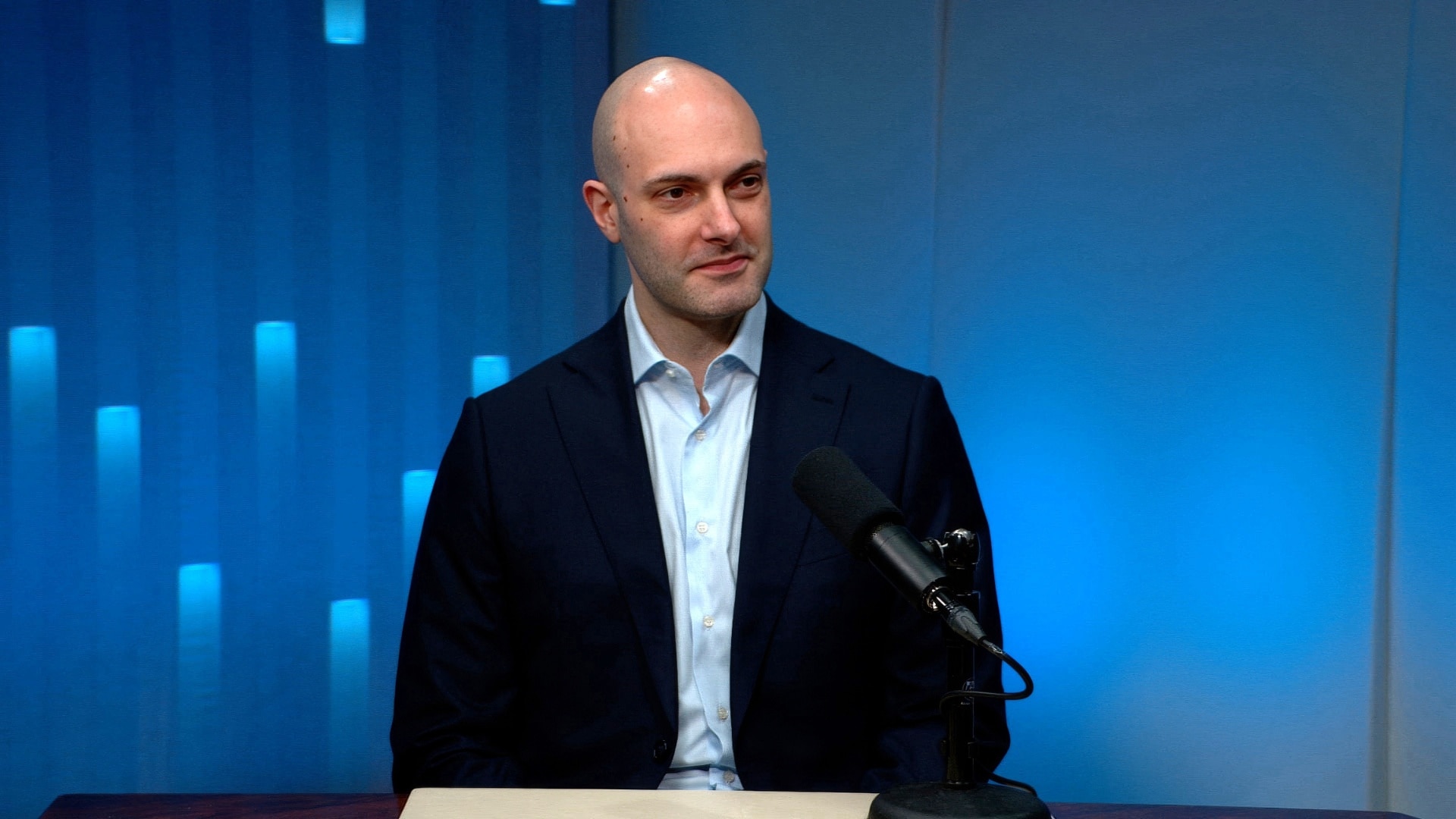
IPO activity has been on the rise in 2026. What does that tell us about investor sentiment, and what impact could the IPO boom have on US equities going forward? Ben Snider, chief US equity strategist in Goldman Sachs Research, shares his views on whether the rise in public offerings is a sign of market strength or a warning that the market is at its peak.
Transcript:
Allison Nathan: The IPO market is booming again. But is the surge in activity a sign of market strength or a warning that the market is at its peak? I'm Allison Nathan, and this is Goldman Sachs Exchanges. Today, I'm sitting down with my colleague in Goldman Sachs Research, Ben Snider, Chief US Equity Strategist. Ben, welcome back to Exchanges.
Ben Snider: Good to be with you.
Allison Nathan: So Ben, let's get into it. I know you're getting lots of questions about this topic. We've obviously seen years of muted issuance, and that was a topic for quite some time, but IPO activity has clearly accelerated. So just give us the context. Put some numbers on it for us. How much growth have we seen?
Ben Snider: We're just about halfway through the calendar year, and so far, we've seen just shy of 50 US IPOs. That's about double what we saw at this point last year, and it's the largest number of deals at this point in the calendar year since 2021, which was one of the largest IPO years on record. So we are definitely seeing a recovery.
What's notable though is that the size of the deals on average has been very large, and so in dollar terms, we're already basically tied with 2021 for a record year of about $120 billion in issuance.
Allison Nathan: Right. So number of deals is up tremendously, as is the size of those deals, so pretty impressive stuff we're seeing.
What's driving this activity? Talk us through that.
Ben Snider: So one, as you noted, is we're recovering from a four-year stretch of very muted activity. We had an IPO boom in 2021, valuations were very elevated. We had the sharpest Fed hiking cycle on record, and that led to a few years of recovering valuations.
And so to some extent, what's happening is just a normal recovery. But on top of that, we have, of course, some very large companies that are coming to market, and we have this immense desire for capital to help fund the AI boom. And putting all that together is the reason we're seeing such a strong acceleration in deal volume.
Allison Nathan: But it's been concentrated, I don't want to put words in your mouth, but it's been concentrated in certain sectors. Obviously, technology, the AI-related theme, is it as narrow as I think it is, in terms of that sector?
Ben Snider: In number of deals, we've seen pretty diverse array.
There's been healthcare deals, there's been deals in the industrial space. But in dollar terms, you're right to point to AI as the key driver.
Allison Nathan: And so if we think about the AI narrative and how much momentum it's had, if that momentum cools, what do you think happens to the IPO pipeline?
Ben Snider: Well, to some extent, a healthy market environment is a requirement for IPO activity.
And we've built a tool we call the IPO Barometer. We view it as a macro indicator of how conducive the environment is for IPO activity. That combines things like interest rates, CEO confidence, equity valuations. Today, all those signals are pretty healthy. If the long-term average of the barometer is about 100, today we're at 140, which is not as high as we got in 2021, but otherwise at the top of the range.
And if AI were to deteriorate, probably a lot of those indicators would deteriorate as well.
Allison Nathan: So, IPO activity really depends a lot on the macro conditions, the backdrop, but does the activity itself share anything in particular about sentiment in the market?
Ben Snider: It's definitely an indication of positive sentiment, both on the corporate side, the, the sense that business activity is good and there's a desire to use the capital that will be raised through IPOs, and in terms of investor sentiment, which you see broadly in equity valuations.
The real concern from investors is, is this indicative of a kind of euphoric environment that marks the peak of bubbles? It's not lost on clients that we also saw a very sharp increase in IPO activity, for example, in the late 1990s, or as I mentioned earlier, in 2021.
Allison Nathan: Right. So do you see a lot of similarities or are there differences that we should be focused on as well?
Ben Snider: There's some similarities. Equity valuations are very high, not quite as high as in 2021 or 2000, but they're very high. Investor confidence is clearly elevated. And of course, there's the backdrop of technological change and potential new area to invest in. Those are the similarities. I think the key contrast is something we alluded to a little earlier.
You know, if you look at the 25-year average, there's about 100 deals per year, so we're tracking pretty close to that average. In 2021, there were over 250 IPOs. In 1999, almost 400. So although the dollar volume is, is quite elevated, although we're seeing an acceleration in activity, to me it still looks like we're a far cry from that level of euphoric sentiment that we saw in those episodes.
Allison Nathan: Right. Okay. So that's, that's a comforting message you're giving us. When we think about this issuance, it's obviously happening against a backdrop of a very strong equity market broadly. I mean, there's been some volatility, but we're basically at or very close to all-time highs in the major US equity indices.
So what does the additional supply of shares mean for that overall strength in the equity market?
Ben Snider: This is probably the biggest concern we hear in our conversations with investors, whether it's institutional investors, corporates. It's amazing, actually, more than AI, more than the macro environment today, this is the fear that investors have that that supply is going to overwhelm the market.
And I think there are a few reasons not to worry. First, as I mentioned earlier, the number of deals is, is really not exceptional, although the magnitude of dollar issuance is quite large.
Second is, of course, markets get larger over time. And so although we're forecasting a record magnitude of issuance, about $700 billion this year if you combine IPOs and follow-ons, that scales to just about 1% of the equity market. That's actually lower than the long-term average. It's roughly in line with the environment from 2015 to 2019.
And then the third reason is that corporate demand is still quite elevated. If you look at buybacks, they're going to exceed a trillion dollars this year, which means even before we think about retail investors or hedge funds or mutual funds, corporate demand for shares is going to outweigh corporate supply of shares.
Allison Nathan: Right. That's actually a very interesting point you make. I mean, people don't think about that demand side as much in this context. But do you see an inflection point coming though at some point? You know, will you see that tip and demand less than supply?
Ben Snider: So admittedly, the math does get harder in 2027.
Part of the reason that, in our view, the demand will outweigh the supply this year is that a lot of these IPOs are coming public with relatively small floats. They're issuing relatively small shares of the company when they first launch. But over time, more shares will come to market, investor lock-ups will expire, and that suggests that potentially there will be a lot more supply as we look into 2027 and beyond.
And of course, there are a lot of uncertainties between here and there, but it does become a more challenging outlook.
Allison Nathan: So given that, you know, talk to us about the broader outlook you have for later this year and into 2027 for the US equity market.
Ben Snider: We could spend a whole podcast talking about this, but the medium term outlook is similar to what we've seen recently, which is a backdrop of very healthy earnings growth powering the market higher.
To give you some numbers, the S&P 500 is up about 10% year to date. Over that same period, forward earnings are up about 17%. That means P/E multiples are actually lower today than they were at the start of the year. Earnings have done all of the driving, and our expectation is that will continue. Of course, as we discussed, there are a lot of uncertainties, not just IPOs, geopolitics, AI, so I do think we'll see continued volatility in the market, but we also think the bull trend should continue.
Allison Nathan: We are hearing a lot about equity volatility, but again, when I look at my screen, we're mostly near record highs.
So is it a volatile equity market today really?
Ben Snider: You're getting at a really interesting disconnect, which is if you look at the index level, the market has not been that volatile. But what's happened is the combination of extremely high volatility at the individual stock level and very low correlations, that is the various stocks moving in different directions.
And so that means the index has not been that erratic, but stocks have been. And when you look at investor leverage, whether it's margin debt, hedge fund leverage, or the increase in assets of leveraged ETFs, all of that contributes to the view that we're going to see more volatility going forward.
Allison Nathan: Right, interesting. So you have a pretty optimistic outlook for earnings. You have, but there's going to be volatility. What are you telling investors right now?
Ben Snider: The message to investors depends on the investment horizon, right? For the hedge funds who are trying to trade the short term, volatility becomes much more important than, for example, a long-term investor.
But my message to almost everyone is to keep an eye on earnings and really highlight that that is the strength that's driving the market.
Allison Nathan: Right. And as long as the economic growth that we expect continues, we would expect earnings to hold up, but there's a lot of uncertainty, as you say.
Ben Snider: That's right.
Allison Nathan: Thanks so much for joining us, Ben.
Ben Snider: Thank you.
Allison Nathan: This episode of Goldman Sachs Exchanges was recorded on Monday, June 22nd, 2026. I'm Allison Nathan. Thanks for listening
Recorded on June 22, 2026.
The opinions and views expressed herein are as of the date of publication, subject to change without notice, and may not necessarily reflect the institutional views of Goldman Sachs or its affiliates. The material provided is intended for informational purposes only, and does not constitute investment advice, a recommendation from any Goldman Sachs entity to take any particular action, or an offer or solicitation to purchase or sell any securities or financial products. This material may contain forward-looking statements. Past performance is not indicative of future results. Neither Goldman Sachs nor any of its affiliates make any representations or warranties, express or implied, as to the accuracy or completeness of the statements or information contained herein and disclaim any liability whatsoever for reliance on such information for any purpose. Each name of a third-party organization mentioned is the property of the company to which it relates, is used here strictly for informational and identification purposes only and is not used to imply any ownership or license rights between any such company and Goldman Sachs.
A transcript is provided for convenience and may differ from the original video or audio content. Goldman Sachs is not responsible for any errors in the transcript. This material should not be copied, distributed, published, or reproduced in whole or in part or disclosed by any recipient to any other person without the express written consent of Goldman Sachs.
Disclosures applicable to research with respect to issuers, if any, mentioned herein are available through your Goldman Sachs representative or at http://www.gs.com/research/hedge.html
Goldman Sachs does not endorse any candidate or any political party.
Subscribe to Briefings
Our weekly newsletter delivers the latest insights on economic forces shaping markets—from Goldman Sachs leaders, economists, and investors around the world.
You can unsubscribe at any time. For information about how your personal data will be used, visit Privacy Information and Resources.