

Talks at GS
Caitlin Clark on Navigating Pressure and the Future of the WNBA
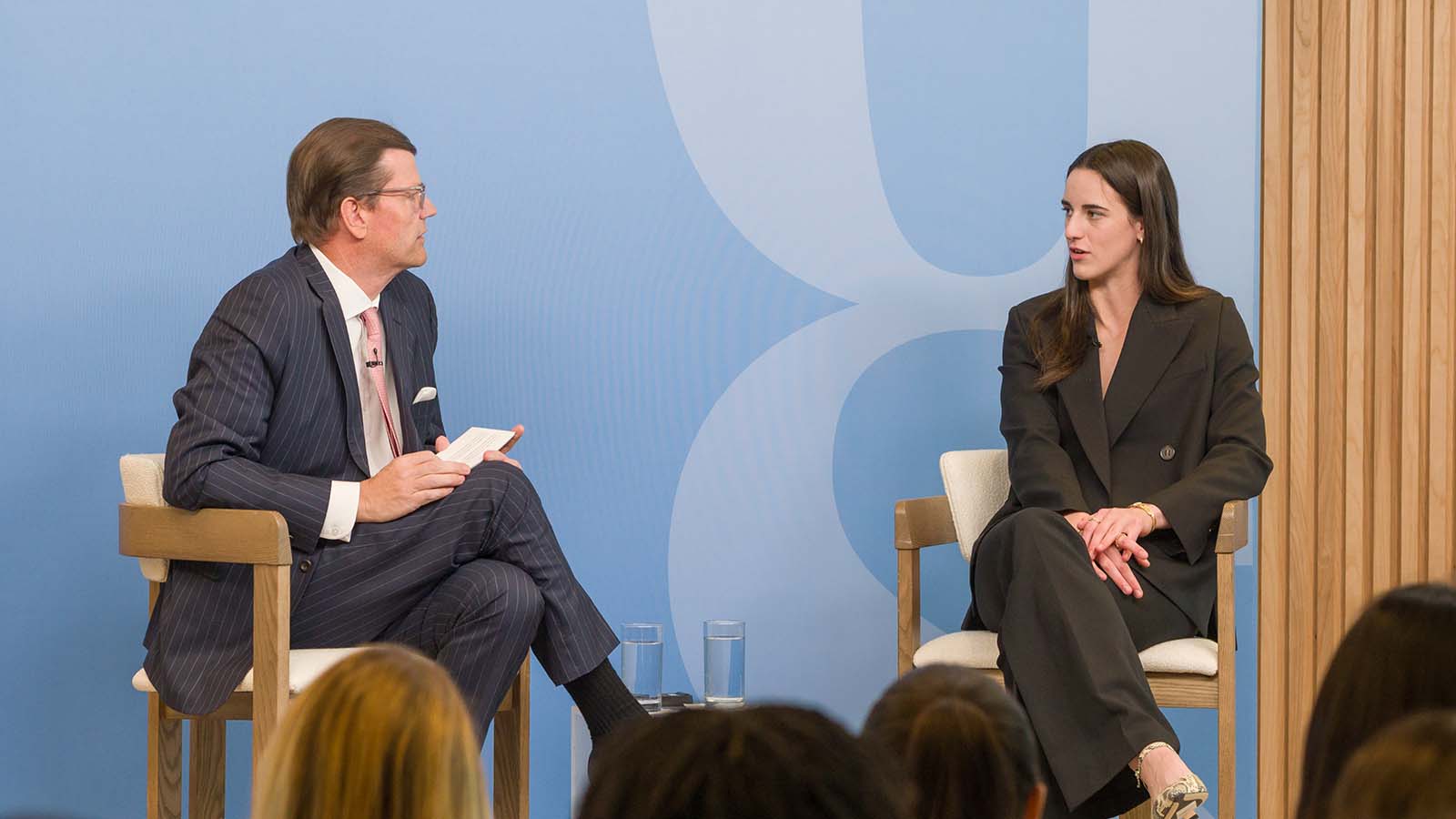
Caitlin Clark has become a sports and cultural icon, but her success is rooted in a grounded upbringing and a relentless focus on basketball fundamentals. She joins John Mallory, global co-head of Wealth Management, to discuss insights on her early love of the game, the transition from college to the pros, what last season’s injuries taught her about leadership, and the future of the WNBA amid global expansion.
Transcript:
Caitlin Clark: The person that you see in an interview, the person you see on stage is the person you’re going to get. I’m not putting on a face for anybody. And that’s how I was always raised. And I feel like that’s kind of gotten me where I am today.
[MUSIC INTRO]
John Mallory: Caitlin needs no real formal introduction. It's fair to say that she's become a bit of an icon in the sports world. And really, on the cultural level. And it goes far beyond everything you've been able to accomplish on the court, right? And so, we've got the whole career at the University of Iowa. My favorite stat is the all-time scoring leader, men or women, in NCAA history.
Caitlin Clark: Thanks.
John Mallory: Number one draft pick in the WNBA draft. Rookie of the year, Indiana Fever. Last year, some injuries made it a little bit tougher. And we're going to get to all of that. But I think what I'd love to do is just dial it back for a second and just start with a little bit about you just growing up. And what basketball meant to you when you were a kid before anybody knew who you were and how you kind of got involved in the first place.
Caitlin Clark: Growing up I had an older brother and he played basketball. My dad was his basketball coach. So, like some my first memories of basketball were, honestly, just going to his practices. Like I wanted to do whatever he did. I wanted to be around the game. I always kind of had a passion for it.
I first started playing with the boys because my dad couldn't really find a league for me to play in where I was growing up. So, that's just what I did. I never, like, thought in my head, “oh, I should be playing like with the girls. Like, it was just basketball. And I loved it. And then eventually, I switched to playing with the girls.”
But honestly, I give a lot of credit to my older brother and, really, my dad who was my first coach as the people that really inspired me to play basketball and really to love it and want to work at it more than anything.
John Mallory: Was there ever a moment where you realized how good you really are?
Caitlin Clark: I mean, I think as a kid you're like pretty naive. So, you don't always, like, realize it. It's like you kind of just love the sport and you love getting to go do it.
The first time I probably realized, like, maybe it was a little different for myself was like sixth grade when colleges started watching me because I was playing two grades up at the time. Which is pretty messed up. Like, no sixth grader should be going through that. And my parents did a great job of, like, guarding me. Like that wasn't a thing until really like my sophomore year of high school.
So, I would say like kind of around middle school I was like, oh, like maybe I can like really have a future in this. And like, I really wanted to be really good at it. So, I just kept working at it.
John Mallory: How did your parents try to shield you from all of that? Because that's a real parenting challenge.
Caitlin Clark: Yeah, they would like tell my older brother, like, when we got home from school, like, "You need to go get the mail first" because like colleges were sending me letters and stuff and text and call my dad. But like, they never like told me about any of that type of stuff. They just wanted me to enjoy my childhood. And honestly, like just enjoy recess with my friends in seventh grade and things like that.
But, you know, growing up my parents always instilled, basketball is something you got to do because you’re a good student, you’re a good person. Like there was multiple times where, you know, I wasn’t allowed to play in games because I got in a fight with my brothers.
My punishment as a kid wasn’t like getting my iPad taken away or something. It was like, I wasn’t allowed to go to the high school basketball games on Friday night. I think more than anything, my parents just kind of kept me grounded and humble. And that’s just how I was raised.
John Mallory: That's fantastic. Talk about a little bit the transition from college to the WNBA. And so, obviously, the level of play is elevated. But there are other aspects to it. Different kinds of pressures. Different cadence to the season, all that kind of stuff. Talk about what was the hardest in making that transition.
Caitlin Clark: Oh, I mean, there were a lot of really hard things. We played in the National Championship my senior year. And then I literally went home for like two days. And then, like, I really never went back to Iowa City. Like, I graduated and, like, got my degree, never walked because I was playing professional basketball. Like, I was still finishing classes during playing my first WNBA games. So, it's a very different dynamic than really any other professional sports.
Like, you know, the NFL draft you have a couple months to train. And then you get drafted. And then you have a few more months till you play your first game. It's not like that.
So, in a way, like, you're almost kind of thankful for it because you don't, like, have time to like process everything. But you're just like throw into the fire.
It's hard, like, learning a new coach. Learning a new system. Living in a new city. Learning new teammates. You know? You have to all kind of bond and work well together and gel together. And, you know, kind of after our first ten games we kind of figured it out. We made it back to the playoffs for the first time since 2016. So, it was like the longest drought in WNBA history that a team hadn't been to the playoffs. So, we did all right.
John Mallory: I mean, the game itself is the same at some level, just elevated. But the rest of the circumstances around you are all different.
Caitlin Clark: Yeah.
John Mallory: Yeah. And that's got to be tough. So you are known for your elite scoring plus elite playmaking. What are your personal non-negotiable checkpoints? And how do you self correct when fatigue or pressure shows up midgame?
Caitlin Clark: I think for myself, and there's always been pressure, especially over the course of the last four years, but I like always try to remind myself about the work that I've put in. Like, I know I'm prepared for these moments. And also, you look at the biggest, the best basketball players there've ever been, you know, they've had times where they've really struggled. And there are going to be slumps you go through. There are going to be days that are really hard. That's just reality of the sport you play. You're not going to be perfect every single day.
So, I think just reminding myself of that. Obviously, it's easier said than done. I get pretty fired up on the court, especially when I'm not playing very well. I think, additionally, like, relying on the teammates you have. you know? I think that's why I love basketball. It's a team sport. I think that's probably what I rely on the most when things aren't really going my way or--
John Mallory: But do you adapt? Like, is there a night that you're out there and you say, "Well, my legs just aren't really there today and my shot's off and I'm actually going to think differently about how to approach the game"? Or is it not like that?
Caitlin Clark: Well, I always think every shot's going in. So, maybe that's like a poison. Maybe I should probably, like, pass a little bit more. But there are always things you can do, even if you're not scoring. You know? The attention you draw or the way you can get your teammates open. Like, there are always other things you can contribute. And it's certainly easier said than done. But I like to think I keep shooting too. I'm not going to stop.
John Mallory: You're not going to stop shooting. Good. Looking at the fundamentals of the game, ball handling, footwork, passing, defense, which of those become most expensive to neglect at the pro level and why?
Caitlin Clark: I think that's probably one of the biggest differences when you get to the professional level is everyone's good. You have to show up. Every single player that's on the floor. Really all of those things, like you can't lack in one area. I mean, that's really tough to pick. I'd probably go with defense. And obviously, that's probably like an area that I've had to improve the most since becoming a professional. You have to be able to guard everybody on the floor.
People always, like, try to hate on my defense. So, it's just like, putting my mind to it.
John Mallory: When you're operating at this level, what are the skills you continue to work on or take that extra time in practice to focus on? How do you think about that?
Caitlin Clark: I think if you, like, go and watch any professional basketball player workout, like they always start with the fundamentals. Like, it's form shooting. It's the same thing I did when I first started playing basketball is you start with the simple things. I think, like, ball handling is a really lost art. I always tell, like, kids, be able to dribble. Be able to pass. Like everybody's so worried about, like, shooting threes. Which is probably, you know, Steph Curry's fault. It's not my fault. But everybody wants to be able to do that.
But I think it's like all the little things that kind of get lost. And just doing the little things can get you a long way. Because it's not something that people really want to spend time on anymore.
John Mallory: So, let's talk though a little bit about last season because there were challenges. There were injuries. A couple of different injuries along the way and some recurring injuries and that kind of thing. What was like that? And I mean, how have you thought about trying to get healthy?
Caitlin Clark: Yeah. Well, it's certainly not anything I've ever been through before. That was, like, my claim to fame is like I was always healthy. I didn't miss a single game in college. I would play, like, 40 minutes a night. And then going into the training camp, I kind of hurt my quad at the beginning of training camp. And I really like never got back to 100 percent health after that and dealt with some other injuries.
Looking back now, I think it's going to be something that's going to be really beneficial for me. When you become a professional athlete, like this is like what makes you money. So, you have to be able to take care of it the best you can. And I probably didn't always prioritize that. I always thought, like, oh, I can just show up to the gym. I'd like tie my shoes and I'd be ready to go. And it doesn't really always work like that. So, I think that was a good learning lesson.
And then like also just like learning to be a really good teammate. Like you sit on the bench, and you get to watch the game kind of with a little bit of a different perspective because you're obviously competitive and want to win. But it's a little different when you don't get to put the uniform on and, like, actually be on the court.
But it'll tell you, it definitely sucks. The thing that you don't always realize until you get hurt is like how isolating it is. Like, you're in there more than anyone trying to get healthy. Like you're in the training room before practice, during practice, after practice doing anything you can to get back on the court. And it's hard, like, getting to watch people do what you love. Like, you want to be out there doing that. So, I think it taught me, like, no matter like if I have a teammate that's hurt, like in the rest of my career I'll always be the person to check on them because it really is an isolating thing. And not anything anybody ever wants to go through.
John Mallory: You mentioned your relationship with the teammates and maybe how that evolved a bit through the injury. You're naturally going to be a leader on any team that you're on. How do you think about your leadership style?
Caitlin Clark: Well, I think certainly before I was hurt, I was always the kind of lead by example person. Like, I was going to be in there working more than anybody. I mean, you get hurt, that's like just kind of hard. Like you're not on the court. Like, when you're the point guard, like you're the voice everybody listens to. And I think for myself it was like being really intentional about the conversations and relationships I have with my teammates. Like, I feel like it almost will probably benefit me more in the long run of, like, having those little moments where you can like really understand how your teammates operate. Obviously, when like you're in the heat of battle, it's so much different than when you're not and you're just in the locker room hanging out.
So, just getting to watch from that perspective, I think, was, you know, a really helpful and cool thing. And just like, at the end of the day being their biggest fan. Throughout my career, everybody has pretty much been my biggest fan. So, it was kind of fun to like get to do that for them. And they did a tremendous job. And I wasn't the only one hurt all year. Like, we were dealt a bunch of injuries to a lot of players we had. So, it was impressive that we were one game away of still reaching the finals.
John Mallory: That's pretty exciting. I want to ask you just about being sort of an athlete and a cultural leader and how much of an imperative you feel. We sort of put athletes on pedestals. They are completely elite at doing one thing. And then sometimes culturally people look to them and expect them to do lots of other things at that same level, which doesn't always seem totally fair to me. And you bear that maybe even more than most in sports given the rise of the WNBA and women's sports in general. So, could you just talk about how you think about that and your responsibilities a little bit?
Caitlin Clark: The person that you see in an interview, the person you see on stage is the person you're going to get when I'm in my green room right before this. Like, it's all the same. Like, I'm not putting on a face for anybody. And that's how I was always raised. And I feel like that's kind of gotten me where I am today.
So, that's sometimes hard about athletes. It's like you get this perception of, like, who you think they really are. And sometimes they are that way. And statement they aren't. But hopefully, like any young kid that meets me, like I hope they truly feel like I am the person that they look up to. And I can be a hero for them. Like, I know that's not always the case. It's like somebody meets their hero and it isn't who they really thought. And that can be, like, a disappointing and hard thing. So, you know, obviously I try to make as much time as I can for people, especially young kids.
Like, I'll sign before every game as much as I can. And that ten seconds of an interaction with a young individual, I think can, like, really benefit their life because I remember the idols that I like grew up watching. Like, I remember Maya Moore was my favorite player growing up. And I literally, like, just ran up and hugged her as a kid. And that was probably like one of my, like, best childhood memories. And that was like really impactful on my life. And I think it just really shows like what kind of impact I can have on the younger generation.
John Mallory: You know our organization pretty well. And you know that teamwork is sort of a big thing that we focus on here. And there really is sort of a deeply ingrained view that the whole is worth more than the sum of the parts, you know, if we do it correctly. How much of that is really important in the context of the teams that you've been on? Meaning the chemistry, the fact that everybody gets along versus just having a whole bunch of really good athletes, but the fact that people really trust each other, those kinds of things. Can you just talk about that?
Caitlin Clark: I think it's very different when you get to the professional world. Obviously, like, everybody's really good. So, it's a little different. But like, when I was in college, like, you looked at our roster, it wasn't like players that were highly recruited. Like, it was a team that, like, really believed we could accomplish something. We hadn't been to the Final Four since 1992. But the only people that really believed that we could get there are first were me and Coach Bluder. And then, eventually like when you get a collective unit to believe like you can accomplish something and everybody buys into their role, that's what allowed us to go to back-to-back National Championship games. We didn't win either of them.
But people always try to say, like, aren't you mad like you never won a National? I mean, like, yes. But it doesn't keep me up at night. Because those are my best friends. And a lot of them don't even play basketball anymore. And you know, those times were like really all they had. And I think the culture that we had got us way further than any sort of skill we had. And then, I think that's honestly like what I'm kind of trying to bring to the professional world.
I think a lot of my teammates now on the Fever would tell you, like, the chemistry that we have and the bond that we have has got us pretty far. Like, you even look, last year, you know, we were signing players that hadn't played in the League in multiple years. And then we were still able to make it to the semifinals in game five and almost reach the Finals. And I think that just speaks to the type of people that we had on our roster. Like, it's more so the people than it is the type of skill you have. And being able to put that together, you have to be really selfless.
John Mallory: There are some interesting individual rivalries that have kind of come up in the sport. And this has been true in all sports for years. Is that good for the sport? Is that how you sort of think about it?
Caitlin Clark: There are always going to be rivals. And I think that's a really positive thing. I think the best thing you can do is, like, let it occur naturally. I think at times, like, that's kind of the problem with the WNBA is the media like wants to, like, create something that's probably not 110 percent real. And you don't always see that in, like, men's sports. That's what makes sports interesting. That's why people want to tune in. That's what keeps people coming back for more.
I wasn't allowed to own anything orange because that's the color of my rival high school. Rivalries just get up a little extra. And I think it's a good thing, especially when it's organic.
John Mallory: When you think about, like, sort of ten years from now, what are your hopes and aspirations for the League?
Caitlin Clark: I think that's like a really tough question to answer because I feel like, you know, if you probably would have asked people about the WNBA ten years ago, maybe they wouldn't believe that we would be in this moment right now. So, you know, hopefully we're expanding the game globally, especially like what you've been able to see them do with the NBA, which we're doing.
I think be at 18 teams by like 2028, which is a really big deal to allow a lot more women opportunities to play professional basketball. Really the sky's the limit. I think you've seen what we've been able to do over the course of the last two years and the amount of people that have watched and continue to show up. And I think the college game, especially, is in a really great place. And the amount of young talent there is, like, that's going to continue to come into the League, it's going to be a really cool thing to watch as well.
John Mallory: So, the Olympics is a backdrop right now and everything else. It must be super fun, and it must be a real source of pride to get to be a part of all that.
Caitlin Clark: Yeah.
John Mallory: But you'll have a new coach, right? What are the other dynamics that will be at work in terms of that?
Caitlin Clark: Yeah, well, so this is my first time with the Senior National Team. I've played with the Junior National Team three times. Didn't play in the last Olympics. But this is, like, they kind of call it like a cycle or a quad. It's like the four years that you get ready to play in the Olympics.
The team we took to the last Olympics was kind of an older team. And by the time four years pass, like, it's going to be a bit of a newer crew. So, you kind of have to find a balance of the young team, but also the, you know, players that have been there before and kind of understand what it takes to win. And also, I would say like international talent has gotten a lot better. And a lot of those teams, like, spend a lot of time practicing together, training together. Like, you don't always get that in the US because, you know, you're playing in the WNBA. You're playing in the NBA. Like, you don't get that time spent together. So, it will certainly be interesting. I mean, it's still two and a half years away. But I'd say, like, the closest thing you're going to get is the World Cup. But the roster will probably vary a little bit. And our head coach is the Duke coach currently. And then our coach for the Fever is actually an assistant. So, that will be fun to be able to have her there too.
It's quite the journey of, like, the three-year process of, like, finally building up to the Olympics. And then they really don't name the Olympic roster until, like, a few months before. It's a long journey and process to be able to make that team. But hopefully we're there. So.
John Mallory: Super exciting. And I know everybody is super appreciative of you taking the time with us. And we wish you so much luck in the season ahead.
Caitlin Clark: Well thanks, everybody. It was great to be here.
The opinions and views expressed herein are as of the date of publication, subject to change without notice, and may not necessarily reflect the institutional views of Goldman Sachs or its affiliates. The material provided is intended for informational purposes only, and does not constitute investment advice, a recommendation from any Goldman Sachs entity to take any particular action, or an offer or solicitation to purchase or sell any securities or financial products. This material may contain forward-looking statements. Past performance is not indicative of future results. Neither Goldman Sachs nor any of its affiliates make any representations or warranties, express or implied, as to the accuracy or completeness of the statements or information contained herein and disclaim any liability whatsoever for reliance on such information for any purpose. Each name of a third-party organization mentioned is the property of the company to which it relates, is used here strictly for informational and identification purposes only and is not used to imply any ownership or license rights between any such company and Goldman Sachs.
A transcript is provided for convenience and may differ from the original video or audio content. Goldman Sachs is not responsible for any errors in the transcript. This material should not be copied, distributed, published, or reproduced in whole or in part or disclosed by any recipient to any other person without the express written consent of Goldman Sachs. Disclosures applicable to research with respect to issuers, if any, mentioned herein are available through your Goldman Sachs representative or at http://www.gs.com/research/hedge.html
Subscribe to Briefings
Our weekly newsletter delivers the latest insights on economic forces shaping markets—from Goldman Sachs leaders, economists, and investors around the world.
You can unsubscribe at any time. For information about how your personal data will be used, visit Privacy Information and Resources.