
Talks at GS
Carlos Cordeiro on the Legacy of the FIFA World Cup 2026
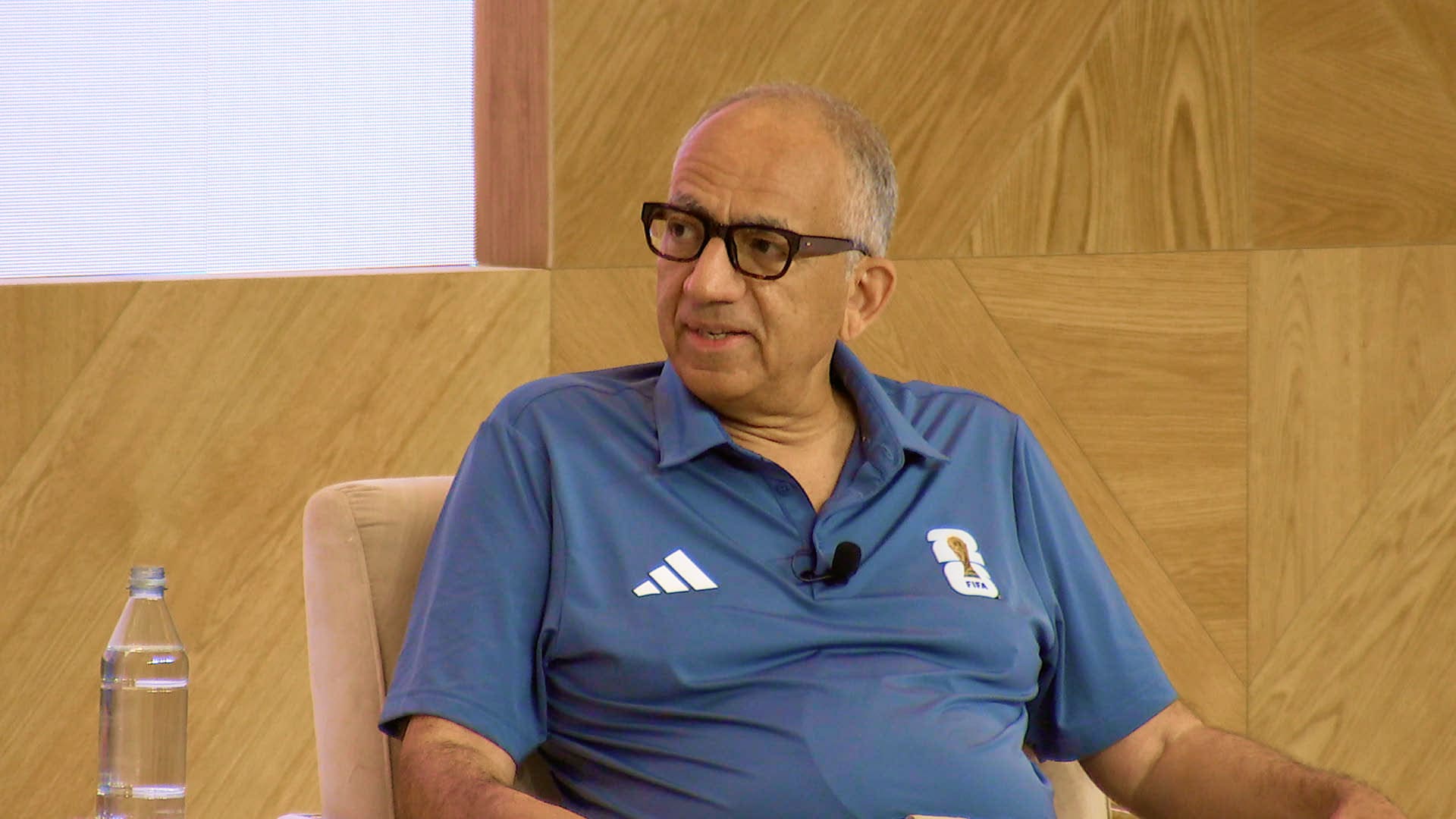
The 2026 FIFA World Cup is set to become the largest and most inclusive tournament in the sport's history, spanning 104 soccer matches across the US, Canada, and Mexico. Carlos Cordeiro, senior advisor to the FIFA president, senior advisor to the White House Task Force on the FIFA World Cup 2026, and Goldman Sachs alum, joins Gene Sykes, co-chair of Goldman Sachs M&A and co-chair of the Global Technology, Media, and Telecom Group, to discuss the strategy behind the 2026 bid, the operational complexity of hosting 48 teams and millions of fans across three countries, and the impact of the World Cup on the future of soccer in the US.
Transcript:
Carlos Cordeiro: FIFA has never done joint bids before, let alone three countries. But at the end of the day, I think the world saw the bid as a united effort to bring three countries together.
[MUSIC INTRO]
Gene Sykes: I'm thrilled to be joined today by Carlos Cordeiro. After a distinguished 30-year career in international finance, including more than a decade as a Goldman Sachs partner and vice chairman, Carlos transitioned to leading the world's most popular sport. Most notably, Carlos co-chaired the historic United 2026 bid by successfully securing the hosting rights for the 2026 FIFA World Cup.
His vision has manifested into the largest sporting event in history, featuring 48 teams from around the world, 104 matches across the United States, Canada, and Mexico. Please welcome Carlos Cordeiro.
Looking back to the 2018 bid, how does the reality of the World Cup today compare to what you expected back in 2018?
Carlos Cordeiro: Gene, thank you very much for having me. We're super excited. It's been years of preparation. I can't ever understate or overstate that. But perhaps I might just go back a little bit because the first bid I was involved with was just before 2010, when the US bid for the 2022 World Cup, which you all know went to Qatar.
And we thought we had the best, the biggest bid then but we lost, and that came as a shock. But I think we took some important lessons from that
So, we stepped back. We said publicly we'd never bid again. This was 2010, 2011, 2012. FIFA went through a very significant crisis around 2015. Governance, leadership. But that brought change. And with that change, you know, we reconsidered. Reforms were put in place in 2016, and we decided to bid in 2017.
And we felt reasonably good, you know, that at least the process would be fair. But even then, I'd say we were concerned about the position of the US and America in the world. And that's what led us to joining up with Canada and Mexico.
Mexico was actually bidding independently, so we had to bring them in. And we put in the first ever joint bid. FIFA's never done joint bids before, let alone three countries. And that itself was a monumental task. That all happened around 2017-2018 and we've gone through a lot in the last eight years.
And I would say until we won the vote in 2018, we were never sure that we were going to prevail. But at the end the of day, I think the world saw the bid as a united effort to bring three countries together. And that's what's about to happen.
Gene Sykes: So, people like to talk about the economic impact of something like the FIFA World Cup on the country. How do you think about measuring that? And how do you promote it so that people in the country say, "this is worth it"?
Carlos Cordeiro: So figures get bandied about in the tens of billions, but I think ultimately the impact to GDP here will be in the order of $20 billion. Perhaps a little bit more. Now that's a fraction of an economy that's $30 trillion, but even then, $20-$25 billion is larger than a third of the world's GDP, right? So, it's not insignificant.
I mean, these cities and little towns that are housing and hosting teams. The impact to those communities is massive. We're expecting 7-8 million tourists, despite the tougher regulations on the visa side. And all these people will travel around. They'll rent cars. They're going to fly, stay in hotels, shop, and so on. And so the impact will ripple through long after the World Cup has ended.
Looking at the economics perhaps from the FIFA side. We go in four-year cycles. We have one event, which is the men's World cup, that basically funds the next 47 months. This cycle, the revenue for us will be twice as what it was four years ago, so it's a significant jump, mostly because we're here in North America. We have larger stadiums. We have more tickets to sell.
We're probably going to hit something close to $14 billion, but against that we have significant expenses. We have the tournament expenses that are probably closing around $4 billion. Remember, we pay for everything. We renovate the stadiums. We put grass down, and not just any grass, the FIFA grass. We have to move teams in private charters. So you're moving 48 teams all at the same time. Obviously all the hosting aspects of that and all the employees and so on.
The way FIFA does things is much like the IOC, at the Olympics. There's one way of doing things, and there's no second standard. So it involves a massive number of people and costs, but everything FIFA generates, net of these expenses then goes back into sport. So maybe a third of the federations around the world depend on FIFA, 100% of their budgets. And I'm talking about development, academies, running national teams, training coaches. All of that expense is borne by FIFA. We are a not-for-profit, but we depend on this one tournament basically to keep us going for the next four years.
Gene Sykes: I'd like you to talk about the impact on the United States of hosting this tournament, both the impact in terms of the visibility and awareness and excitement about what we think of as soccer in the United States but futbol everywhere else in the world,
Carlos Cordeiro: I think you'll see this summer soccer taking over the country. And I think particularly if the US men's team does well and goes further into the tournament, people will start following it more so. But even now, I think soccer has grown dramatically, but there's more to grow at the professional level, at the amateur level.
And we think one of the greatest legacies from the tournament will be the next generation of kids who will be exposed to soccer perhaps for the first time.
So at a social, cultural, sporting side of things, I think this legacy of this tournament will be massive.
But there's another side to it as well. The hospitality side, the welcoming side I think will become more and more evident as communities open up, welcome not just the players but their millions of fans and followers, who will be with the team at every step of the way. That is very significant.
We have 211 broadcasters. We're expecting a TV audience, a cumulative TV audience around the world of six billion people.
Gene Sykes: Wow.
Carlos Cordeiro: 39 days, six billion people ain't bad, right? The Super Bowl, the one game has 125 million global, most of them in the US. The final of the World Cup will be closer to 2.5 billion.
Gene Sykes: Wow, amazing.
Carlos Cordeiro: Live. So reaching that audience, it's super important that they see another side to the US, that we are welcoming, we want them to come, and I think you'll see some of that.
Gene Sykes: Incredible. Well, that's sort of a double legacy. The legacy of better and more talented young players in the game so that we have a more competitive team over the long term. And then giving maybe a better and more friendly, more realistic face of what the American public means to the rest of the world.
Carlos Cordeiro: On the women's side, it's well known, right? We have been dominant now for 50 years. We've won more World Cups than any other nation.
Title IX opened the door to more financial resources at the university level, and soccer became the single largest beneficiary of Title IX for women. Long before there were women professional leagues, decades before, and clubs. And so the most talented women from around the world came to the United States to study and play soccer. Obviously, it benefited the Americans more than any other country, and that's where you've seen the results for that.
The men's has been very different. The 1994 World Cup, which was 32 years ago, gave birth to Major League Soccer. Unquestionably, that was one of the biggest legacies coming out of that World Cup. And the league started, in its way, slowly but it's now grown. It's watched all over the world.
Our national team players, up until maybe a cycle or two, say 10 years ago, were largely homegrown US professional players because they weren't quite ready to play in Europe. Today, the leadership of the core group of the team all play in Europe.
So the team now is a combination of European-based and US MLS players. I wouldn't have thought of that being possible 10 years ago, so clearly the progress is being made.
I think in 10, 15, 20 years, you'll see the Lionel Messis coming out of the US, not necessarily Europe, right? And I think that's what the dream is all about. We need to retain our best athletes in soccer, give them more opportunity, and soccer is expensive, as you know. And that's something I know the federation is very focused on, is providing better access, particularly to the underserved communities where so many of these great athletes come from.
Gene Sykes: Well, it's an interesting comment about Title IX in particular. Since the Rio Games in the summer of 2016, Team USA has had more women, and we've had more medalists who've been women. And that's been true for all of the Olympic and Paralympic Games since then. So, it's really a function of just how much we've invested in women's sports in this country through college athletics.
Carlos Cordeiro: How can you be the number one country in the world by any metric, right, and be number 20 in the world when it comes to futbol or to soccer? So we've got to change that, and that is ultimately the objective is to grow the game at all levels around the world but particularly here in the US where historically we have such great athletes in every other sport.
Gene Sykes: And the more that we give people the opportunity to play sports, compete in sports, learn to understand the values associated with sports, they will be both better citizens and they'll have more productive lives. And they'll be better Americans.
Let's pivot a bit to your career in finance and your time at Goldman Sachs. In 1994, you were instrumental in bringing the post-apartheid South Africa to the international capital markets for the first time. What was the experience like of advising a country in such a profound state of social and political transition?
Carlos Cordeiro: Goldman Sachs in 1990 in Europe was still primarily an institution focused on US clientele. We hadn't quite yet become a European firm, which we are now. So to think of going to South Africa and pitching this, it was sort of a very foreign thought, far from anyone's. But it so happened that when Bob Rubin, our co-chair senior partner, left to join the Clinton administration in 1992, he was asked by the then-transition government from South Africa to basically take in about a half a dozen of their smarter economists, give them some exposure to Goldman Sachs and to capital markets and so on, and I was the young guy at the time who was asked to basically look after these folks.
Well, they went back to South Africa having spent a great six weeks at Goldman Sachs, and they all ended up in incredibly important positions. So, when Goldman Sachs knocked on the door, "Can we be your advisor?" we had already an advantage.
So here was a country that is endowed with great resources. Yet people didn't know anything about it, right? And you were going from a regime that had been around for a long time to kind of an unknown with President Mandela. So they were very focused on, "Can you, Goldman Sachs, help reintroduce the country to the world?" And that's the role we played. We came in as an advisor. We positioned them.
The deal itself, the finance of the bond wasn't large. It was $500 million, upsized to $750. But getting that across the line, getting South Africa an investment-grade rating. I sat through three sessions with President Mandela and the ratings agencies, and he singlehandedly moved that needle. Seriously. He was about unifying the country, bringing people together, and providing for some continuity.
Anyhow, Goldman Sachs now has a huge presence in South Africa, as we have in other parts of the world. But that was a very defining moment for me personally but for the firm as well.
Gene Sykes: So with this experience in international finance with political leaders from very different countries, now you transition to international sport. Talk about the transition. What did you find to be surprising about international sport, the people in international sport, as opposed to international finance?
Carlos Cordeiro: When I came into US soccer, that was now 20 years ago, perfectly well managed but absent of any governance. A few people made all the decisions. No board committees. No audit committee. No focus on risk. So that to me was a bit of a shock. And not running insignificant budgets. Tens of millions of dollars.
So they had elements of management but lacking in infrastructure for governance. And I worked very hard to change that, and it's evolved since of course. But for the most part around the world, you don't see that. And I think that is why there's been so much noise around sports, where money gets lost.
So, in the current cycle, every federation, wherever you are, you get $8 million over four years, $2 million a year. Where does that money go? So, we have an incredible compliance effort that follows the trail of that money to make sure that that money goes into development. That will go up now because our budget has expanded, but we are trying to do everything we can through the international federation, which is what FIFA is, and its membership, to change that. And that is an ongoing process and will take time.
Gene Sykes: What's the key to developing trust among people from different countries, especially some people from countries that have had difficult relationships with the United States? How do they learn to trust you?
Carlos Cordeiro: Well, maybe I use the bid as the example, right? So, in 2018, we were bidding for this World Cup, and, I became president four months before the vote, all our intelligence suggested we weren't going to win this thing. Morocco was much further ahead.
And that's where the joint bid came in. It took the spotlight off the US and basically made us one of three.
Gene Sykes: But a lot of this comes back to personal trust in you.
Carlos Cordeiro: But promoting Canada and Mexico, how we positioned them was really critical. And then getting in front of all these associations. Remember, one country, one vote. So Germany, England, the big futbol powers had an equal vote to anyone in the Caribbean or in Africa. So, there's no Security Council that sort of makes things happen, like in the UN.
So we had to basically gain the trust and the confidence of these member associations around the world, and there's nothing better than doing that at a personal level. So, we had to travel extensively in those three or four months.
But at the end of the day, if you don't sit down with somebody and develop a personal relationship, it's hard to ask them to support you. And that's what it took.
But look, that's no different than how we operate and how we're trained to operate at Goldman Sachs, right? It's gaining access, trust, and then ultimately confidence in a relationship that translates into transactions over time. And very similarly in international sports. Different sorts of people but, at the end of the day, we're all human beings, and you've got to basically connect at that very personal level to gain trust.
Gene Sykes: So let me ask you the last question. You think about this World Cup. Without saying where the US team is going to end, do you have a personal favorite among the countries that are in the competition?
Carlos Cordeiro: I think there's a lot of discussion there. But, you know, only eight countries, Gene, in the 100-year history of World Cups, only eight countries ever won this. Mostly European and three from South America.
I think we're at a point now, whether it's at this World Cup or the next one, where you're going to see some unusual names appear. Unusual in the historical sense. But a country like Morocco has invested for decades in youth, developing their youth, went into the semi-finals. Surprise semi-finalists in Doha. I think you'll see people like Morocco, if not Morocco themselves, surprise us. And my hope is that the Americans will ultimately be in that final four, if not this time then onto the next one.
Gene Sykes: That's great. It's going to be an exciting six weeks. We'll look forward to it. Carlos Cordeiro, thank you for leadership.
Carlos Cordeiro: Thank you very much. Thank you.
This episode was recorded on June 8, 2026.
The opinions and views expressed herein are as of the date of publication, subject to change without notice, and may not necessarily reflect the institutional views of Goldman Sachs or its affiliates. The material provided is intended for informational purposes only, and does not constitute investment advice, a recommendation from any Goldman Sachs entity to take any particular action, or an offer or solicitation to purchase or sell any securities or financial products. This material may contain forward-looking statements. Past performance is not indicative of future results. Neither Goldman Sachs nor any of its affiliates make any representations or warranties, express or implied, as to the accuracy or completeness of the statements or information contained herein and disclaim any liability whatsoever for reliance on such information for any purpose. Each name of a third-party organization mentioned is the property of the company to which it relates, is used here strictly for informational and identification purposes only and is not used to imply any ownership or license rights between any such company and Goldman Sachs.
A transcript is provided for convenience and may differ from the original video or audio content. Goldman Sachs is not responsible for any errors in the transcript. This material should not be copied, distributed, published, or reproduced in whole or in part or disclosed by any recipient to any other person without the express written consent of Goldman Sachs.
Disclosures applicable to research with respect to issuers, if any, mentioned herein are available through your Goldman Sachs representative or at http://www.gs.com/research/hedge.html
Goldman Sachs does not endorse any candidate or any political party.
Subscribe to Briefings
Our weekly newsletter delivers the latest insights on economic forces shaping markets—from Goldman Sachs leaders, economists, and investors around the world.
You can unsubscribe at any time. For information about how your personal data will be used, visit Privacy Information and Resources.