

Talks at GS
Emma Grede on Building Iconic Brands and the Inspiration Behind 'Start With Yourself'
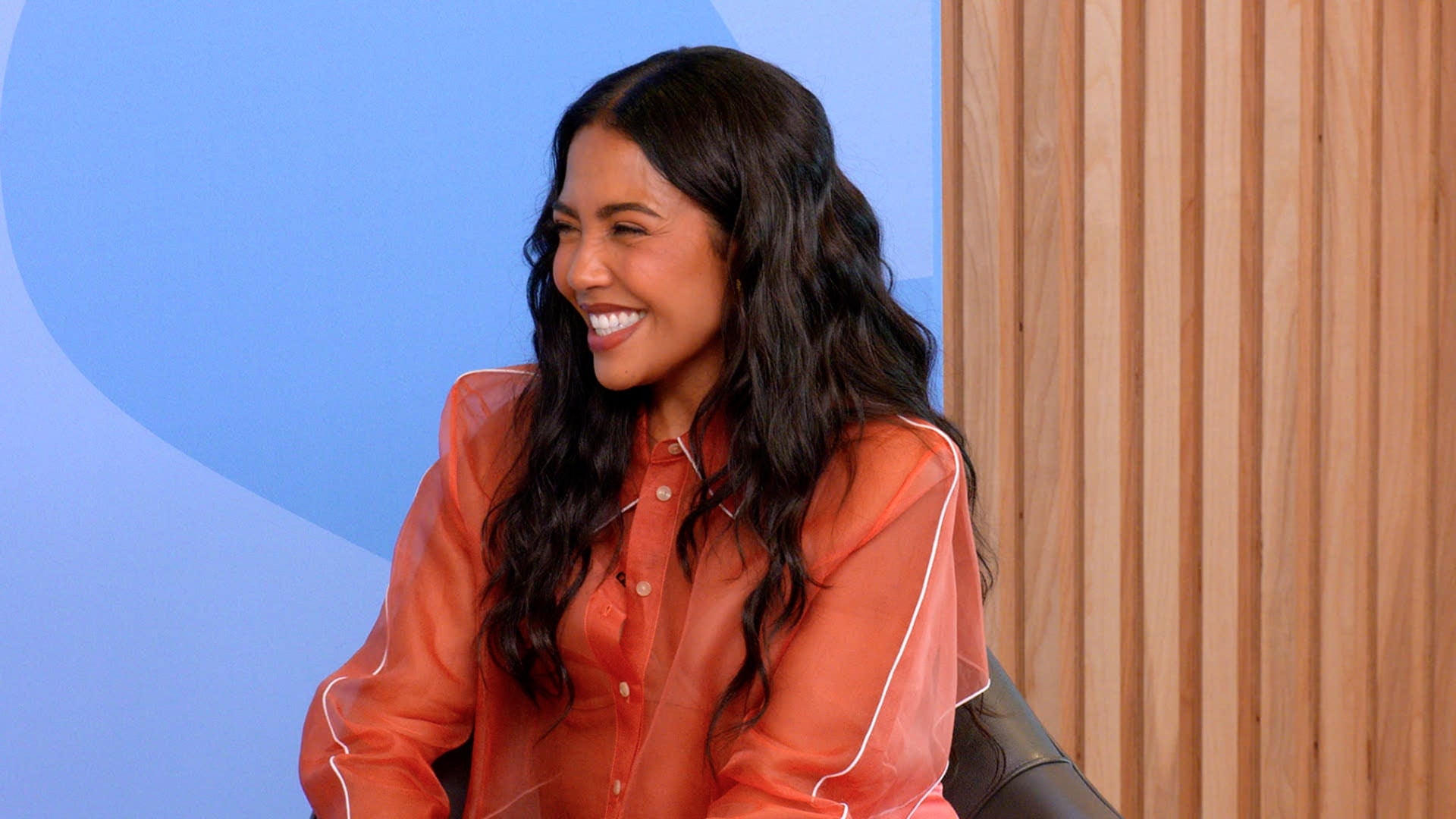
Emma Grede has redefined the modern consumer brand landscape, emerging as a global leader in fashion and lifestyle as the co-founder and CEO of Good American, founding partner of SKIMS and co-founder of Off Season. In a discussion with Kim Posnett, global co-head of Investment Banking at Goldman Sachs, Grede details her journey from East London to becoming one of America’s wealthiest self-made women. During the session, she shares insights from her new book, Start With Yourself, emphasizing the importance of financial fluency for women and explaining how a commitment to authenticity has fueled her success as a serial entrepreneur.
Transcript:
Emma Grede: This idea of being seen in the right place at the right time, taking the right photo, and putting that out into the world, like, that stuff doesn't work. The best use of your time is to be excellent at whatever you're doing, to be reliable, for people to be able to count on you, because that's how you build a network. That's what's going to get you closer to living a life of your dreams and having a career that you can be really, really proud of.
Kim Posnett: I am so excited to introduce my friend, the brilliant, the amazing, the beautiful Emma Grede. She's the host of a podcast, "Aspire with Emma Grede," the co-founder and CEO of Good American. She's a founder of Skims. She was the first female Black investor on Shark Tank. And now she's the author of her new book, Start with Yourself: A New Vision for Work & Life.
So Emma, thank you for being with us today.
Emma Grede: I'm so happy to be with you. I'm always so happy every time I get to speak to you.
Kim Posnett: I know we have such a good time.
Emma Grede: Every time.
Kim Posnett: So let's start at the beginning. You were born and raised in East London. You charted your own path at a fairly young age. Why did you fall in love with entrepreneurship?
Emma Grede: I think that's a great place to start because, you know, where I came from is such an important part of my story. You know, when you grow up in a place like East London, you were considered somebody of value if you were to come through on your word, if you always told the truth. If you didn't, there would be consequences. And when you think about, you know, business, what you have, what you lose, what comes and what goes, your reputation is something that you always have.
When you have a good reputation and you're raised like that, it really sets you up for success in such a way. I didn't actually know what it meant to be an entrepreneur. I grew up in a place where people went to work to pay their bills, and they probably worked in a place doing something that they didn't want to do.
And so there was never an idea about starting to something. I decided to start a business because I didn't think I was being paid what I was worth, and it was almost like a protest. But it's interesting when you think about the idea of entrepreneurialism because I was very entrepreneurial even within my corporate roles, you know? I was always putting my hand up. I was always somebody that leaned into new projects and new opportunities. So I really think about the idea of what it means to be an entrepreneur and how many ways we can apply that to our lives.
Kim Posnett: And how do you think about risk taking?
Emma Grede: Well, risk taking is something that is innate to me because, you know, when you don't have much, it's easy to take risks. Like, in my 20s I didn't have a mortgage, I didn't have any kids. There was nothing that was stopping me from taking risks. But it's interesting because it's like a muscle. Once you start doing it and you get good at it -- and I don't mean "good good and things work out." I mean, get good at taking a risk, it not working out, you failing, and just getting up again.
And what I like to think about, specifically for women, is separating the outcome from who you are. When you take a risk and it doesn't work out, it's often not about you, right? It's about a set of circumstances, and I think that's what allows me to kind of build resilience, bounce back, and come again because I know that the thing is the thing. And I'm just going to get up and have another try.
Kim Posnett: You've built these amazing businesses and brands, but the book is about a foundational operating system for life and work.
Emma Grede: Yes.
Kim Posnett: Why now is this book important for all of us to read?
Emma Grede: Right know, I feel like we are so bombarded in the media by messaging, and so much of it is manufactured. And what I started to think is that people would look at my Instagram and they would look at articles written about me and they would imagine that that picture was, like, me, glam, sitting at my desk and that the reality of my life is very different from what the picture of it is. And so I wanted to write something that would be an honest interpretation of what it takes to be successful.
I wanted to strip away the gloss and be honest about being a mother of four and the sacrifices that I have to make. To be honest about all the failures that I've had. To be honest about the difficulty that I had when it came to raising capital. I wanted to create something that was not a book for you just to read but a book that was to be used.
And also because there are all of these unwritten rules, specifically for women, that can really hold us back and keep us small. And I just thought this can't be the way. This can't be the prevailing wisdom. There's a lot of different ways to come into leadership. There's a lot of different ways to come into success, and I wanted to add my way to the collective wisdom that's out there.
Kim Posnett: Okay. In the book, you talk a lot about new thoughts to replace old thoughts, mold a more impactful mindset. And, you know, one of the most persistent old thoughts in leadership is this idea that, with enough optimization, we can it all without a cost. And so how do you evaluate the parts of your life that deserve 150% of you so you're all in and the parts of your life where you're not going to spend time? How do you think about that?
Emma Grede: Well, I think that we've been conditioned into this idea of constantly trying to seek this balance. And it's my point of view and my experience that there's just no such thing. There's been no moment where I've sat there and gone, "I found it. I'm in total balance now." My 20s was a dog. My 30s was a slog. And so far the 40s is like what? Like, what is happening?
But that's the reality, right? It's like you don't get an extraordinary result without extraordinary effort. The good news is that life comes in seasons, and there's moments where you have to be 150%, to your point. And there's other times where you have to lean out. Like, you are just about to have a baby, I'm thinking. That'll be a moment where you have to, like, wait a second before you're 150%. And that's the truth at being a woman, right?
These things, what happens to us, happens to us. We make our choices. But I think that women have been culturally conditioned to avoid the exact behaviors that lead to money, to power, to leadership opportunities, and that's what I want to get rid of. The idea that we have to be everything to all people, that we should be in this constant search for being, you know, a perfectionist, because experience tells me that not a lot of it is actually true.
The most important thing -- and I wish this for everybody -- is that you can hold a vision for yourself, for your work and your life. That's very, very different from manifestation. It's very different from creating a vision board. When you hold a vision for yourself, it's about what type of person do you want to be. What are your principles? What is your way of doing things? What do you want for your family? What type of things are important to you?
And when you have a very, very clear vision, you book your tradeoffs like that. You say yes to everything that gets your closer to your goals. Yes to everything that brings you closer to the vision of the type of life and work you want. And then you have to say no. And the trick of it is that some of the things you say no to are things that you actually want. They're things that would be fun. They're things that might be good in the moment. But if it's not all anchoring to the big thing that you want then that's the time that you say "no, thank you."
Kim Posnett: So for every decade of your life, have a vision statement. And then you work backwards towards that vision, as you just said, every single week. How do you think about back solving from the vision to, like, what you're doing on a Tuesday in the spring?
Emma Grede: This is my favorite question ever. I'm an operational person. Like, I only know how to be in the weeds and to do the thing. So here's how I do it. So I'm like, okay, what is the headline for this decade? And that helps you frame things, right? It's like, okay, this is going to be, like, my visionary decade. That is the, like, put your head down and work, you know? It's like whatever it is, but you're going to give it a frame. And then you're going to create the goals under that frame. Like, here are all the things that ladder up.
The trick of it is to break that down into a year, into your months, into your to-do list that week. Because life is so complex, it's so rich, there's so much to do, it has a way to drag you down into the minutiae that you have to be the person that can raise your head up and see the vision constantly. So once you get really granular, like, I put it on the Notes section of my phone. It's always saved as, like, "Me 2026," right? "Me, whatever the year is.” And I look at it every single week because, again, it's a reminder for your decision making.
If somebody says, "Hey, could you come and do X, Y, and Z this week?" you can say "No." Like, that's not the priority this week. Not, "No, I'm ever so sorry," or, "Yes, I'll do it anyway," because you know you can't be a people pleaser and a leader. So you can strike these things from your to-do list because they're not part of what you want to do. It is permission to put yourself at the very top of your to-do list, at the very top of your priority list.
And again, as a mother of four, people go, "Are you kidding?" And it doesn't mean that you're selfish. It doesn't mean that you don't prioritize your children. What it means is that you have a very high sense of self-value. When you put yourself first, when you are very, very clear about what it is that's important to you, guess what? Everybody raises to the level that you are setting for yourself, and magic stuff happens.
Like, a lot of a sudden you're like, "Oh my god, that thing on my list, it happened. You know, I can't even believe it. Like, that was a wishful thinking," but it actually starts to happen.
Kim Posnett: So in sports, they have a highlight reel.
Emma Grede: Oh, yeah.
Kim Posnett: Think about what are the five or six things that are going to be on your highlight reel at the end of this year? And are you allocating the time and energy to achieve that? Which is the point, like, move towards your vision.
Emma Grede: Do you have a song? Do you have, like, a song in your head?
Kim Posnett: I don't have a song in my head.
Emma Grede: Oh, come on. Come on, I'll give you a song. I'll give you a song. It's Goldman Sachs so I'm not going to swear, but I know a song. It's Rihanna. I can feel it for you.
Kim Posnett: I want to shift to this because this is another topic that we talk a lot about at Goldman in business. This idea of building a network versus networking. Okay, it's different.
Emma Grede: It's really different.
Kim Posnett: It's really different. So as a CEO, how do you use your network to push you to grow? And how do you think about building it?
Emma Grede: So this might feel a little counter-intuitive. My point is if you have a lanyard around your neck, you probably ain't networking. This idea of being seen in the right place at the right time at the right dinner tables alongside the right people taking the right photo and putting that into the world, like, that stuff doesn't work. It doesn't work to move you from A to B. Those are nice-to-haves but they aren't the single-best use of your time.
The best use of your time is to be excellent at whatever you're doing, to be reliable, for people to be able to count on you because that's how you build a network. That's how you become front of mind for people. If I want to have a conversation about raising capital, like, guess who I call? Like, I don't call some woman I met at the conference. I'm like, "What?!"
Kim Posnett: Wearing a lanyard.
Emma Grede: Right. I'm not wearing a lanyard. Like, no! The lanyard lady is useless to me. And all of that stuff is nice. Listen, I love a dinner. I love the right panel. I enjoy those things. But that isn't what moves the needle. That isn't what's going to get you closer to living a life of your dreams and having a career that you can be really, really proud of.
So again, think about being effective with your time and your energy. Think about the people that you sit next to, the people above you, the people below you, because they will be the people that recommend you for positions. Those will be the people that will say, "Hey, I think this person is excellent at this thing and therefore we should put them into this opportunity."
It's always way closer than you think. And so I would try to recontextualize the way that you think about a network. And network are the people that are going to enable you to get stuff done. That's it.
Kim Posnett: So you have all of these businesses that founded. You're the CEO. You're an investor. It seemingly appears disconnected, but I actually don't think it is. And so talk about why all of those brands are not disconnected. But also talk about how do you think about allocating your time across all those brands in your portfolio?
Emma Grede: So the first thing to say is that I am operationally involved in one set of businesses, and then I have a family office and I invest in, like, tens and tens and tens of companies, in consumer, in tech, in lots of different interesting things. And I have a real focus on female founders because they're the ones that find it hardest to get the capital. And so that for me I feel is an obligation, given where I've come from.
When I think about my own time, I think about what am I good at. Not what do I like the most because -- surprise, surprise -- I really enjoy the clothes but it's, like, what am I actually good at? And where am I good? At what time in a company's trajectory am I good? Like, I'm a vision setter. I'm somebody that's very operationally minded, and I've been really good at replacing myself, at finding presidents, at finding CEOs, at finding C-level talent that can come in and fill in for the places where I'm weak.
But I make sure that I am not in a position where I'm trying to be all things to all people. And I often find that, you know, we think that we have to have all of the answers. You don't. You just need to know where to look for the answer. You need to know who to ask for the answer and surround yourself with the best people. And I think the commonality in all of those businesses are that it might have started with me, it might have been an idea that I came up with, it might not be an idea that I came up with, but what I've been excellent at is the combination of finding the right teams, of actually articulating around an idea and a vision and bringing that to life.
And the only way that you can do that is by relationships and finding great people. So when I see "self-made" this, "self-made" thing, I almost giggle because I think there's nothing about anything that I do that is even remotely self-made. I build teams, and I'm really great with people. And because I started at the bottom, I value every single person's contribution because I've done all of those jobs. I literally understand what it is to be at every level of the company. So I think that that is probably my superpower.
Kim Posnett: Let's talk about Shark Tank for a minute. So you made history on Shark Tank, but you have this unique lens of being also a founder as well as an investor. And so maybe talk a little bit about how do you identify people who have founder magic, as you say, versus someone who just found a great product? What is that distinction in your mind when you're evaluating businesses to invest in?
Emma Grede: That's a really good question because, you know, I really have the mentality that I'm going to invest or hire actually for attitude over experience. Now, I'm never looking for somebody that's been there and done it, especially when you think about the landscape right now with AI changing absolutely everything. You might have 40 years of experience and have come to one of our companies, but all of that's been totally upended because we're trying to do things in a different way. Everything's been turned on its head.
So I value flexibility when it comes to staff enormously. But when we talk about investments, it's the individual, that attitude that actually keeps that business going because all businesses go through downturns. You know, I went through 2008. I went through COVID. The world has kind of been just been, like, upended very recently. And so I know better than just to try to bank on good products because good products can change. Good products get trumped. Good products go out of fashion.
The founder mentality will stay. And that's the difference between success and failure. Somebody who really understands how to activate themselves in a downturn is the type of personality that I feel is investing worthy.
Kim Posnett: By the way, how long does it take for you to identify that in someone? Like, can you identify that in half an hour?
Emma Grede: Oh, I know quick -- I mean, literally. You're like, "I hope it works. You're really cute and you did a good pitch. And I've asked you 12 questions." You know, I made a deal with myself that every deal I did on the show I would definitely close. So I remember Mark Cuban saying to me, I was like, "Are any of these things going to make my money?" And he said, "You know, it only takes one." And I had my one.
So this is not just about, like, betting on things willy-nilly. I have to have the full package and the full feeling. But I somehow seem to have a touch for these things.
Kim Posnett: Yeah, I'm going to get to Mark Cuban in a second. I'm going to go to money first.
Emma Grede: My favorite subject.
Kim Posnett: So you've been very vocal about the fact that women need to talk about money. And not just as a metric of success but sort of as a tool for autonomy. You talk about how people come onto your podcast, and the men who come onto your podcast are --
Emma Grede: Spill.
Kim Posnett: -- gleeful about talking about their pursuit of money. And when you talk to women about money, they're sort of more cautious to talk about it. So explain what you think that is.
Emma Grede: When I talk about us being culturally conditioned, like, this stuff starts really young, right? You're taught not to speak about money. And it was a little bit different for me because I come from East London and there was such desperation around money that we spoke about it maybe more than most. But once you get into the workplace, you're cautioned, you know, you don't disclose your salary. You don't talk to the people next to you about money. You don't, you know, ask for more until things are exactly in line and it's the perfect time.
And then that extends so far through your life depending on where you came from, what your history is with money. And I've seen it time and time again. I have extraordinary deal flow at this point in my career, and so I get to see different pitches at different stages. And what happens more often than not with female founders is that it takes me way too long to get to the part where the money comes.
They've already told me how they're going to give away money, and they're going to support your community. And they're going to do all of these incredible philanthropic things. And I'm like, "How are you making a profit?" Like, where's the EBITDA? And so I think what happened is that, you know, if you think about what it means to be an ambitious man, you can close your eyes and conjure up this idea of this really handsome, incredibly ambitious man.
When we say, "She's an ambitious woman," we're like [WHISPERING], you know? And so it stops us from articulating our needs, from saying exactly what it is that we want because it's a loaded connotation. And men more naturally share those conversations, but more broadly in the culture we need women to talk about money because money and power are inextricably linked. And make no mistake, we need more women in positions of power everywhere in the world right now, not just in our corporations but politically, economically.
We need more women to be in positions where they are making the decisions on behalf of all of us because, when I think about what's happening in AI right now, it's very clear that female voices are missing. And so the more money we earn, the more opportunities that we have, the better that's going to be for all of us. And I'm talking about the good of civilization, not just women.
So we have to put money in the center of our conversations, and I really want women to understand that you can do meaningful, impactful work and care about money. We need to say what we're worth. We need to articulate what we want. And we need to get fluent in the language of money so that we can be right alongside all of the men that have most of the money and all of the decision making. That's an imperative right now.
Kim Posnett: So you mentioned Mark Cuban, who is a friend and mentor of yours. It's a little bit paradoxical, but you believe it's critical for leaders to physically show up and be in the world to build influence. But also you acknowledge that some of the most effective mentors aren't in the room at all. So explain thought paradox and what do you mean? And how do you think about who have been some of the most important mentors to you and why?
Emma Grede: So, you know, mentorship's a funny thing because we always want to be mentored by someone who doesn't necessarily want to mentor us. And so I've felt my whole life, you know, I didn't know anyone. And so I was always like, "Well, who's going to be my mentor?" I tell my clients, you know, back in my old agency days I was like, "Okay, here's a woman in the C-suite. She's the CMO of whatever company." And I'd rush through my meeting and get to that last 10 minutes and use it for myself. I'd ask as many questions as I could because that's the closest got to somebody in leadership. And I'd just be like, you know, good ol' Emma, she's going to leverage any opportunity she gets.
And so I never had an official mentor. There was never anyone that I had an official working relationship with. I was just shooting my shot. And I feel like that is the way to work with anyone that you admire. It's like ask a question in the moment. Take what you can. Listen to everything that they say. Absorb everything because the chances are you're not going to get that one on one time.
And so I like to get back to basics with this stuff. Don't dream of some mentor that maybe you'll magically meet one day and you're following on social media. Take what's in front of you and use and utilize the things that are within your proximity. I've learned from sitting in meetings with you. You think I'm taking notes? I'm just writing down what she said. I'm like, "I'll take that one," you know? You were one of the first people that I ever spoke to. And I was like, "I don't know where this lady's going to be useful, but one day I'll have something that I can bring to her. Just send a nice email."
Kim Posnett: By the way, I had the same thought.
Emma Grede: And it worked out.
Kim Posnett: It worked, it worked.
Emma Grede: You know? But it's true, right? So my thought is to just take your opportunity. But putting yourself in the right visibility and within the right proximity is a no-brainer. It's the single-biggest thing we have. If you look at all of the best studies that are ever done in the world on longevity and what it means to live a happy and fulfilled life, it all comes down to community and your deep relationships with people.
And if you don't leave your house, if you do the majority of your calls on a video screen and you order your food on an app and you're buried in some feed somewhere, that you're missing the very point of life. And so I'm not just talking about this in the context of work. Like, we have to remember what we're all here to do and what we're all living. And I think that it's become far too easy for us to live in these kind of, like, isolated little parts. It isn't good for our lives, and it definitely isn't good for us and our careers.
Kim Posnett: You just mentioned this concept of joy. And so something you talk about is executive EQ required to scale businesses. And how do you manage through sort of heavier, darker times? You know, feelings of anger, fear, guilt? How do you manage through that as a leader? But then also, more importantly, how do you manage joy?
Emma Grede: So the first thing is I'm really pragmatic about joy because I don't expect happiness. Nobody has made my happier than I've made myself. I take it as a responsibility for myself as much as I would anything else in my life. So that's the first thing to say.
You know, I always talk about this idea of, like, living your life and having this rule of thirds because, when you're doing something difficult and you're chasing a dream and you're chasing the life of your dreams, you'll probably be happy about a third of the time. And the other third of the time, you'll feel a little bit of indifferent. And the final third, you're going to feel really crap. You're going to have sad and dark days, but that is normal.
And when you have a dark day and you understand that that's part of the arc of your life, it's so much easier to deal with. We're not supposed to be happy all the time. We're not supposed to be joyful all the time, but it does make those moments of joy all the more important for you to create and to manufacture and to ensure that they happen.
I schedule joy like any other thing in my diary. I do a girls trip every year without fail. There are, like, 57 kids between these six women, right? And we are like, "Right, okay, like, how are we doing this?" But we do it. I need that week so badly. Right now, my team are working like so unbelievably hard. You couldn't even imagine it. But we make sure we have a dinner at the top of the tour, and we look in each others' eyes and we cheers. And we have a moment of, like, can you even believe that we did this and we're here?
So it's like you have to be purposeful about those things. And we're so lucky because we work around such smart and intelligent and brilliant people. And so I always like to remember that and go, like, how are you doing today? How are you feeling? Like, don't forget to, like, look into somebody's eyes and remember there's a person and a thing.
And what happens when you start to live that way is you get to back. People see you. They recognize you. And you're not just like another number. And I think that's really important.
Kim Posnett: I love it. That is a perfect way to end. Thank you, Emma. You're amazing.
Emma Grede: Thank you so much. Thank you, guys. Thank you.
This episode was recorded on April 14, 2026.
The opinions and views expressed herein are as of the date of publication, subject to change without notice, and may not necessarily reflect the institutional views of Goldman Sachs or its affiliates. The material provided is intended for informational purposes only, and does not constitute investment advice, a recommendation from any Goldman Sachs entity to take any particular action, or an offer or solicitation to purchase or sell any securities or financial products. This material may contain forward-looking statements. Past performance is not indicative of future results. Neither Goldman Sachs nor any of its affiliates make any representations or warranties, express or implied, as to the accuracy or completeness of the statements or information contained herein and disclaim any liability whatsoever for reliance on such information for any purpose. Each name of a third-party organization mentioned is the property of the company to which it relates, is used here strictly for informational and identification purposes only and is not used to imply any ownership or license rights between any such company and Goldman Sachs.
A transcript is provided for convenience and may differ from the original video or audio content. Goldman Sachs is not responsible for any errors in the transcript. This material should not be copied, distributed, published, or reproduced in whole or in part or disclosed by any recipient to any other person without the express written consent of Goldman Sachs.
Disclosures applicable to research with respect to issuers, if any, mentioned herein are available through your Goldman Sachs representative or at http://www.gs.com/research/hedge.html
Goldman Sachs does not endorse any candidate or any political party.
Subscribe to Briefings
Our weekly newsletter delivers the latest insights on economic forces shaping markets—from Goldman Sachs leaders, economists, and investors around the world.
You can unsubscribe at any time. For information about how your personal data will be used, visit Privacy Information and Resources.