
Talks at GS
Strengthening the Navy SEAL Community Amid Geopolitical Shifts
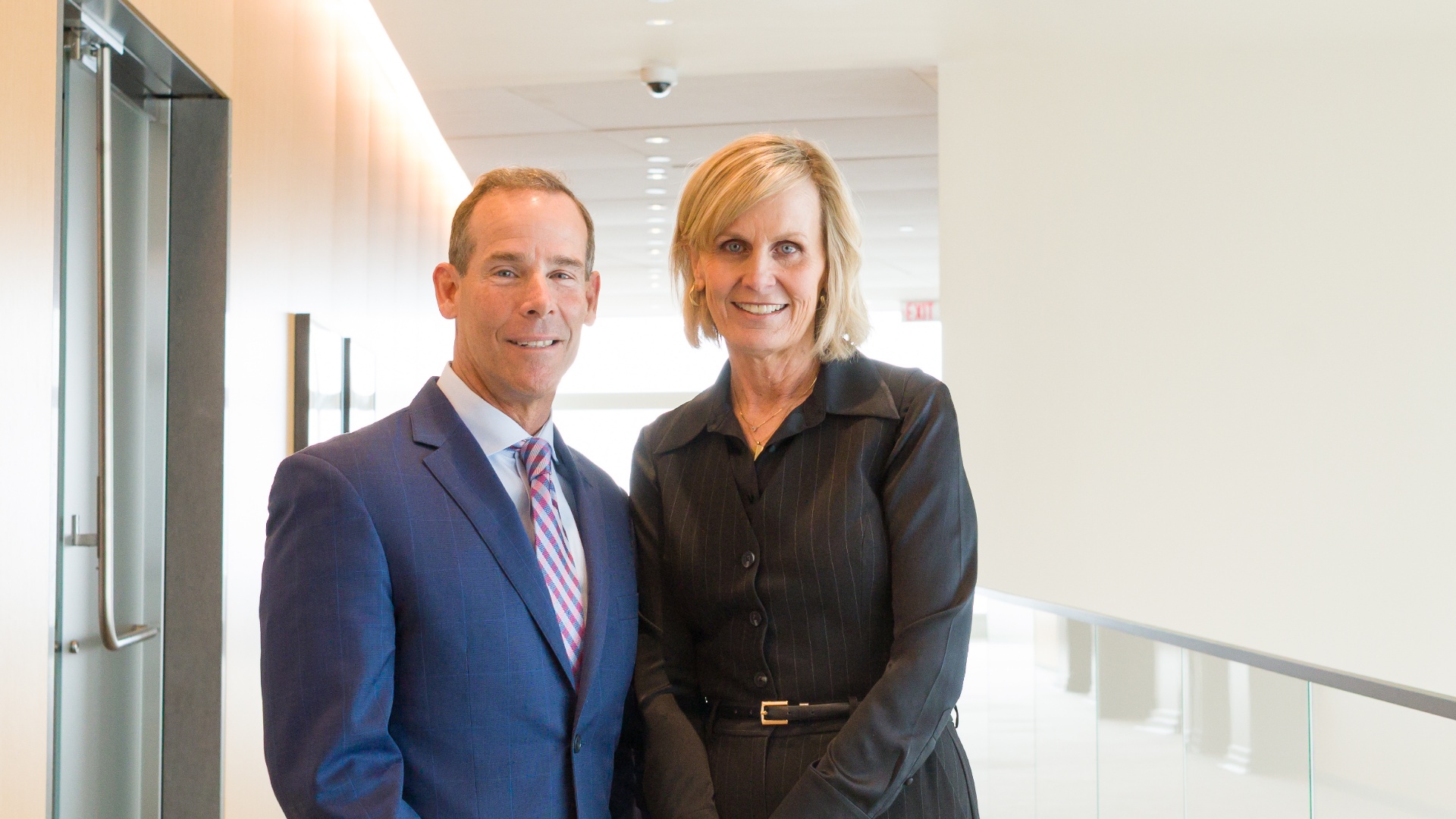
The Navy SEAL Foundation serves as a critical pillar of support for the SEAL community, providing comprehensive resources for active-duty operators, veterans, and their families. Goldman Sachs’ Vanya Kasanof, head of Investment Banking Client Services for the Consumer and Retail Group within Investment Banking, joined Rear Admiral Keith Davids, former commander of Naval Special Warfare Command, and Robin King, chief executive officer of the Navy SEAL Foundation, to discuss the unique challenges faced by SEALs and their families. They also talk about how the foundation is navigating a shifting geopolitical landscape that demands constant readiness and resilience.
Transcript:
Robin King: Our job is to ensure that the families are so well supported that they understand that that community is there to wrap around them.
Keith Davids: Ultimately, what kept me around was sort of the sense of purpose. I felt like I was doing something maybe bigger than myself and part of an elite team. But at the end of the day, it was about the people and the personal relationships. No question. That's what sustained me and kept me in.
[MUSIC INTRO]
Vanya Kasanof: Hello everyone. And welcome back to Talks at GS I'm Vanya Kasanof. I'm head of coverage for the consumer retail group inside the Investment Bank. And I'm also head of the Americas Veterans' Network. But more exciting, I'm delighted to welcome Rear Admiral Keith Davids and Robin King, two leaders who have shaped and supported the special operations and veterans' communities through times of challenge and over the course of the last couple decades through immense transformation.
Rear Admiral Davids, we only have 40 minutes, so I can't go through his whole bio. He brings decades of operational and strategic experience. Most recently as commander of Naval Special Warfare Command. His distinguished career includes deployments all over the world: Afghanistan, Iraq, the European and Pacific theatres. And he has earned many of our military's highest honors. And many of those honors with a special combat designation. So, thank you for everything that you have done.
Keith Davids: Thanks. It just means I'm old.
Vanya Kasanof: Robin King, who is not old, has been a driving force behind the Navy SEAL Foundation since its inception. Guiding the organization to national recognition for both its impact and its transparency. Under her leadership, the foundation has developed specialized programs and raised millions to support SEALs and to support their families. So, thank you for joining us today.
Robin King: Absolutely.
Vanya Kasanof: I'm going to start, Keith, with you. Your career has, again, I'm calling you old, your career has spanned pivotal moments in US military history. But take us back a little bit to the beginning. What inspired you to join the military? What kept you in service?
Keith Davids: Well, thanks. Thank you all for letting us spend a little time with you. Really honored to be here with Robin, one of my heroes here. But I don't know if my story's all that inspiring. I was a young kid, grew up in south Florida. And my passion and hobby was sailboat racing. And so, I was a Youth National Sailing Champion. And at that time, the best sailing team in the country was the Naval Academy. So, I was recruited by the coach. I didn't know a darn thing about the Navy. My father had served in the Korean conflict in the Army. Didn't have the best experience. So, military wasn't a big thing in my family.
But I got to the Naval Academy. I really didn't know anything about it. And but I think what happened is you get there and you find yourself with these principled men and women and you go through. The Naval Academy is not like Buds or anything. But it was, you know, significantly hard. And I think you have these shared experiences that create tight bonds. And then you have friends. And so, I kind of stuck with it. I'll give it a try.
And then with regard to being a SEAL, if you're a midshipman at the Naval Academy, each part of the Navy tries to solicit or recruit you. The surface Navy shows you these cool ships at sea slicing through the waves, shooting tomahawk missiles. And I went to high school around Top Gun, the first one. And so, you know, the cool jets flying. And I remember the SEAL, they're all trying to recruit, and this SEAL comes out and he talks to us about this something, Naval Special Warfare, unconventional warfare. And when he finished talking, he said, "Listen, this isn't for most of you. You can't do it and we don't need you." And if you have questions, I'll answer them on the PT field tomorrow morning at 5:30" and he walked away.
And so, the hook was set. Wait a minute? What do you mean, I can't do it? Great recruiting pitch. So, I tried it. And then I think we were talking about it a little bit at lunch, but I never was that person. Maybe some of you know you want to be Goldman Sachs in 20 years or whatever. For me, it was like one tour at a time. I'll try one more. I really like what I'm doing.
I think ultimately what kept me around was sort of the sense of purpose. I felt like I was, you know, doing something maybe bigger than myself and part of an elite team. That was pretty special. But at the end of the day, it was about the people and the personal relationships, no question. That's what sustained me and kept me in.
Vanya Kasanof: Now, Robin, you have a personal connection. And so, talk to us a little bit about what motivated you to get involved in your role and how you've seen the challenge evolve over the years.
Robin King: Yeah, so I am a spouse of a SEAL who did 32 years in the SEAL teams. He did not start off as a SEAL. I married a photographer. People will say, "Oh, you knew what you were getting into." No. I did not. I did not. He was shooting album covers. We were living in L.A. Life was like-- I thought we were cool. You know? And life was good.
And he came home one day and said, "I want to be a SEAL. I've always wanted to be a SEAL." And I was like, "What?" I mean, literally, we owned a house and a dog. But it was apparent that this was his calling.
So, fast forward, he's in the teams. And I take a small job, I had little kids, at a fraternal order of Navy SEALs. And from that the Navy SEAL Foundation grew. But this was all pre 9/11. After 9/11 we lost our first SEAL in Afghanistan in March 2002. And we lost our second one at the end of that month. And this little foundation that was really just focused on education because before the war there wasn't much else we needed to be focus on, determined that we had a responsibility to do something more.
And then over the next 25 years, the foundation's programs just grew organically based on the needs of the community. So, watching the agility that we needed to have to support the families, watching the different things they were going through, starting off with our gold star surviving families, moving into wounded, ill, and injured, working on family and community and resilience, and then going into the transition over those next 25 years. And then into a lot we deal with now with traumatic brain injury and mental health issues.
It wasn't so much of whether or not I wanted to stay. Once you've seen certain things, you just can't not. You just feel like you have to be a part of it. And I had to be able to, you know, share what this community needed. How they were at the top of the spear for everybody. But we just had a responsibility to take care of these families.
Vanya Kasanof: Uh-huh. Well, we're going to come back to the foundation in a little bit. Before we do, and this may seem like a silly question, but I'm going to ask you, Keith, so who are the SEALs and what do they do? And actually, it's interesting, one of the things we were talking about at lunch was that in terms of getting support for the Navy SEAL Foundation, there are a lot of meetings, as you were describing to us, where even at the outset of the meeting, folks don't actually even understand. And I like what you said, "You can't support what you don't understand." So, maybe start there for us.
Keith Davids: Yeah. So, SEALs have some fairly well-defined missions. Most people think of the SEALs as the direct-action special reconnaissance. They do unconventional warfare. They do foreign internal defense. They train others. There's a whole range of missions. I think the sense of identity comes largely from sort of direct action and special reconnaissance.
Having said that, I've seen SEALs do all kinds of things, to include conventional missions. Heck, you guys remember when Haiti was hit with an earthquake a few years ago? My boss called me and said, "Hey, Keith, I need you in Haiti tomorrow. And I need you to go do humanitarian assistance and disaster relief." I said, "Crank caller. Wrong number." You know? I don't even know what that is. I had to go on my joint pub and look it up. It wasn't a SEAL mission. But I think I got the call because the community and the organization had a reputation for solving problems, working well with other teams.
The SEALs are good teammates. "Teams and stuff." Because we rely on everybody else. We need the Air Force to drop bombs. We need the Navy to get us places. Like we are so reliant on the rest of the joint force. I've worked for more Marines and more Army bosses, I think, than Navy, frankly. But what my boss said was, I had two bosses at the time, one was a Navy guy who said I need to do this. The other guy was an Army guy, head of special ops, he said, "Keith, that's not a SEAL, not even a special ops mission."
What I learned is, if it's a lawful order, it can be a special operations or SEAL mission. And so, it was a very conventional mission. But he needed it done in an unconventional way.
So, I think at the end of the day SEALs are problem solvers. Now, for like the last 20 plus years, it's confusing to tell the difference between a Marine Special Ops and Army Special Forces and SEALs because we've been doing a lot of the same work. Because what the nation needed from us was go pressure Al-Qaeda or ISIS networks, right? Go after the networks and make sure there are no attacks like 9/11. And so, that's what the nation needed. And that's what we all sort of did.
Where I'll tell you we're at today and where I think the SEAL teams are headed is sort of back to our maritime roots. And so, when I was a commander of Naval Special Warfare, I tried to look around the world and say, "Where are we doing things that the Army can do as well or better or the Marine Corps can do? Let's get out of those areas and do things that only we can do or we're uniquely qualified and trained to do." And largely that's maritime.
You know, I'm pretty bullish on the fact that, the future of Naval Special Warfare, and I've been saying for, I don't know, a decade that I believe this is a maritime century. And I kind of think we're seeing that play out right now. You know? I can just look around the globe. Strait of Hormuz is probably in a lot of top of people's minds right now. The world's goods move on the sea. That's just the way it is. The world's data, all the ones and zeros from trades and everything, they travel on the seabed. Access to strategic minerals are on the seafloor. I just think, you know, this is a very-- mega cities around the world mostly are on coastlines or near water. Just think, the points of friction on the globe have to do with a maritime environment. And so, that's where SEALs are today.
And I think the differentiator with our SEALs is they're the only force certainly in the special ops community that has over 100 assault boats. Most of them stealth. They've got wet submersibles, even submarines now. But I think that's what we do. And for the last 20 years, the SEALs have been really well supported by other forces. And I think now we are a supporting element to the Marine Corps and the Army and the Navy and the conventional forces.
Vanya Kasanof: Yeah. So, we will come back a little bit to the evolving nature of conflict. Before we do so, so, you talked a little bit about the mission and the role of the SEALs, Robin, how do you think about the mission and the role of the Navy SEAL Foundation?
Robin King: Well, you know, if you'd asked me that a few weeks ago, I think it would have been a little bit different. We were focused a lot on community. Taking care of the health span of the operator. I mean, nobody does 20 plus years in war and comes out of it unscathed. Right? So, all these guys are going to have wear and tear injuries, much less the guys who have actual battle wounds, traumatic brain injury, mental health.
Now we're focused on ensuring the resilience of the family. The strength so that the warrior can go forward and know that his family's taken care of. My husband once said to me, "When I'm on target, I'm not thinking about you." Which I was like, damn, okay. But when I stepped back from it and thought, you know, we don't want the operator, like, in a movie rubbing the picture of his wife and children and kissing it before he goes. He needs to be laser focused on what he's doing.
And so, our job is to ensure that the families are so well supported that they understand that that community is there to wrap around them, that the warrior going forward is like, "I'm on target, I'm on mission. I do not need to think about that. The community is amazing. Naval Special Warfare is amazing. The Navy SEAL Foundation will take care of them. And I can go and do my job."
Vanya Kasanof: Okay. So, now let's come back a little bit, Keith. We've got drone warfare, cyber attacks, new technologies. Can you walk us through a little bit about that evolution? Where you think it's going, sort of what are some things that you're seeing today?
Keith Davids: Yeah, thanks for the softball question. I would say a couple things. The diffusion and democratization of technology, I mean, it wasn't that long ago that, you know, only nations had exquisite radar systems. They had commercial satellite capabilities. You can get signals intelligence now as a commercial service. Like, the data, access to big data sets, to almost, you know, intelligence communities used to look at, but now many of you in this room I'm sure are looking at data every day doing predictive analysis. The same is true about understanding naval maneuver or an Army getting out of garrison, because there are a lot of things that have to happen left of that. You know? And so, you can see.
So, I guess in the perennial game of hide and seek, advantage - seekers. You know? The Navy, we were talking about it a little bit at lunch, but my wife is a service warfare officer. She might get mad at me for saying this. But there was a period when the Navy had a bit of a, I call it, a long off season where they could go anywhere. We could drive our ships and fly our planes almost anywhere around the world largely uncontested. That's not true now.
The Houthis are screwing up global shipping and actually putting the US Navy under pressure. They don't have a navy. How is that possible? But when you have access to exquisite intelligence and you have access to cheap drones and munitions and you bring those things together, now a relatively small force can hold at risk other forces. I think that's one of the global trends we're seeing. And I think where it's going to continue is that we've got a lot of models, unfortunately, for terrorist groups and even for nation states that you don't have to have the most exquisite capabilities. You can change the cost curve.
We won't talk about how much our missiles cost to shoot down cheap drones. But you've got to get that right. But I think one of the big trends, another big trend is that you don't have to be a navy to project power at sea, at least in close proximity in the littorals. You see that in the Straits today.
I think the electronic spectrum is something that I never really had to think a whole lot about in my career. And now, if you put up an antenna and you try and command and control forces the way we've all done it for the last number of decades, you're going to be an aim point very quickly. It's just a little bit of a revolution in military affairs. And I think the change in the way we're fighting.
Vanya Kasanof: Do you see a change in the role for special operations, for the SEALs within that context?
Keith Davids: It cuts both ways. I talked about the SEALs supporting the Navy and the Army and the Marine Corps and the Air Force and everything else. I think now we can be a lead element. And so, I think because smart people even before me made investments in technologies and capabilities that allow the SEALs to go places and the SWCCs, our warfare, our combatant crewmen, our stealth boats, can go places no one else can on the planet and do things no one else can. That that access and placement that are increasingly hard to get ships and planes, right, because of radar return and all that, means that the joint force is going to rely on us to do things.
Whether it's cyber or space, sometimes you need to be proximal to a target without getting too classified or anything, but sometimes proximity matters. And I think that those are the things that will matter most that our special operations forces will be doing in the future.
Vanya Kasanof: Uh-huh. So, Robin, you've talked a little bit about how just even over the last few weeks how you think about your mission and your focus has changed a little bit. What do you think are the key support functions for NSF in terms of supporting the community? And then, you know, you lead an organization that is well, well regarded for both its impact, but also its transparency and efficiency. And so, how do you think about making sure that you sort of maintain that discipline as well?
Robin King: So, let's just start with the last part first. Transparency is incredibly important to me personally when it comes to the foundation. I want our community to understand what we do and why we do it. We can't do everything. The government does a lot. Naval Special Warfare does a lot. And we fill a certain set of needs. And we stand by those programs. We develop those programs. We evolve those programs by listening, by communicating, by staying as close as we can to leadership and making sure that they know that we are there.
If it's something we can't do, we're going to want to communicate that as quickly as possible and try to find another outlet for that need. Whether it's another organization, because we do partner with. We're about collaboration and coordination. We don't think any one group could do this alone.
In terms of the mission of the foundation these days, it's what it's always been. To provide critical support to the Naval Special Warfare community. And its warriors, its families, its gold star, its veterans. When that mission was written initially, it was written very broadly on purpose. Because what we knew was that we didn't know. We didn't know what the future was going to hold. So, we wanted to have the ability to move left and right. And I think our agility from the day we started till now has remained exceptional.
I think with our size, people, "Oh, Navy SEAL Foundation is so big." I have 25 people. I don't know what makes us so big. But "Oh my God, you're so big." But that gives us the ability for everybody on the team to know what's going on. We pull the team together regularly. It's important that our administrative people and our development people all know what's going on programmatically so that we can support the community in the best way possible. And that we communicate, you know, all of the great work we're doing within this community that's really driven by privacy. You know?
So, we're challenged on how we do our job because I'm not a university. I can't bring people to campus and show off everything we've done. We're having a look at people like the wonderful people at Goldman who have supported us through the years and say, "You got to trust us that we're doing fantastic things for this community that I can't show you any of it." You know? It's kind of a tough role to be in. But that's what our families want and need. And, you know, that privacy's extremely important to them. And we're going to support them the way the SEAL teams want to be supported.
Vanya Kasanof: A lot of folks in the audience who have served or who have family members who have served, but also a lot of folks in the audience who have not. What would each of you say in terms of what you'd want people to know that active and veteran communities need for support in terms of, maybe, people who are a little bit further away from service themselves? Maybe we'll start with you.
Robin King: I think the active duty and veterans need to be heard. Especially the veterans. They need to be heard. It's a lot for a veteran, from my experience, to actually say they need anything. It's not in their nature, right? It's not what any of our veterans do to come say, "I need this or I needed that." So, there are ways to listen to people and to really try to hear what's going on with them, even if they're not telling you directly.
People don't always know how to respond to "What do you need?" But instead, it's "Here's what I can do for you." People like, "Oh, that would be useful. That would be helpful. I would appreciate that." But, you know, when I've dealt with people who are in the middle of something, and it's like, you know, "What do you need?" They don't know how to answer that question.
Keith Davids: Just to add to Robin is I think the other part is I think in the military, the culture, you know, you're selfish if you're asking for help. Particularly in the SEAL community, it's about the team. And always it's team before self is kind of the mantra.
I don't know if I have a lot to add other than to say, you know, just try and understand that, you know, everyone has a different experience. But I think we're just in this weird period in our history. I've watched teammates come and go during this period of sustained combat operations that we never experienced for such a long time. Even, you know, God forbid World War I or II, you go for a year or two and then you're home. But these repeated-- I had a master chief was actually bragging about some of our teammates that had gone on 18 combat deployments. And I remember thinking, I do know that there are people that look fine, but they have deep wounds that have a hard time functioning in society again because of the things they've done and seen that just no one should be exposed to once, much less repetitively.
Vanya Kasanof: Yeah. So, I want to maybe conclude by once again thanking you both for spending time with us. And also, just to make a plug that if you're not familiar with what the Navy SEAL Foundation does, it's a wonderful organization. I want to thank, actually, Dan Howard for sort of helping to lead a Goldman commitment to that organization, which we're so proud and happy to be associated with you guys.
And so, you know, I'll ask you guys that if you do have energy, check it out. And again, thank you for spending time with us.
Robin King: Thank you.
Keith Davids: Thanks for having us.
Robin King: Appreciate it.
This episode was recorded in partnership with the Goldman Sachs Veterans Network on March 23, 2026.
The opinions and views expressed herein are as of the date of publication, subject to change without notice, and may not necessarily reflect the institutional views of Goldman Sachs or its affiliates. The material provided is intended for informational purposes only, and does not constitute investment advice, a recommendation from any Goldman Sachs entity to take any particular action, or an offer or solicitation to purchase or sell any securities or financial products. This material may contain forward-looking statements. Past performance is not indicative of future results. Neither Goldman Sachs nor any of its affiliates make any representations or warranties, express or implied, as to the accuracy or completeness of the statements or information contained herein and disclaim any liability whatsoever for reliance on such information for any purpose. Each name of a third-party organization mentioned is the property of the company to which it relates, is used here strictly for informational and identification purposes only and is not used to imply any ownership or license rights between any such company and Goldman Sachs.
A transcript is provided for convenience and may differ from the original video or audio content. Goldman Sachs is not responsible for any errors in the transcript. This material should not be copied, distributed, published, or reproduced in whole or in part or disclosed by any recipient to any other person without the express written consent of Goldman Sachs.
Subscribe to Briefings
Our weekly newsletter delivers the latest insights on economic forces shaping markets—from Goldman Sachs leaders, economists, and investors around the world.
You can unsubscribe at any time. For information about how your personal data will be used, visit Privacy Information and Resources.