
Talks at GS
Thelma Golden on Preserving Black Culture and the New Era of the Studio Museum in Harlem
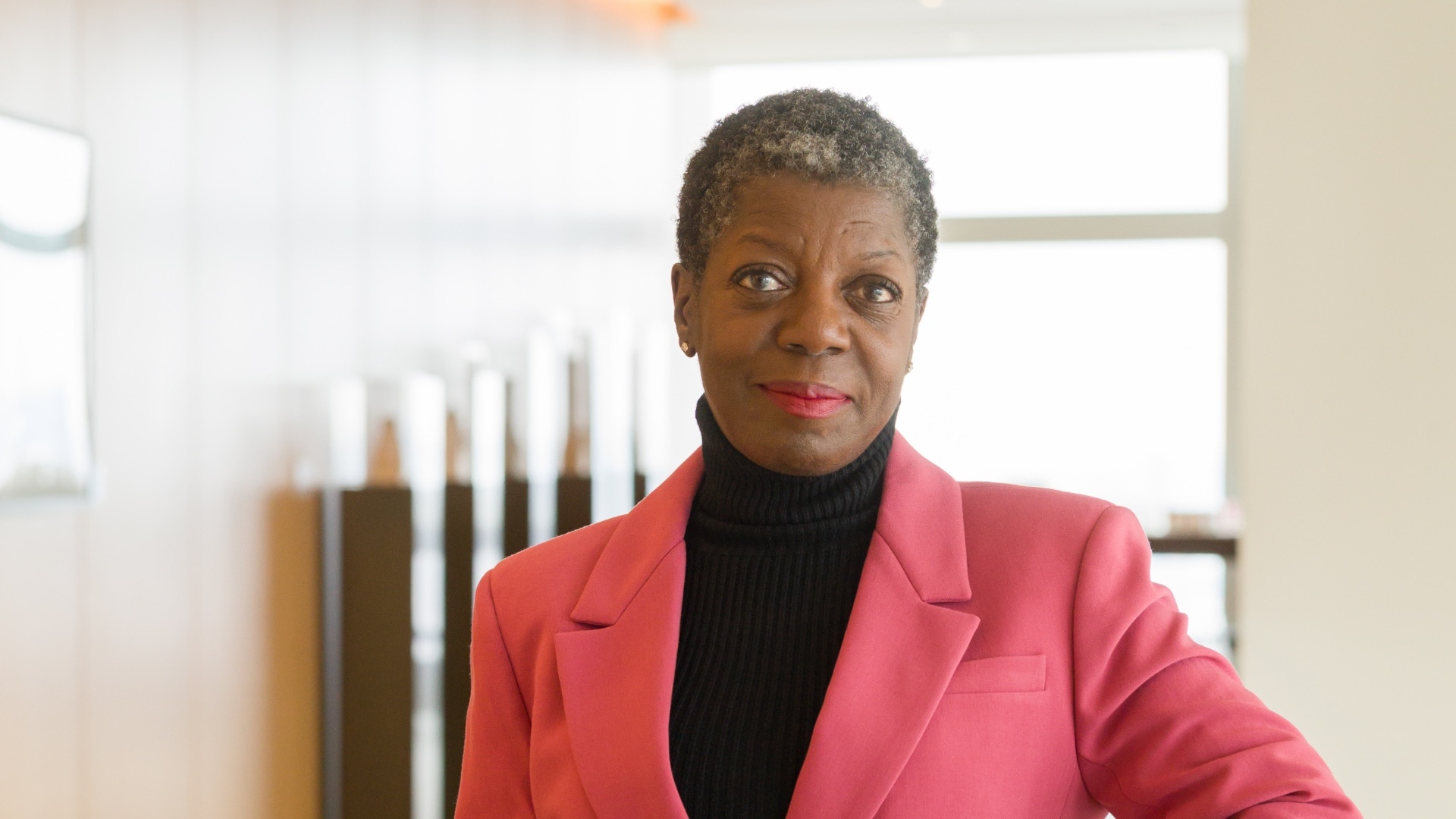
The Studio Museum in Harlem serves as an internationally recognized home for Black art and artists, championing new scholarships and cultural dialogue while anchoring the historic 125th Street corridor as a vital civic institution. Thelma Golden, the Ford Foundation director and chief curator of the Studio Museum in Harlem, the world’s leading institution devoted to visual arts by artists of African descent, joins Asahi Pompey, global head of the Office of Corporate Engagement and chair of the Urban Investment Group at Goldman Sachs, to discuss the museum’s 14-year journey to build its new state-of-the-art home. They also talk about the importance of maintaining cultural anchors in a changing neighborhood, and why Golden believes art remains an essential tool for reconciling reality and imagining new possibilities.
Transcript:
Thelma Golden: That's why I love artists, not just in the work they make but in the way they think because they're world builders. They can imagine futures.
Asahi Pompey: Welcome to another session of Talks at GS. I am thrilled to welcome Thelma Golden, Ford Foundation director, chief curator of The Studio Museum in Harlem. And we all know that The Studio Museum is internationally recognized for championing artists of African descent and for also advancing new scholarship and cultural dialogue.
Thelma, I think what's so compelling about your work is that it not simply reflects the art world as it is, but it's changing the industry, expanding who gets seen, how culture is interpreted, and which stories are central rather than being peripheral. Now, Thelma demonstrates how a museum and a curator can influence contemporary culture, change the canon, and shift it. So please join me in giving a very warm welcome to Thelma Golden.
Thelma Golden: Thank you. Thank you. Thank you, Asahi. It's a real privilege to be here with you all today at Goldman Sachs and to be here with you on this stage today. So thank you for inviting me. And I cannot speak about how much I'm inspired by the work you do, and so I feel really, really privileged to be here and be in conversation with you.
Asahi Pompey: Thank you, Thelma. That means a lot. So I want to start with Thelma, the person, the museum director, the curator. You grew up in Queens in a family where you went to museums. Talk a bit about your background, your upbringing, and how that led to who you are today.
Thelma Golden: Yeah. Well, as you said, I was born in Queens. Any Queens people here? I always feel like, you know, if you say, "I'm born in Brooklyn," Brooklyn people start talking before you even --
Asahi Pompey: It gets pretty loud.
Thelma Golden: You know, Queens people are so, like, "You know, hmm, I don't know." So I have to make you all, like, you know, represent. I was born in St. Alban's. And I am that New Yorker who was a child of New Yorkers. My father was born in Harlem in 1926, which was, like, literally in the midst of the Harlem Renaissance. My mother in 1930 in Bedstuy, Brooklyn. And when they married in 1963, the real negotiation was where they were going to live. That's how we ended up in Queens, right? There was no, you know, Brooklyn or Harlem.
And so I grew up deeply kind of, you know, embedded in this city. My mother was one of five, and so I have many, many first cousins and all of our relatives lived in the city. And my father was a lawyer and insurance broker. And he had a business, an insurance brokerage business, and all of his clients were around the five boroughs.
And so as a child there were many ways in which I came to understand the city, right? Through my family life, through my father's business. And it also meant that I grew up in the city understanding, like, in a very what I consider a gift, the idea that this city was full of culture. And that all of it was accessible to me.
So I grew up in the city, in museums, in performing arts institutions, you know? I mean, on the way down here from Harlem I saw the Intrepid. You know, it's, like, Kids Week because it's vacation week and that was my childhood. On a vacation week, we were going to whatever activities there were in the different museums or performing arts institutions.
Now, I will say my brother would edit this a little because he obviously did sports. I did not, right? So he would say, "Well, I didn't always go to a museum," and its' true. He played sports, and he did that. But even that took us around the city as his sports took us to different neighborhoods. And so that's what wedded me to the idea that cultural spaces were special.
And when I was in high school, I was in the Teen Program at the Metropolitan Museum. And that solidified my idea. I mean, it was almost kind of this incredible idea to me. One day it occurred to me there were people actually -- this was a job, right? Something you could do every day.
And the way I understood it intellectually but also emotionally then was that quite literally that if you worked in a museum it meant you got to go to a museum every day. And that's what fueled my desire. Like, okay, I want to work in a museum because then I can go to a museum every day.
Asahi Pompey: Museum every day.
Thelma Golden: And I went away. I left the city to go to college. I went to Smith College. And I only did that because my father, as I said, being born in Harlem, my mother in Brooklyn, for them college meant leaving the city, right? I did not want that. You know, I wanted to stay.
But I went away and came back and instantly began working in museums. And when I was in college, I interned at The Studio Museum. And in every single way -- I wouldn't have said it then -- but it was so clear that everything about that just set me on the trajectory that I am now inhabiting today.
Asahi Pompey: Wow. You discover artists and you see qualities in them that others don't, and you bring these artists to the fore where others can really get to know them and see them. Help us expand our aperture. When you discover these artists, what are you seeing generally?
Thelma Golden: Yeah, I can't. I can't describe that or explain that. And I don't think it is so much that I see things others just don't see, but I think it's my job to consistently be in a space where I'm engaging with artists, looking at work. And then my role, first as a curator, because I spent the beginning of my career at the Whitney Museum of American Art as a curator and then came to The Studio Museum as a curator before being director.
And my work as a curator and making exhibitions is allowing everyone to have that experience, to see a work of art, to be moved by it, to have it allow you to think, to feel, to maybe have it pose questions for you. And perhaps sometimes just to be a space to get lost in.
But in terms of, like, when I go into an artist's studio or I see their work in an exhibition, I don't have a sort of checklist or a set of criteria that makes me say, "Well, this is it," but I know it. I do. And that's something that just has lived in me since I started working, and it's what in many cases is what has fueled the work that I do when I, particularly when I was an exhibition maker.
Asahi Pompey: Wow. I love that notion of getting lost in it because how often in life do we get lost in something?
Thelma Golden: Yeah. Or just to have what it means -- you know, I often think people say to me, "Well, I don't know," especially, you know, and let's be clear here. I have always worked in the realm of contemporary art. That is primarily work made in the present. My own work of course has engaged with artists in the past and particularly, because of my commitment to Black artists, I've done work with the works of artists from the past.
But often people will say to me, "Well, I just don't know. And I see it and what am I supposed to know?" And what I say is we bring all our experiences to artwork. So what it is you know already is what's going to help you in what it means to engage in work. And I just find that personally enjoyable, and that's what I hope others will feel when they walk through museums.
But I also think sometimes it's interesting just to be able to allow work -- and I don't just mean this about the visual arts, all art -- just to allow you the experience to see what happens when you are engaging in it. When I was in the high school program at the Met, it was an after-school program. The Queens people relate. In those days, it took me -- I went to high school in the Upper East Side. So, you know, going home was, like, an hour on a good day. Two trains and a bus.
But if you took those two trains and a bus and went home then I was home, right? So that's why I was, like, the after-school activity queen, okay? I was going to do anything to just stretch out the amount of time I could be in Manhattan before I had to go home. So any program I was signing up for.
And so the Met's program was great. Four days a week, 3:00 to 6:00, and there were different classes. And you could pick which ones you took or you would be assigned. And I took one twice with an artist -- I didn't know at the time he was an artist; he was our teacher -- named Randy Williams. And he would make us walk through the Met relatively fast. So you're just walking by these artworks relatively fast. And then he'd pick one of us to say, "Okay, when something catches your eye, stop." And then you had to talk about it. Like, why did this particular work make you stop?
And we'd be doing this all over the Met. High school students, in many cases not knowing anything about these works. And it was such a profoundly amazing exercise. And it's one that I do all the time still when I walk through museums. Sometimes I just stop. Like, what made me stop at this work? And what can I know about it from this experience? So I just love what it means to kind of be in the space of art.
Asahi Pompey: So much of that is you being present in each of these moments and experiences. Let's talk about your amazing new home.
Thelma Golden: Yes.
Asahi Pompey: You had this audacious idea of creating this new home for The Studio Museum of Harlem. Tell us a little bit about the stages and the process to get there.
Thelma Golden: So in 1960, you had a group of really amazing people in the midst of the Civil Rights Movement, the Black Power Movement, the Black Arts Movement felt there needed to be a museum devoted to Black artists. At that time, Black artists' works were being excluded from museums. The way art histories were told excluded the contributions of Black artists. And our founders knew that, to address that, that not only did they need to engage these other institutions but also an institution needed to be created to write those histories. And so that was our founding.
It was a big, bold, incredible idea in a very modest space. Our original Studio Museum was a second floor loft on 5th Avenue and 125th Street, a rented space that our founders basically took over and installed exhibitions. It was up a flight of stairs over a liquor store. But in it, in our name, The Studio Museum in Harlem, and just in their ambition, they envisioned an institution that could shift and change the contemporary art world. It's a New York Times article announcing this great initiative at that time.
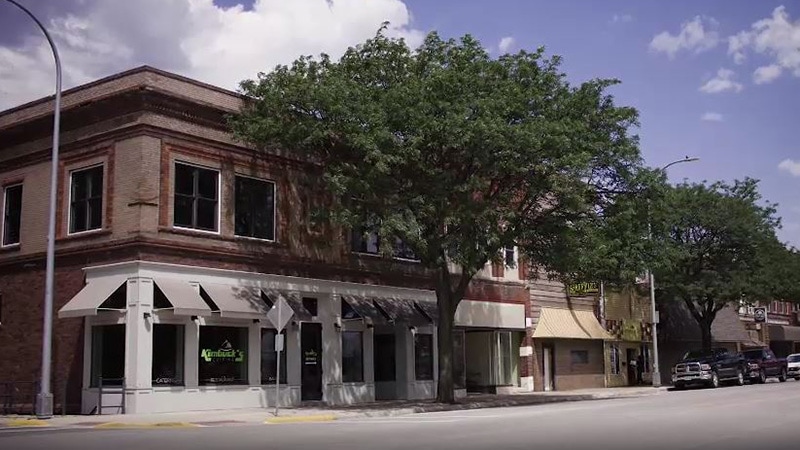
Our second space that we moved into in 1982 had been a bank on 125th Street. And this was a time when there was a great disinvestment in the real estate on 125th Street, so there were many buildings that were either underused or vacant. And the museum was able to acquire one that had been built in 1914 as a bank, New York Bank for Savings, and was called the Kenwood Office Building. And that space was where we were able to build out in that former building a museum on the first and second floor and we had tenants above.
And so both of those spaces, the museum worked it with incredible ambition. This is our former gallery space. But the building was challenged in its age and what it needed on an ongoing basis. A roof. The façade pointing. You know, all the things, like having an old house. There was always something. And that often crippled our ability to do our work, which is to collect work, have a permanent collection, present education and public programs, make exhibitions, engage deeply in the work of preserving the work of Black artists.
And so early in my time at the museum, I began to think about what would it mean to envision a future for ourselves that would start, first, with physical space? And that meant thinking broadly. Now, I won't say the first idea was let's knock down the old building and build a new one, right? Because even saying it now, even though we've done it, it still sounds so far from a reality, given all the things one might know. And it also didn't sound practical, but I do think this is the advantage of me being a curator maybe at heart because often, when you're making exhibitions with artists, you're starting just with an idea.
Artists will say something to you. It's just an idea. And you work towards, first, you've got to be able to envision it with them, right? Be an active co-conspirator in this idea. And then it takes twists and turns what that work becomes, what those works become to become an exhibition takes time. So in a way, being able to sit with my amazing board and say, "Okay, we can keep fixing this building," obviously, right? We can put in a new HVAC system. We could perhaps renovate the galleries. But where would that lead us eventually? Not very far.
So that to actually say let's knock the building down and start over really became an idea that we could all see. And we began this project about 14 years ago. It would not have happened without the Urban Investment Group at Goldman Sachs because -- and now I'm going to speak some financial language and I'm probably going to get it wrong -- but here is the truth.
To do this project required all sorts of ways that we had to be ready for it. But essentially as an institution, our primary asset was that building and we were knocking it down, right? So that doesn't really put you in a good position for lending. And so that's why we were so grateful to Goldman for what it meant for you all to partner with us and the City of New York, which was our initial investor, to be able to say, yes, we are going to take down this building, build a new state-of-the-art purpose-built building for the museum but also for Harlem, for the city, for artists, for our community.
And on November 15th, we opened. So we just hit our 90th day this past weekend. And it still feels -- I mean, I'm looking pictures of our space, you know? And it still feels somewhat unreal in a way that here we are now in this building. But on another level, it doesn't feel unreal because our archive continues to speak to me.
To build a building, we had to move out. Like moving out of a house, you go in those closets and things you haven't looked at for years. So there were just everywhere boxes of folders and all kinds of things. But in there were some essential documents from the early years. And we'd always had an archive of all the official documents, but I would just find things that really made me know how much our founders were envisioning this ambition even back in 1968.
Asahi Pompey: They had that vision.
Thelma Golden: Well, the way they spoke about what they were doing even though it was in that modest loft. So that when I'm in the building we have now, I know that in '68, if they could have, if they could have done that, they would have, 100% they would have done it. So in a way, the building feels incredibly also like a manifestation of the original ideals of our founders.
Asahi Pompey: I want to talk about this moment that the country's in. So a lot of change, a lot of uncertainty. Artists over centuries have responded to times of uncertainty certainly through their art. And you've said before that times like these art is both a mirror that allows the space for reflection and a window that allows us a way to move through these moments in order to imagine a new future and possibilities beyond our present situation.
Thelma Golden: Wow. I said that? Okay.
Asahi Pompey: Yes, you did. eloquent.
Thelma Golden: No, I did. And I believe that, you know? In moments like we are now, particularly in deep tumult, often people will say to me, "Well, what are artists making?" And often it doesn't play out that way, right? It's not so instant and so reactive.
You know, quite often it exists in reflection, right? So that I'm in artists' studios now who are deeply thinking about, talking about, living in this world. And in some cases, some of them are talking about how the world we're in is crippling their ability to make because there's so much that one is engaging with. But at the same time, we know -- I know -- that what we will see in the works they're making will be a reflection.
But also, the space of art I think as we all try to live in this world and engage with what our highest ideals might be for what this world should be and the reality of where we're in, that quite often the arts -- and I mean that broadly because it's not just simply about going to a museum -- it's like all of the arts are a way to process. And we know that, right? We see that through the history of time. And we see that particularly in African American culture, right?
I mean, so much of our art comes out of a way to reconcile our realities. You know, when we think about -- what I love working in Harlem is many of my cultural peers are performing arts institutions. And when we understand the way in which the performing arts, the arts that we can carry in our bodies -- dance, song, voice, right? -- and how those were used to metabolize not just present realities but to voice and envision futures.
And that's why I love artists, right? Not just in the work they make but in the way they think because what they are able to do is they're world builders. They can imagine futures. And that's what I think is necessary in times like this. We have to be able to imagine a future because current reality offers us no hope at all, and these imagining of futures are what allow us to move through.
Asahi Pompey: And we're going to see that reflected in their art.
Thelma Golden: And we are. I mean, I think we see it. We can feel it. But it also provides I think an important historical record. I know the artists of this moment will create a record which will allow a deep sense of reckoning in the future about what this present moment really has been about.
Asahi Pompey: Thelma, on behalf of our CEO David Solomon, the entire leadership of the firm, we thank you not only for the Talks at GS today but for also serving on the advisory cancel of our One Million Black Women initiative.
Thelma Golden: Which was a great honor. A great honor, especially given some of those women were in Harlem and also to be able to work with you all on such an important initiative of creating new possibilities.
Asahi Pompey: You are a national treasure.
Thelma Golden: Thank you.
Asahi Pompey: And we're thrilled to have had this time with you. Thank you.
Thelma Golden: Oh, thank you. Thank you.
This episode was recorded on February 19, 2026.
The opinions and views expressed herein are as of the date of publication, subject to change without notice, and may not necessarily reflect the institutional views of Goldman Sachs or its affiliates. The material provided is intended for informational purposes only, and does not constitute investment advice, a recommendation from any Goldman Sachs entity to take any particular action, or an offer or solicitation to purchase or sell any securities or financial products. This material may contain forward-looking statements. Past performance is not indicative of future results. Neither Goldman Sachs nor any of its affiliates make any representations or warranties, express or implied, as to the accuracy or completeness of the statements or information contained herein and disclaim any liability whatsoever for reliance on such information for any purpose. Each name of a third-party organization mentioned is the property of the company to which it relates, is used here strictly for informational and identification purposes only and is not used to imply any ownership or license rights between any such company and Goldman Sachs.
A transcript is provided for convenience and may differ from the original video or audio content. Goldman Sachs is not responsible for any errors in the transcript. This material should not be copied, distributed, published, or reproduced in whole or in part or disclosed by any recipient to any other person without the express written consent of Goldman Sachs.
Disclosures applicable to research with respect to issuers, if any, mentioned herein are available through your Goldman Sachs representative or at http://www.gs.com/research/hedge.html
Subscribe to Briefings
Our weekly newsletter delivers the latest insights on economic forces shaping markets—from Goldman Sachs leaders, economists, and investors around the world.
You can unsubscribe at any time. For information about how your personal data will be used, visit Privacy Information and Resources.