
The Markets
Are European Stocks Poised to Outperform the S&P?
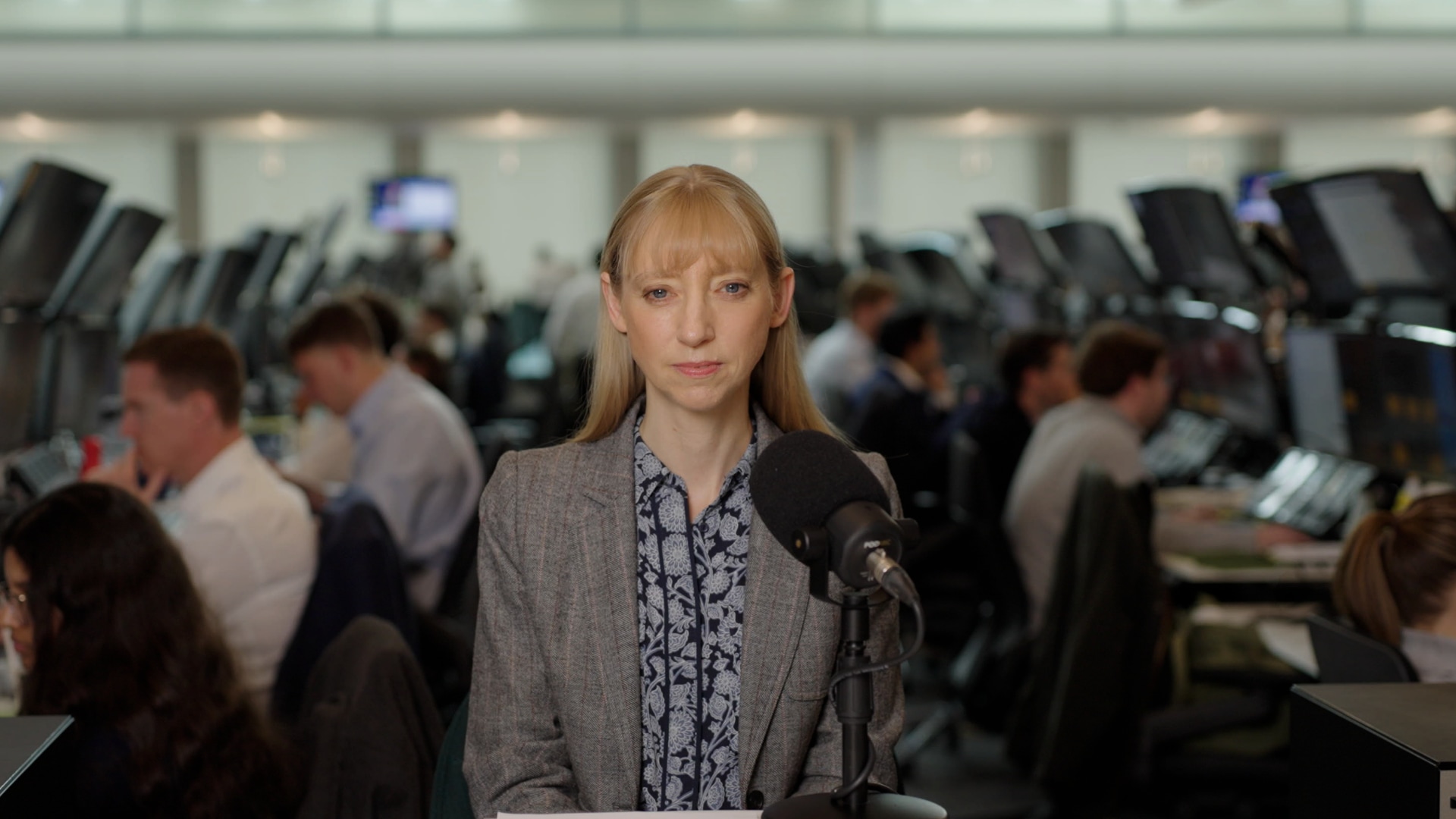
As US stocks surge, European equities are turning out positive performance as well. Sharon Bell, European portfolio strategist in Goldman Sachs Research, recently raised her target prices for European indices, but she still doesn’t think they’ll outperform their US counterparts. She discusses with Chris Hussey.
Transcript:
Chris Hussey: This is The Markets. I'm Chris Hussey, and today is Thursday, June 4th. And I'm joined from the Goldman Sachs trading floor in London, by Sharon Bell, who is our European portfolio strategist Goldman Sachs Research. Sharon, thanks so much for taking time with us on The Markets.
Sharon Bell: Thank you.
Chris Hussey: So let's, you know, go right into your specialty which is European equities. Stocks are up a lot this year. What's driving the rally?
Sharon Bell: Yeah. So Europe is at close to all time highs. Hasn't performed as well as the U.S. or Asia. But it's bounced a lot from the lows. And I think the reason Europe's bounced so much is the earnings have been quite strong. Obviously, the energy stocks you've seen earnings rise for energy companies because of higher oil and gas prices.
But it's not just energy companies. The whole commodity complex is doing very well. Utilities mining companies for example, but also financials with higher interest rates. Chemicals have been doing well in terms of earnings. So if I look at the suite of European companies, then actually earnings estimates have been upgraded on average by six or seven percent this year.
You have had some downgrades, but that's been in consumer discretionary areas of the market. But net-net it's been upgrades. And I think that's really driven the rally.
Chris Hussey: Okay Sharon, you mentioned a bunch of different sectors, you didn’t really mention tech though. Without tech, is there more to go on a European rally?
Sharon Bell: Yeah, Europe has got some tech and tech has also been seeing upgrades as well. It's not as big as you point out as it is in Asia or the US, but tech is also helping to drive European earnings. So I think, if you look over all in Europe, it's got some tech, not as much as elsewhere. It's got energy.
It's got other areas that have done reasonably well, like, heavy asset companies, companies like industrials, utilities, energy, defense, aerospace companies all seeing upgrades as to whether you've got more to go. Yes. We've recently upgraded our STOXX 600 forecast. We're now looking for 660 on that index over the next 12 months. That is an upgrade compared to previously.
And the reason we've done that is just because earnings have been good and the economy has been more resilient than expected too. It's not a strong, the economy, as you say in the US, but you're not in recession. And actually, Germany continues to spend fiscally just as the plan was laid out last year. You're starting to see that fiscal spend come through. And that's helping to boost growth in Europe too.
Chris Hussey: Okay. Let's talk a little bit about concentration here. Because in the U.S., of course, it's been a concentrated rally. You were talking about so many different parts of Europe that have been doing well. Is Europe less concentrated than the US?
Sharon Bell: Simple answer is yes. It is much less concentrated than the US. And you see that in a couple of different ways. One way you take the top ten companies, the largest ten companies in the US, they make up 40% of the index in Europe, Europe's top ten companies make up just 15% of the entire index market cap.
So very, very different. Not only that, that 40% I mentioned, for the US is a high more or less, whereas in the case of Europe, top ten companies make up 15%. And that's actually at the lower end of the concentration that Europe has seen historically. So no, I don't think Europe is as concentrated as the US.
There's another way of looking at it as well, which is what's been driving returns. Has it been a narrow breadth of companies or has it been a wider breadth of companies in the US? Not only is the US market concentrated in terms of size of companies and market cap, it's also concentrated in terms of returns. Very few companies have driven the returns in the US.
In Europe it's been a bit broader. I mean, it's there has been similar themes. Keep that in mind, that you've had energy, tech, AI, and some of the companies which have been in other sectors have been driven by those same themes. So industrials, utilities, for example, you need to power the AI revolution are all drivers. And in that sense, similar themes have driven the European market as the US, but it's been much less concentrated in terms of number of stocks.
Chris Hussey: Does that lack of concentration in Europe give it more legs to a rally, or do you feel like it is too insulated from the AI trade to do that.
Sharon Bell: I think it's not completely insulated from the AI trade. It's got a lot of potential there. It's got exposure to AI via obviously the tech companies themselves. But also the utilities companies for the need for energy. Europe is undersupplied in energy. Needs to improve those networks and grids. And the companies doing that are great investments, we think.
Industrials, this is an area that Europe is well known for, very high-quality industrials. And their demand and their businesses are very much driven by AI demand data centers at the moment, CapEx as well. And then it's not just an AI driven trade. You've also seeing investment by Germany, for example, in more defense, more infrastructure.
Europe generally has, has a lack of infrastructure and defense spending in recent years. So you're seeing European companies win a lot of that business and do very well. So I think yes, it's AI, that’s one part of it, but it's broader than that.
Chris Hussey: No it is broader than that. But, help me understand this because at the beginning of the call, you mentioned that while Europe is doing great, it's actually not doing as great as U.S. or even Asia. What is your view going forward? Can Europe outperform.
Sharon Bell: So it's not our view, our base case is that you get positive returns from Europe. And we have upgraded our index forecast. But we would still have the U.S. and Asia outperforming. Why is that? So we would have the US outperforming because it's got big hyperscalers where we're expecting pretty good returns. And we're looking for an economy which actually is growing quite nicely in the next couple of years in the US.
So we do think the US market continues to outperform Asia as well. We see driven by earnings driven by the semi stocks and driven by the tech sector. For Europe it's broader. So you got the diversification benefit where you invest in Europe and you also have some value benefit as well. But I do have lower returns in Europe because the European economy is, after all, more hit by the higher energy prices.
We don't have energy independence in the same way that, say, the US does. So, I see lower returns, but still positive. I'm looking for about high single digits, let's say total return for Europe in the next 12 months.
Chris Hussey: So we're at that point in The Markets podcast where I normally ask, what's the trade? But you're not a trader, you're a strategist. So I'm going to ask you, what's the investment? Where do you want to put your money here?
Sharon Bell: Yeah. And that's an interesting question because, I think there's potential for shorter term trades and things like consumer discretionary companies if and when the Straits of Hormuz open, and you see more flow of oil prices come down, energy costs reduce. Then I could see a bounce in some of these companies that have been sold off. But I think the longer-term investment, which is what you're really asking me, is still in those structural winners.
So we would call, for example, for HALO stocks to do well. That's heavy assets, low obsolescence companies, companies that did not do well over the decade or decade and a half after the financial crisis. And you want to just be in purely digital assets. None of these heavy assets type companies, heavy capital companies, think they will do well.
And by that, I mean things like utilities, telecoms, industrials, even energy companies that are investing and have good assets and can make return on those assets. And I think Europe has a lot of those. I also like our renewables companies, defense companies, aerospace companies. I think the tech sector in Europe trades at a discount to similar companies elsewhere in the world.
Banks as well. We think interest rates will be higher for longer and that will help the bank sector.
Chris Hussey: Okay Sharon, what are you looking for in the summer ahead?
Sharon Bell: I think the absolutely crucial thing for Europe, particularly, is a reopening of the Straits of Hormuz and some, topping out and decline in energy prices. I think that is absolutely key. Key for confidence in the economy, key for investors, particularly domestic investors, would like to see that in order to stop feeling more confident and buying the market.
We've got a lot of big IPOs coming through in the US. So seeing how those are absorbed as well will also be important for European equities. So the Straits of Hormuz, those big IPOs. And of course we have an earnings season coming up the second quarter. How have companies digested the higher energy prices. What sort of resilience like those will all be absolutely crucial for Europe.
Chris Hussey: All right. One last question for you Sharon, can England win the World Cup?
Sharon Bell: Well we have a five percent chance of England winning the world because our economists, not me. Our economists crunched all the data they put. Spain is the likely winners. So a European country. So they put Spain ,I think it's 25 or 26% chance of Spain winning, then France. Unfortunately England, my home, five percent chance haven't won since 1966. But, you never know.
Chris Hussey: Well, I do know it's going to be Argentina, but, Sharon thanks so much for taking the time with us here on The Markets.
Sharon Bell: That's great. Thank you.
Chris Hussey: That does it for this week's episode of The Markets I'm Chris Hussey. Thanks for listening.
Recorded on June 4, 2026.
The opinions and views expressed herein are as of the date of publication, subject to change without notice, and may not necessarily reflect the institutional views of Goldman Sachs or its affiliates. The material provided is intended for informational purposes only, and does not constitute investment advice, a recommendation from any Goldman Sachs entity to take any particular action, or an offer or solicitation to purchase or sell any securities or financial products. This material may contain forward-looking statements. Past performance is not indicative of future results. Neither Goldman Sachs nor any of its affiliates make any representations or warranties, express or implied, as to the accuracy or completeness of the statements or information contained herein and disclaim any liability whatsoever for reliance on such information for any purpose. Each name of a third-party organization mentioned is the property of the company to which it relates, is used here strictly for informational and identification purposes only and is not used to imply any ownership or license rights between any such company and Goldman Sachs.
A transcript is provided for convenience and may differ from the original video or audio content. Goldman Sachs is not responsible for any errors in the transcript. This material should not be copied, distributed, published, or reproduced in whole or in part or disclosed by any recipient to any other person without the express written consent of Goldman Sachs.
Disclosures applicable to research with respect to issuers, if any, mentioned herein are available through your Goldman Sachs representative or at http://www.gs.com/research/hedge.html
Goldman Sachs does not endorse any candidate or any political party.
Subscribe to Briefings
Our weekly newsletter delivers the latest insights on economic forces shaping markets—from Goldman Sachs leaders, economists, and investors around the world.
You can unsubscribe at any time. For information about how your personal data will be used, visit Privacy Information and Resources.