

The Markets
Are Hedge Funds Still Bullish on AI Stocks?
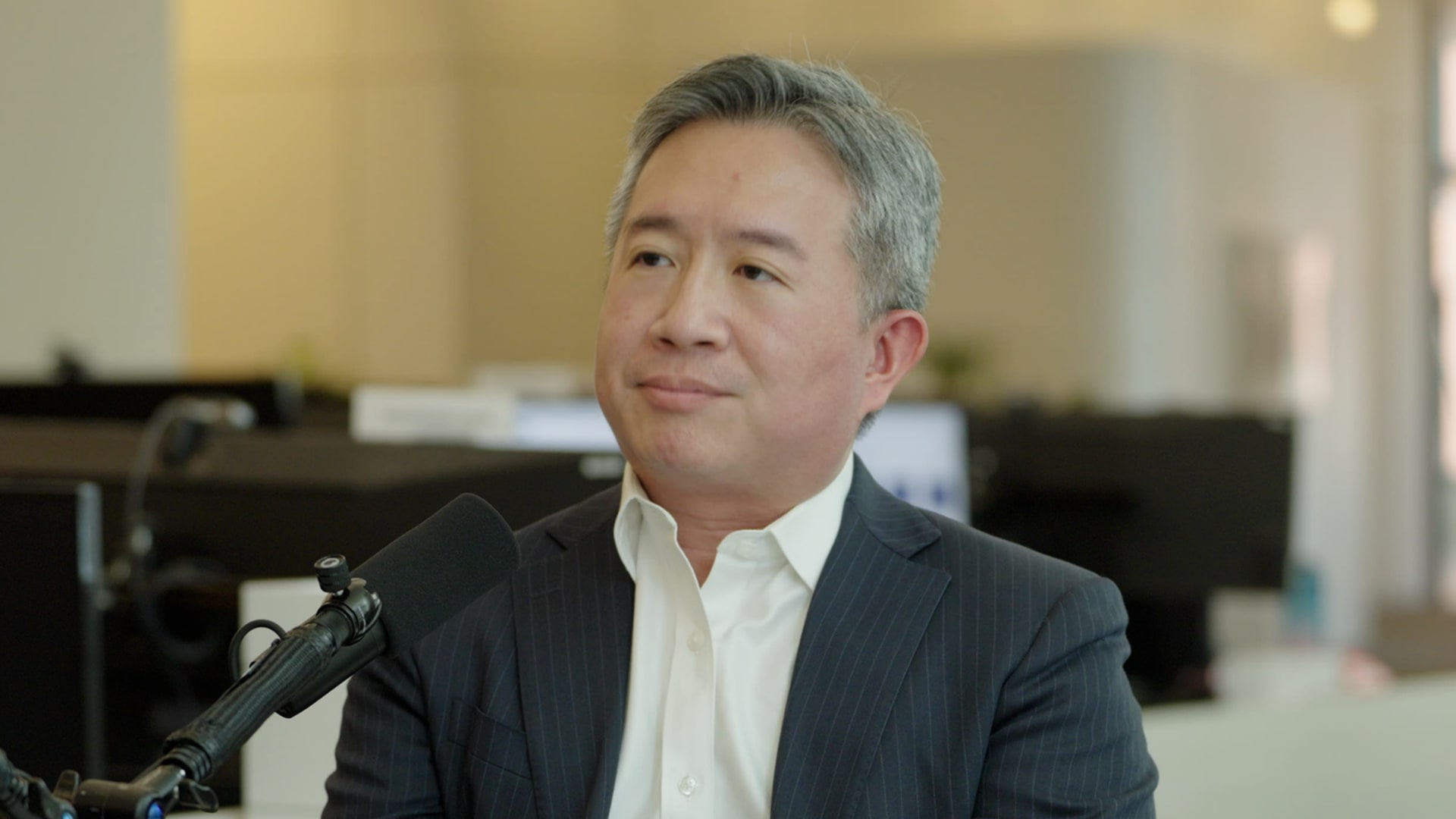
Tech stocks been buffeted by a reversal of momentum in US equities, but hedge funds are still fundamentally bullish on AI stocks, according to Vincent Lin, co-head of Prime Insights and Analytics in Global Banking & Markets. In this conversation with Chris Hussey, he explains why the greatest cumulative selling of tech stocks in the history of his data set looks more like a “healthy reset” amid crowded trades and high volatility rather than a loss of conviction in the AI trade.
Transcript:
Chris Hussey: This is The Markets. I'm Chris Hussey, and today is Wednesday, July 22nd, and we're here on the Goldman Sachs trading floor with Vinny Lin, who is co-head of Prime Insights and Analytics within Global Banking and Markets. Vinny, thanks so much for joining us.
Vincent Lin: Thanks for having me.
Chris Hussey: You know, we go back a couple decades, you and I.
Haven't had you on the show before, so it's great to have you here. But, you know, Prime Insights and Analytics, that can mean anything. Tell us a little bit about what you do and what part of our firm you're in.
Vincent Lin: I would say the primary customer base for Prime Services are hedge funds, and also capital allocators in the alternative asset management industry. So, they rely on their prime brokers for a whole suite of services, including consulting, capital introduction, financing, securities lending, reporting, and then lastly trade settlement and- and clearing.
And so as their trades settle and become custody on the Goldman PB accounts, we have a unique visibility into those trades and positioning changes, almost on a real-time basis. And so what our team is focused on is to analyze those data on an aggregate analysis manner, and also distill insights on what's happening, you know, essentially the biggest themes that are happening in the hedge fund industry.
Chris Hussey: Okay, Vinny. Let's get into some of the trading activities that we're seeing right now, and the momentum trade is front and center. Now, momentum is always talking about stocks that are going up, and they keep going up, or stocks that are going down; they keep going down. And we've seen a lot of violence in that momentum trade, even as the S&P 500 has managed to stay pretty flat.
What are we looking at? What is going on?
Vincent Lin: First of all, the magnitude of the recent drawdown in momentum has been very sharp. Price of our high beta momentum basket coming into this week was down 32% from the highs.
Chris Hussey: Wow.
Vincent Lin: And it is now only up 16% year to date, after being up more than 60% in June. One level deeper, if you look at just the TMT momentum long short pair, that basket is actually down even more by almost 40% from the highs, which would be the sharpest drawdown that we have seen in the past five years.
So clearly, you know, tech stocks have been ground zero in the middle of this momentum unwind. And our data do point to significant length reduction by, you know, tech-focused hedge funds in the past two months.
The magnitude of the recent supply is the largest on our record, going back to the last ten years. Essentially on par with the episode that we saw in the summer of 2024.
And it's not just the persistence and the magnitude of supply that's been notable, it's also how the composition in terms of the source of the selling has been shifting within the tech sector.
If we go back to the start of June, the selling was initially led by the hyperscalers and then in the second half of June, it was shifting to a lot of the semiconductor stocks globally, memory makers. And if you look at the most recent selling activity, essentially July month to date, it's been more led by kind of the tech hardware component names, and also infrastructure solution providers.
Chris Hussey: So, some people may not know this, but you came out of the research department, so you're a fundamental guy as well as one of these technical guys. Put the fundamentals around that story. Is this just investors taking a little bit of froth over a group that, by definition, momentum, has done very well? Or is there a fundamental story that you're hearing from customers as well?
Vincent Lin: From a fundamental perspective, you know, in my opinion, AI is among the biggest tech cycles we ever see in our lifetime. But the problem is the trade had become very crowded, right? If you look at our fundamental long, short returns from an alpha perspective, as of early June, our data will show that essentially the entirety of their positive alpha returns was driven by the AI infrastructure trade.
And then secondly, you know, using the positioning you know, changes in semiconductors globally as an example. We started this year with global semis net allocation being 10% as of this year. Meaning, if hedge funds holistically have $100 net investment in global equities, $10 of it was being allocated to global semiconductor stocks.
Chris Hussey: That's a lot.
Vincent Lin: But that 10% number actually more than doubled to 20%, as high as 24% in June, which was by far the highest level on our record. If you look at where it is today, right, that positioning has been reduced from 24% to 18%. But still far above where we started at this year, but clearly a significant reduction from the highs.
Secondly, it's not just hedge funds who have been riding the wave. We have seen significant buying activity and participation by the retail community as well. And I think lastly, you know, the proliferation of the levered ETFs also added additional leverage and overall impact to the system.
The second component I'll mention on momentum specifically, is not just the price, the severity of the price drawdown. Equally important is the volatility of the factor. When we look at you know, the realized momentum factor volatility in the last three months, it has shot up to the highest level in the last 45 years, essentially the highest level outside of recessions.
So the recent de-risking in the AI trade has become as much of a risk management exercise as, you know, managers look to either control or reduce the overall volatility in their portfolio. The last thing I'll mention is, you know, along with this de-risking, the last six weeks, you know, the overall market has seen a heavy dose of capital market issuance, as well as technical events such as, you know, multiple index rebalancing, pension rebalancing, and also monthly, as well as quarterly option expirations.
In our opinion, this is a healthy reset, not a complete loss in fundamental conviction. And in fact, as the momentum factor started stabilizing toward the end of last week, we're starting to see some buying activity resurfacing again in the last three trading sessions.
Chris Hussey: Yeah, it makes sense. You sort of climb that wall of worry, and what we're really seeing is the wall of worry show up, and that gives you another reason to buy it again.
All right. Talk to us a little bit, because you mentioned leverage; you mentioned the de-risking exercise. You've always taught me that there are normal levels of leverage that are sit within a hedge fund, and then sometimes it goes up, sometimes it goes down. Where are we in the leverage side and the gross investment side?
Vincent Lin: So if I look at specifically our, on our equity fundamental long, short-buck and looking at, you know, where their exposure levels were six weeks ago in early June, their gross exposure was essentially at five-year highs, right? So positioning was very full. And even on a net exposure basis, netting down long and short investments, net exposure has risen significantly to four-year highs as well.
After all of the de-risking, and if you look at where our positioning is sitting at today, both gross and net exposures are now down to kind of 60- 65th percentile versus the last three years.
So essentially middle of the pack, right? So, I think an argument can be made that overall positioning has come down to more kind of cleaner levels as hedge funds have, have clearly taken, you know, some chips off the table. But clearly, it by no means positioning is, you know, kind of a washed out.
Chris Hussey: All of this is taking place while hedge funds have to navigate a much more concentrated market than they used to. I wouldn't think anybody would want to pay two and 20 for them to invest in, you know, the biggest stocks in the world.
How are hedge funds navigating the concentration in the market? Do we see them dipping into smaller cap alpha? How does that work?
Vincent Lin: First of all, I would say hedge fund performance has been very solid this year. You know, in fact, you know, through the end of June, we have, you know, the kind of average hedge fund performance being up 9%, which would be, you know, among the best halves that we've seen the past 20 years, with all hedge fund strategies that we've seen printing positive returns year to date.
And to your point, I do think this year, despite the market concentration, as you mentioned, still being elevated, it's been a, a very strong environment from an alpha perspective. Because, you know, even though index, you know, level volatility has been relatively contained, single stock volatility has been through the roof.
Which has translating to stock correlations being at multi-year lows. And so, there's a lot of sector rotations, you know, movements underneath the surface which, you know, has proven to be a very fertile ground for particularly for single stock pickers.
Chris Hussey: Okay, what's the trade?
Vincent Lin: Buying the dip in the US AI infrastructure equipment names. But, you know, I think the reason being, you know, valuation is down to almost two-year lows.
But because of the increased volatility as we talked about previously, I think probably a better expression is to do it using limited loss structure, like cost spreads in option space.
Chris Hussey: I love that. A little juicy. All right. We're going into the biggest week of earnings next week. What are you watching for?
Vincent Lin: So just like, you know, every single biggest tech investors, I'm watching mega cap tech hyperscaler earnings closely. You know, first of all, the trajectory of their AI CapEx spend for the rest of this year into next year. And also any incremental progress on translating those CapEx spend into, you know, incremental revenue and profit growth, at least among, you know, a few of the hyperscalers. And then, you know, as we move out of the earnings cycle, one thing I'm watching closely is if correlations will start picking up again because, you know, even though we have seen a very significant de-risking in the AI trade, simultaneously, we have seen a meaningful reduction in the amount of macro hedges that people have on.
So essentially, this is your textbook definition of de-grossing. Taking off your AI longs but also reducing your macro hedges.
So, you know, I think the market is still pricing implying stock correlation is remaining low, but that, that would be one of the factors I'm watching closely as we move deeper into summer.
Chris Hussey: Vinny Lin, always putting the insight into all the analytics that just proliferate across the trading floor.
Thanks so much for taking the time with us. Really appreciate it.
Vincent Lin: Thanks, Chris.
Chris Hussey: That does it for this week's episode of The Markets. I'm Chris Hussey. Thanks for listening.
Date of recording: July 22, 2026.
The opinions and views expressed herein are as of the date of publication, subject to change without notice, and may not necessarily reflect the institutional views of Goldman Sachs or its affiliates. The material provided is intended for informational purposes only, and does not constitute investment advice, a recommendation from any Goldman Sachs entity to take any particular action, or an offer or solicitation to purchase or sell any securities or financial products. This material may contain forward-looking statements. Past performance is not indicative of future results. Neither Goldman Sachs nor any of its affiliates make any representations or warranties, express or implied, as to the accuracy or completeness of the statements or information contained herein and disclaim any liability whatsoever for reliance on such information for any purpose. Each name of a third-party organization mentioned is the property of the company to which it relates, is used here strictly for informational and identification purposes only and is not used to imply any ownership or license rights between any such company and Goldman Sachs.
A transcript is provided for convenience and may differ from the original video or audio content. Goldman Sachs is not responsible for any errors in the transcript. This material should not be copied, distributed, published, or reproduced in whole or in part or disclosed by any recipient to any other person without the express written consent of Goldman Sachs.
Disclosures applicable to research with respect to issuers, if any, mentioned herein are available through your Goldman Sachs representative or at http://www.gs.com/research/hedge.html
Goldman Sachs does not endorse any candidate or any political party.
Subscribe to Briefings
Our weekly newsletter delivers the latest insights on economic forces shaping markets—from Goldman Sachs leaders, economists, and investors around the world.
You can unsubscribe at any time. For information about how your personal data will be used, visit Privacy Information and Resources.