

The Markets
How Earnings, Volatility, and AI Capex Are Affecting US Markets
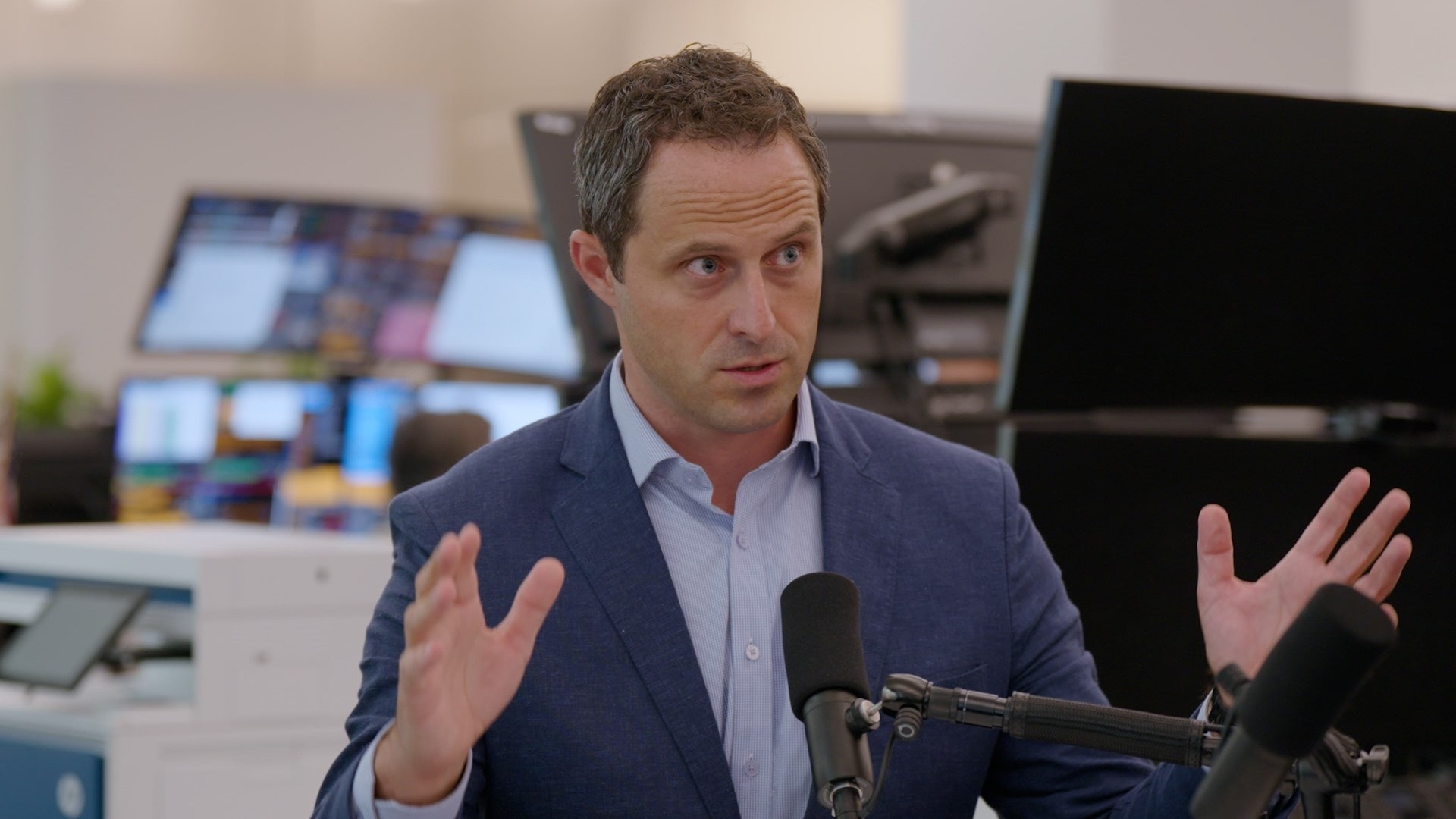
As more US companies report earnings next week, the bar is “very high” from the perspective of analysts and option market makers, says Brian Garrett, head of equities on the Cross Asset Sales desk in FICC & Equities. In this conversation with Chris Hussey, he also discusses how debt issuance from hyperscalers to fund AI capex is filtering through fixed-income markets and the divergence between single stock volatility and equity index.
Transcript:
Chris Hussey: This is The Markets. I'm Chris Hussey, and today is Wednesday, July 15th, and I'm here on the Goldman Sachs trading floor with Brian Garrett, who heads up equities within the Cross-Asset Sales Team in Global Banking and Markets. Brian, thanks so much for joining us.
Brian Garrett: Chris, thanks for having me again.
Chris Hussey: All right. We haven't had you on in a little bit. It's been kind of an amazing run here for markets, yet at the same time, we have the Strait of Hormuz, inflation, high rates, midterm elections loom. All of that does not sound like it makes for a market that should be at an all-time high. What do you make of it all? What are you looking at as we walk into earnings season?
Brian Garrett: Yeah, sure. I mean, as you mentioned, earnings season is something that we're very focused on. You know, you got pretty much half of the large banks reported earnings so far this week and, you know, S&P financial sector is making an all-time high this morning.
So next week 20% of S&P market cap reports earnings. You know, I think the one thing that we're focused on is just the very high bar that is being set for US equities into their earnings prints. The first one is fundamental. I think our analysts from bottoms-up perspective are expecting year-on-year earnings growth of 22%. And then when you look at the options market, you know, the average S&P stock is implying like a 5.5% implied move, which is also between 60 and 70 bps higher than, you know, call it, the long-run average.
So not only do equities have a high bar in terms of just you know, the EPS performance they can deliver, but they also have a really high bar in terms of price performance that they can deliver to kind of outperform what the option market is expecting.
Chris Hussey: Yeah, and but, you know, when you think about the investors that you talk to, are they feeling nervous about that? Or do they feel fine?
Brian Garrett: Yeah, I mean, listen, I think that the amount of kind of volatility under the surface in the market right now, and I know I bring that up a lot when you and I talk just because we've been living in a period of very, very low realized correlation which is a function of low index realized vol and super high single stock realized vol.
Chris Hussey: Yeah.
Brian Garrett: So I think, you know, our prime brokerage team put out a note this morning that said about 75% of global equities that had been bought off the April lows has been sold heading into earnings. So that's, you know, that's almost the one thing that feels positive to me going into this season, is that we have a high bar fundamentally. We have a high bar from a volatility perspective, but, like, we actually have pretty clean positioning. And I think that while investors have become nervous just given, you know, the momentum factor unwind and just, like, this very, very high level of single stock realized vol, if these names can perform, there is room to add them in the average portfolio.
Chris Hussey: Yeah, and that clean positioning from our prime brokerage unit, that's talking about hedge fund positioning largely, right?
Brian Garrett: Correct. Yeah. Yep. Yep.
Chris Hussey: Okay. So let me talk to you about another theme which is in the market, of course, which is the AI theme, and we've started to see the AI infrastructure guys and the hyperscalers dip into the credit markets now to fund some of these projects. Is that having an impact on markets at all? What do you see?
Brian Garrett: Yeah, you know, I think it's really interesting. The AI build-out from the hyperscaler community is going to require a massive amount of capital. I think our research team said between 2025 and 2030, they need to raise somewhere between $5.5 or $6 trillion. Someone's got to finance that. And you know, you're talking about companies that forever had been large, buyback candidates buying back their own stock, you know, massive free cash flow, asset light businesses that are kind of transitioning into asset heavy businesses. You know, they've tapped the equity markets a bit, kind of offering stock into, into the market.
The last couple of weeks we've seen them kind of come into the credit market to try and get funding from that of the markets. So last Monday, there was some, a, a fairly large deal that came early on in the week. And you know, I think what was coming at pretty tight concessions to where bonds were trading in the market heading into the deal has just started to widen.
You know, I think investors, while they have dry powder and while they are, you know, all-in yield buyers of fixed income, there's two things that are standing in their way. One is just the sheer size at which has already been issued and, you know, the sheer size at which is set to be issued, and then number two is concentration. You know a lot of the paper that has come to the market so far in the IG market has been technology bonds. And if you're a you know, portfolio manager who's trying to take a diverse view of kind of the fixed income market, there's only so much tech you can own. And so I think those two things are, are kind of filtering their way through the market. Goldman has a hyperscaler bond basket that widened by 22 basis points last week, which doesn't sound like a lot, but it actually is.
Chris Hussey: Yeah.
Brian Garrett: And then the only other thing that I would point to is you can, you can kind of discern levels of market anxiety when you look at different vol metrics or CDS metrics. And it's a big disparity between the CDS market in hyperscaler and kind of like the AI names and put skew. So put skew is kind of like equity protection, and then CDS is obviously credit protection. If you chart the two of those against each other, I mean, they couldn't be in kind of wider distributions.
Chris Hussey: Oh, that's fascinating. I'm not going to let you off the hook on volatility. Let's go back to vol.
Brian Garrett: Yeah.
Chris Hussey: VIX sitting actually not too terrible yet. But then you see places like Korea where everything trades plus or minus 5% every day or more. What is the vol market telling you about the health of the markets?
Brian Garrett: I mean, it really depends on where you look. This is one of the first times where there's just, again, we spoke about kind of the decreased amount of realized correlation in just US indices. Like, there is an even larger kind of muted correlation kind of globally.
In the S&P, realized volatility is not telling you the whole story. So KOSPI is the large kind of equity index in Korea. KOSPI implied vol right now is higher than it was during the global financial crisis
Chris Hussey: That's crazy.
Brian Garrett: So, you know, I just, there, there's many different reasons for this. You know, KOSPI has become an index that is extremely, has a lot of weighting towards just one or two stocks and those stocks happen to be hundred vol names. And then, you know, just I think the other aspect is the amount of ETF issuance that has started to hit the market and the way that these ETF wrappers are being constructed.
So, you know, I think one in five ETFs right now have some component of leverage or inverse kind of methodology. That's the total universe. Year to date, one in three ETFs that have been issued have had some component of that. So, it's getting bigger, and it's getting more aggressive. And you know, what this ends up doing is if these ETFs can garner enough assets, it increases kind of like the short gamma in the market, which again, it contributes to the higher level of single stock vol, and it can contribute to a muted index vol.
Chris Hussey: Yeah. It's interesting, cause when you get into a levered ETF, I guess, when the underlying goes down, they're forced to sell even more. Is that what happens?
Brian Garrett: Correct. And the opposite is true. When the underlying is up, they're forced to buy more. You know, I think the existence of these ETFs and, and kind of this cohort of intraday traders, that's less of the issue. It’s more the size and the underlying liquidity within the equity or whatever the sector that they're tracking. Because you know, if you think about it, if you have an ETF that has $1 million of AUM, they're not really going to create a large kind of volume trading footprint on their rebalance. But, you know, if you have something that's $20 billion, it's a completely different story.
Chris Hussey: Such a good point. All right, let's put a bow on it. What's the trade?
Brian Garrett: Sure. So, I actually have two trades.
Chris Hussey: I love two trades.
Brian Garrett: As the vol guy, you always have to have a couple in your back pocket. The first of which is kind of like overlaying single stock callers against long positions. The amount of retail call option buying in the market, the amount of leverage, the amount of volatility that stocks have exhibited to the upside relative to the downside has just created this underlying bid for call options which in about 10% of S&P names and 15% of Nasdaq names actually are trading higher than the implied vol of a put option.
So, kind of in my 20-year career, these are the types of things that don't normally happen. And so, if you're long in equity position, you can buy a 10% out of the money put, which is like an insurance contract on your stock, and you can fund it with, you know, either a 15% to 20% out of the money call.
Depending on kind of the volatility and depending on the duration of the trade, you can actually get, you know, strikes that are even much higher than that. And I just think that it's a really prudent way to take what the option market is giving you and protect some of your stocks when they're trading at all-time highs.
Chris Hussey: All right, I love that trade. What's the second trade?
Brian Garrett: The second trade is just a levered expression to S&P downside. You know, it's not that I'm extremely bearish, it's just more so this is something the market is giving you, and it's pretty attractive.
As we discussed earlier, I think 2026 has been a kind of poster child for the difference between a market of stocks and the stock market. You know, the stock market is experiencing extremely low levels of realized vol. The market of stocks, singles, is experiencing extremely high. And so I think that has kind of taken the cost of protection at the index level to a really low point, really low entry point.
So, you know, one of the things that we're looking at on the desk is, some people call them one touches, some people call them binaries, digitals, whatever. It's a put option that will pay a set level of payout if the index reaches or breaches that point at any time during the life of the trade.
So between now and the end of August, if the S&P drops by 7% at any time, you can make 5X leverage. So, you know, pay a dollar to make five. If the S&P drops 10% between now and August expiry, you can make 10X leverage, so pay a dollar to make ten.
Chris Hussey: I love it. Brian Garrett, he's not super bearish, but he's going to give you two trades that'll give you protection if the market goes down, taking advantage of the options market.
All right. What are you watching most carefully now as we go into the rest of July?
Brian Garrett: Listen, you know, I think inflation data is back on the forefront. You've got a new head of the Federal Reserve. The FOMC meets at the end of the month. It feels as though the job data has, has found solid footing. It's really more so about inflation and kind of how the US economy's going to deal with it.
Chris Hussey: Yeah. Makes sense. And we get another inflation print at the end of the month with PCE. Brian, thanks so much for taking the time with us.
Brian Garrett: Thanks, Chris.
Chris Hussey: That does it for this week's episode of The Markets. I'm Chris Hussey. Thanks for listening.
This episode was recorded in July 15, 2026.
The opinions and views expressed herein are as of the date of publication, subject to change without notice, and may not necessarily reflect the institutional views of Goldman Sachs or its affiliates. The material provided is intended for informational purposes only, and does not constitute investment advice, a recommendation from any Goldman Sachs entity to take any particular action, or an offer or solicitation to purchase or sell any securities or financial products. This material may contain forward-looking statements. Past performance is not indicative of future results. Neither Goldman Sachs nor any of its affiliates make any representations or warranties, express or implied, as to the accuracy or completeness of the statements or information contained herein and disclaim any liability whatsoever for reliance on such information for any purpose. Each name of a third-party organization mentioned is the property of the company to which it relates, is used here strictly for informational and identification purposes only and is not used to imply any ownership or license rights between any such company and Goldman Sachs.
A transcript is provided for convenience and may differ from the original video or audio content. Goldman Sachs is not responsible for any errors in the transcript. This material should not be copied, distributed, published, or reproduced in whole or in part or disclosed by any recipient to any other person without the express written consent of Goldman Sachs.
Disclosures applicable to research with respect to issuers, if any, mentioned herein are available through your Goldman Sachs representative or at http://www.gs.com/research/hedge.html Goldman Sachs does not endorse any candidate or any political party.
Subscribe to Briefings
Our weekly newsletter delivers the latest insights on economic forces shaping markets—from Goldman Sachs leaders, economists, and investors around the world.
You can unsubscribe at any time. For information about how your personal data will be used, visit Privacy Information and Resources.