
The Markets
Riding the AI Wave: Megacap Tech and the Fed
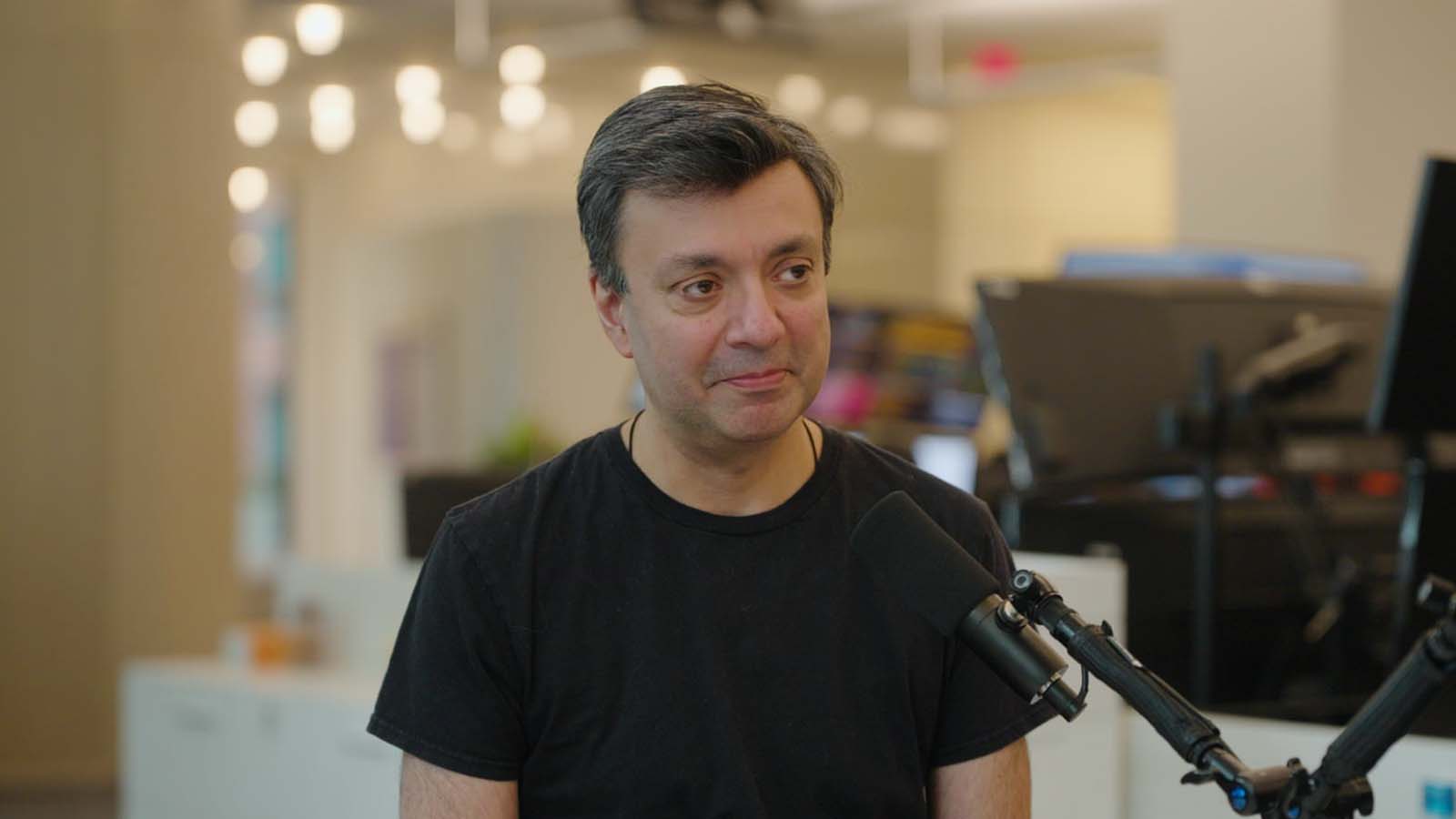
After a divisive FOMC meeting, what policy shifts could lie ahead for the Fed? And what are tech giants’ earnings telling us about the AI trade? Anshul Sehgal, global co-head of Fixed Income, Currency and Commodities in Goldman Sachs Global Banking & Markets, discusses with Chris Hussey.
Transcript:
Chris Hussey: This is The Markets. I'm Chris Hussey and today is Thursday, April 30th. And I'm here on the trading floor with Anshul Sehgal who's global co-head of fixed income, currency, and commodities within Global Banking & Markets. Anshul, thanks so much for joining us here on The Markets.
Anshul Sehgal: Thank you for having me.
Chris Hussey: All right. We're coming right in the wake of the Fed that came in yesterday afternoon. A little hawkish tilt, maybe. Powell said he's going to stick around. Rates shrug. What do you make of it all?
Anshul Sehgal: A little bit of a divided committee. So, if you see where the Fed was after the prior meeting, they were signaling one cut this year, largely because they expected labor markets to continue to be soggy. Since then, we got labor market data that was actually strong. The US consumer seems to be in better shape than what the Fed had projected. And of course, you've got the war, which is inflationary. A supply side shock, which the Fed doesn't really have the tools for. But still, they don't want inflation expectations to become entrenched.
So, if you look at pricing for the ECB, we just had the ECB meeting as well. They're pricing in three to three and a half hikes this year. They're more energy sensitive because they import all of their energy, as opposed to the United States. But still, central banks need to be more centered. So, you've got four dissents. One for a cut this meeting. But three of the dissents were for the Fed to be more nuanced and more balanced. And essentially, not pre-committing in a very soft way. There is no commitment. It's just forward guidance. But the Fed not pre committing to a cut being the next move whenever it might be.
And it's a very minor change overall. It doesn't really affect policy, not for the next few months at least. But it sets the tenor for how they'll be debating things going forward.
So, again, a bit of a divided committee. The labor economists on the committee seemed like they were consistent. They still thought that the next move is likely a cut. And then the rest of the committee, Beth Hammack, Lorie Logan, and Neel Kashkari were more balanced.
Chris Hussey: Yeah, and of course Powell ended the meeting by saying "You won't see me later." And that means you're going to see Warsh later.
Anshul Sehgal: Right, he got confirmed, so.
Chris Hussey: Yeah. He got confirmed. So, how does that play out in the Fed's next move?
Anshul Sehgal: That's a very interesting question. So, Warsh, of course, has spoken a lot about his long-term views. So, he's got that on the balance sheet. He wants to factor what the Fed does and what the US Treasury does. That's not to say that they'll set policy independently. They will, essentially, collaborate. But right now, the way it's been since the GFC is that the Fed's QE program and its balance sheet, essentially, has an impact on longer-dated yields. And of course, the Treasury's issuance patterns also have an influence on longer-dated yields. He wants to factor that out. Have a smaller balance sheet.
He said that it's a slow-moving thing. If he tries to do that very aggressively, very quickly, I think the financial system will get challenged in a very, very meaningful way. I take he realizes that. So, that's one aspect of it, which is slower moving. They will probably spend years studying it before they actually enact anything. So, we'll see where that goes. That's an interesting paradigm.
And then the other thing is in Warsh's mind, how does he rank inflation versus growth? Like, we're going through a stagflationary shock right now. Energy price is up. Obviously, because of substitution, people won't be spending as much on discretionary things. Which means growth's down. Not a great place for the economy to be if the war persists.
We think that Warsh is a little less dovish than Powell was. And that's going to set the tenor in the intermediate term. In the near term, however, I think he's going to take his time to decide what he wants to do.
So, we don't expect Warsh or Powell Fed policy to be on the move for the next three to six months. And we don't think the market does either based on what's in the price. The market's basically pricing in no hike or no cut practically through the middle of next year. Now, that might be too long a frame. It's just that it's a bimodal distribution by middle of 2027 whether the Fed's cutting or hiking. And it averages to no move. But I don't think anyone in the markets really expected the Fed policy to be on the move between now and September.
Chris Hussey: It's true. And I guess underlying that whole bit is this tension between growth and inflation and how those are the two mandates of the Fed. But, you know, put that fixed income, currency, and commodities hat on for a second. Look across all those markets that you see here. Because oil is still going up, or at least it's elevated. And you know, the rates markets are still kind of elevated a little bit too. And yet, credit and equities, they don't seem to care at all about this. How does that make sense? Make sense of it all to us as a markets watcher.
Anshul Sehgal: Great question. So, the way we're thinking about that is post GFC. Coming into the GFC, balance sheets in the domestic economy were very levered. Obviously, bank balance sheets were incredibly levered. But so were private side balance sheets. There was a reasonable amount of froth in markets. Property prices had gone up a lot. The economy's starting point was more fragile.
As a consequence, with that much leverage on private side balance sheets, you ended up being in a place where, like, everything reacted quite violently to any policy move. And that's why the Fed had to step in, expand its balance sheet, do an insane amount of QE. All of those things transpired.
Sitting here today, largely because of the global fiscal expansion we've had since the pandemic, private side balance sheets are actually a lot less levered. Materially less levered than they were in 2008. In a world that is inflationary and private side balance sheets are not as levered, there isn't as much froth in terms of house prices going up and things of that variety.
I think credit sort of disentangles from this macro outlook a little bit. You end up in a place where, like, debt servicing costs in a world that is going to have 2 to 4 percent inflation for as far as the eye can see should not be a problem. And that's why credit's disentangled. Obviously, private side balance sheets have capacity to buy credit should there be a wobble.
Likewise for equities, they've disentangled in a different way. They've disentangled because you've got emergent technologies that can actually move the needle in a very meaningful way. All of this with a backdrop where demographics will see the labor force shrink largely because there's no immigration and the boomers are retiring. So, for the next five years, you're going to see the labor force shrink. You will have a need for these emergent technologies to fill the gaps.
People are living longer. Healthcare services has been the big driver of job growth in the last few years. That's here to stay. People will need that help. Technology can only help all of that.
So, again, like yes, we live in a multi-factor world is what I'm basically saying. We lived in a one factor world where everything was about deleveraging for a decade. And now we live in a world where you've got emergent technologies that hold a lot of promise. You've got inflation that is a little more entrenched than it was over the last decade. And you've got household balance sheets are in much better shape. So, I think that's playing out in different ways along different threads.
Chris Hussey: Yeah, no, it's a great point about the leverage. Although, that leverage has sort of shifted over to the government side of the equation.
Anshul Sehgal: It has shifted to the public side of the balance sheet globally, but certainly a lot more in the United States. And that, of course, the fixed income market or the Treasury market cares deeply for. And that's playing out. You said bond yields look elevated. Term premiums higher than have prevailed for 15 years. That's a reflection of all of those things.
In terms of the US government's ability to service that debt in the near term, it's not an issue. Credibility is not challenged yet. The question becomes next time you have a downturn, how does that play out? Will the US government be able to fiscally expand yet more from where we are today? And that's an open question.
You see other domains, other DM domains where debt to GDP is much higher than it is in the United States. Say, for example, Japan. And the markets have reacted very violently to their efforts to expand public side balance sheets. So, yes, you're closer to the precipice. Most likely. Only time will tell.
But then on the flip side, if AI does hold its promise, you do get a lot of GDP growth. You get a productivity boom. Debt to GDP could actually move the other way too. So, it's an open question which way we go. But the market, the fixed income market, is clearly worried about that.
Chris Hussey: Terrific, Anshul. Yeah, we actually did get a whole big update over the last 24 hours from some of the biggest companies, including all the hyper scalers. What do you make of results there as the AI trade's still in place?
Anshul Sehgal: It's been fascinating. I think you touched upon this. On the one side, you've got war and inflation and oil prices going through the roof. And on the other side you've got an equity market that's completely disentangled from all of this largely because the domestic equity market is over 25 percent hyper scalers at this point in time.
The market liked their earnings broadly. The market was happy that they weren't investing a truckload more in AI capex, at least not in the near term. All of these were positives. But also, coming into this earnings season, the demand for tokens has just exploded. Which means the demand for cloud compute has just exploded. The market's big worry was all of this AI capex, how will they recoup that? And again, like if you've used any of the LLMs out there, they all basically time out now. That's the extent of how much people are using these tools. US industry measures the costs of these tools in terms of how much it would cost to get the same amount of work done with humans. So, this is a much bigger transformation in terms of how people are thinking about it.
So, all of this sort of accrues to the hyper scalers. It'll probably accrue to new business models that are yet to be funded. But the hyper scalers are going to be a part of this equation, as are the LLM providers. And then you have world models that are earmarked for coming out later this year, which will lead to an explosion in token usage yet more. These models will be able to understand the physics of the real world. Will likely be able to see. Will likely be able to interact with us. You'll likely be having a robot sitting here instead of me.
Chris Hussey: No chance.
Anshul Sehgal: But all of those things are on the cards. And the market's excited about it. And that's reflected in the pricing of hyper scalers, certainly, but the broader equity market as well.
Chris Hussey: It is. There's so much in there. As you pointed out, it's a multi factor world. But at the same time, we've had a rebound over the course of April that really was only matched by the rebound that came in the back of the great financial crisis and the other one that came on the back of COVID. Do you like this rebound? Do you want to chase it? Or do you want to fade it?
Anshul Sehgal: We haven't changed our broad thesis. We are living through a credit expansion. Credit expansions are very different than fiscal expansions. In a credit expansion, the lenders do go through phases where they worry a lot about whether they're going to get returns on their capital or not. Debt capital. We lived through one of those with the war.
But wars are generally inflationary. There's yet more spending. All of that in this economy today funnels to, essentially, tech companies. So, you're seeing all of that play out over a very short horizon.
So, yes, April was great. But March wasn't the greatest. I think people were frustrated. People expected equities to have a bigger downturn. It was just that the capex kept the domestic economy in reasonable shape as we went through that.
Am I worried about it? I'm not. We came into all of this-- last time I was here, we were seven on ten with the intent of taking it up should valuations get more attractive. They did. We took it up to a nine. We never got to ten. We were waiting for more of a pullback.
And now, with this rebound, we're back to a seven. We do want to ride the wave. We think it is a big question mark in terms of how far the domestic equity market goes. Remember, like these seven companies, or US tech companies more broadly, do have a monopoly in the free world on these technologies. And these will be deployed very broadly, not just in the United States but the entire world. And they do have the potential to really change how life works.
So, we want to be invested. But we're back to a seven on ten waiting for better entry points to take it up again. And we plan on trading this theme in that manner.
Chris Hussey: All right. So, in a seven world, what's the trade?
Anshul Sehgal: So, we still don't like bonds. I know yields are elevated. There are better returns to be had. There is no growth trajectory there, which is what this market ought to reward. Like I said, energy security is a big thing. So, we like energy. So, that's where we've rotated some of our excess that we had deployed in tech. We think energy security, both because of AI, and geopolitics, is going to be a dominant theme. Defense, similarly.
None of this is going to change very much. None of these are as exciting an opportunity as AI is. AI is a generational thing. These are trades. So, we've rotated some of our allocations in that manner. And we don't really have much else.
So, we're like seven on ten on tech. Three on ten on energy. Two on ten on defense. And no fixed income.
Chris Hussey: A little bit of halo. Hard assets. Low obsolescence.
Anshul Sehgal: That's right.
Chris Hussey: All right, looking forward to May, what are you watching?
Anshul Sehgal: So, May is going to be all about inflation. Labor markets seem to be holding up. If you look at survey data, what is essentially shown is that the US consumers continue to spend. But tapped into their savings. So, now in that world what happens in May? Discretionary spending in May will be the early read. Sentiment data in May will be the early read in terms of how the US consumer is faring.
And then the issue is starting June, it's travel season as you well know as someone with kids.
Chris Hussey: Yeah.
Anshul Sehgal: Airline ticket prices have gone up 70 percent. People will cut back on their travel. But they will still travel. Does that mean that you see an air pocket of growth in June? Perhaps June/July? And if you do, do you view that as an opportunity to wade back in? Or is that a time to be cautious? All of this sort of, like, the leading indicators in May will give us a sense of where we go from there.
Chris Hussey: That's terrific. Anshul, thanks so much for taking the time with us again.
Anshul Sehgal: Thank you for having me.
Chris Hussey: That does it for this week's episode of The Markets. I'm Chris Hussey. Thanks for listening.
And to hear another perspective on how Kevin Warsh could shape Fed policy, listen to our most recent episode of Exchanges with Rob Kaplan.
The opinions and views expressed herein are as of the date of publication, subject to change without notice, and may not necessarily reflect the institutional views of Goldman Sachs or its affiliates. The material provided is intended for informational purposes only, and does not constitute investment advice, a recommendation from any Goldman Sachs entity to take any particular action, or an offer or solicitation to purchase or sell any securities or financial products. This material may contain forward-looking statements. Past performance is not indicative of future results. Neither Goldman Sachs nor any of its affiliates make any representations or warranties, express or implied, as to the accuracy or completeness of the statements or information contained herein and disclaim any liability whatsoever for reliance on such information for any purpose. Each name of a third-party organization mentioned is the property of the company to which it relates, is used here strictly for informational and identification purposes only and is not used to imply any ownership or license rights between any such company and Goldman Sachs.
A transcript is provided for convenience and may differ from the original video or audio content. Goldman Sachs is not responsible for any errors in the transcript. This material should not be copied, distributed, published, or reproduced in whole or in part or disclosed by any recipient to any other person without the express written consent of Goldman Sachs.
Disclosures applicable to research with respect to issuers, if any, mentioned herein are available through your Goldman Sachs representative or at http://www.gs.com/research/hedge.html
Goldman Sachs does not endorse any candidate or any political party.
Copyright 2026. All rights reserved.
This episode was recorded on April 30, 2026.
The opinions and views expressed herein are as of the date of publication, subject to change without notice, and may not necessarily reflect the institutional views of Goldman Sachs or its affiliates. The material provided is intended for informational purposes only, and does not constitute investment advice, a recommendation from any Goldman Sachs entity to take any particular action, or an offer or solicitation to purchase or sell any securities or financial products. This material may contain forward-looking statements. Past performance is not indicative of future results. Neither Goldman Sachs nor any of its affiliates make any representations or warranties, express or implied, as to the accuracy or completeness of the statements or information contained herein and disclaim any liability whatsoever for reliance on such information for any purpose. Each name of a third-party organization mentioned is the property of the company to which it relates, is used here strictly for informational and identification purposes only and is not used to imply any ownership or license rights between any such company and Goldman Sachs.
A transcript is provided for convenience and may differ from the original video or audio content. Goldman Sachs is not responsible for any errors in the transcript. This material should not be copied, distributed, published, or reproduced in whole or in part or disclosed by any recipient to any other person without the express written consent of Goldman Sachs.
Disclosures applicable to research with respect to issuers, if any, mentioned herein are available through your Goldman Sachs representative or at http://www.gs.com/research/hedge.html
Goldman Sachs does not endorse any candidate or any political party.
Subscribe to Briefings
Our weekly newsletter delivers the latest insights on economic forces shaping markets—from Goldman Sachs leaders, economists, and investors around the world.
You can unsubscribe at any time. For information about how your personal data will be used, visit Privacy Information and Resources.