
The Markets
Why Rates Could Keep Rising: Phillip Lee on Treasuries
Transcript:
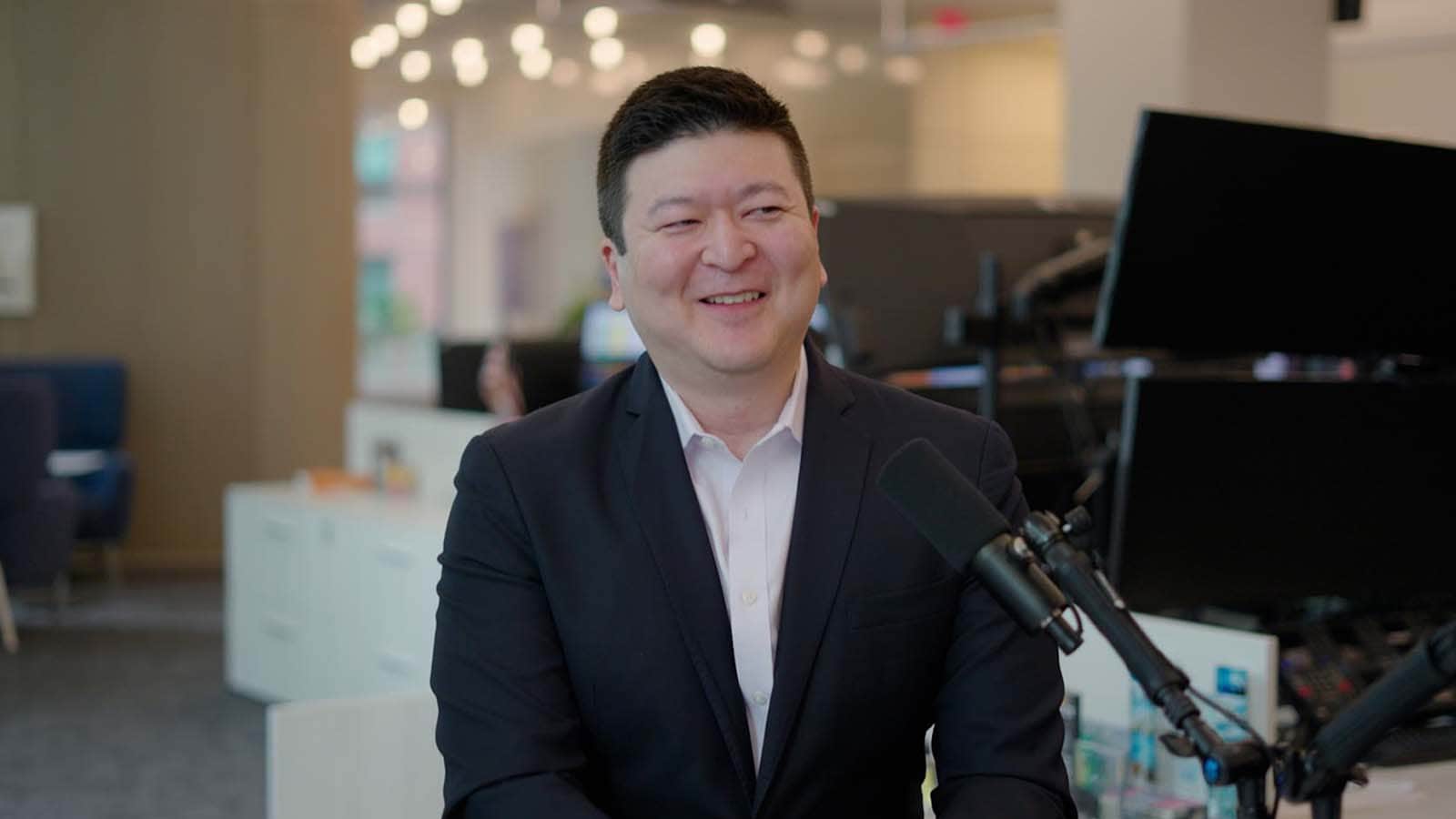
Chris Hussey: This is The Markets. I'm Chris Hussey, and today is Thursday, May 21st, and I'm here on the Goldman Sachs trading floor with Phil Lee, who's head of Real Money Rate Sales within Global Banking and Markets. Phil, thanks so much for joining us.
Phil Lee: Thanks for having me.
Chris Hussey: All right, I gotta ask, what is real money rate sales?
Phil Lee: Yeah. Real money is basically, if you want to keep it simple, is it's the non-hedge fund side of clients. So, we look after our banks, insurance, asset managers, for the most part.
Chris Hussey: Okay, great. That makes sense to me. Okay. Help us understand what’s happening with rates, because rates have moved higher. What’s going on inside the markets?
Phil Lee: Yeah. So, rates, I wish there was a smoking gun answer for this. I think there's a variety of different things that are happening in the markets. One, are inflation risks, so oil, tariffs, near-term AI cycles, are adding to some of that uncertainty and making investors less confident that inflation is going away from the Fed's mandate. So, I think that that's keeping the Fed cautious, and investors are asking for higher real yields.
In addition, I would say that you've had a lot of resilience in risk assets and growth. And so, we've seen equities do really well, we've seen other risk assets do really well, and so, that part of the narrative is really, it's really held up better than expected.
And I think that if growth doesn't slow materially, rates have to stay restrictive a little bit longer. You have to add in fiscal premium to that in terms of, you see that people need to be compensated for holding on to more longer-duration risk, and that compensation leads to higher rates, especially in the back end.
And then finally, I would say, you have global spillover. So coincidentally, the UK and Japan are also having some of this slippage into higher rates, and so that's also spilling into the US markets as well, and US Treasuries.
Chris Hussey: All right. So, sort of a cacophony of reasons. You got inflation, you've got better growth. Interestingly enough, you've got some issues around the US government. And then you've got a competition from a bunch of other countries in terms of their rates going higher, and so US rates kind of go higher in sympathy. A lot to think about there.
But you also got the Fed, and we've got a new chairman who's come in. We're going to have a June meeting. That'll be the first time for that chairman to opine. We went into the year thinking that the Fed was definitely going to cut, and we thought a new chair would be more dovish. Where do we stand with the Fed?
Phil Lee: Yeah, I think at this point, I expect, and I think many do expect that the Fed will stay on hold for a bit. I think the base case has moved from, as you said, when and how much will the Fed cut, to now, how long will they stay on hold? And that seems like the center case. I think that what's interesting is that we moved in February with two to three cuts priced in, and now we've kind of swung all the way because of the nature of the conflict and some of the shock that's out there, to actually hikes priced in. And so, there's almost 30 basis points of cumulative hikes priced into 2027, which I think is a bit tough for the market.
Chris Hussey: Yeah. So, inflation kind of keeps the Fed on hold at best, maybe even raises rates as the markets are suggesting it could. But you also mentioned the government, the need for investors to ask for a little bit more return in this environment. Unpackage that for a little bit. Is there a big fiscal premium getting priced in here, or is that a bit of a story?
Phil Lee: Yeah. I think when you look at, again, not only the US, but the UK, Japan, a lot of these countries are running deficits, right? Six to eight percent deficits. And so, for that, plus all the supply that's coming about, and yeah, that sustainability, I think all of those concerns are making folks increasingly demand for more compensation to hold that risk as that uncertainty unfolds.
And I think that is, it's not that the markets are pricing a default risk per se. It's just saying that structurally, if that much supply is coming into play, you need to kind of take account for that, and that should be compensated for that risk.
Chris Hussey: Yeah, no, it's a great point that you don't have to go all the way to a dark scenario in order to ask for more compensation, which makes a lot of sense.
Okay. So, we've covered the inflation side with the Fed. We've got the fiscal issues embedded in there, the competition from other countries. Let's slice into that growth question you had, though, because you were talking about growth accelerating. But at some point, rates go so high that they stifle growth, and we've had this thirty-year above five percent. Are you worried at all that rates could stifle the housing market and the economy?
Phil Lee: Yeah, that's a great question. I think everyone, all our clients ask about mortgage rates. I think that you started to see that mortgage rate start to tick up towards 6.5%, which is stifling, I think. And that's seen in some of the home sales, the slowdown or the cool down there.
And then relatedly into, kind of what home builders are doing as well, you know, they can't be building homes if the demand is not there, if the sales aren't turning through the cycle. And so, I think that that creates a gridlock, and that is concerning. Analogously, I would say you have the consumer, which, you know, is, right now I would even frame it in a K-shaped bifurcation.
But at the moment, you know, consumers are doing well in terms of the equity, and risk-assets performance so far, but I think our economics team have started to say that you should be worried about some of the personal consumption and the savings rates and things like that where, whereby tax refunds are fading. You have the gas prices are much higher. You have healthcare subsidies fading as well. And so, all of those things all together are making the consumer weaker, and that's something to keep an eye out for, and I think that that's interrelated.
Chris Hussey: No, good point. So, you have these competing forces. Do you think rates are going higher or lower?
Phil Lee: Yeah, I think it depends on part of the curve, but I think rates are going higher. And I think that I, you know, I don't see, the main thing I would see is that the back end is probably going higher still. We saw, at least on the desks, we saw clients looking at five percent in thirty year as a target zone to buy. Some did. It still went higher, right?
And so that goes back to that demand for more term premium or more compensation. And so, it does feel like each time there's need for more compensation, more yield to kind of purchase more. But it does feel like all of the things that are coming up, whether it's Treasury supply or other things, are going to continue to raise that rate in the back end especially.
Chris Hussey: Okay. Given all of that, what's the trade?
Phil Lee: Yeah. So again, I think if you bifurcate that out, I think it is a steepener. And I would say fives, thirties steepeners, and you could do that in linear form, i.e., in Treasuries, or you could do that in a vol conditional format. And, you know, the way to think about that is just more that, if the back end is going to be a function of, you know, fiscal premium, supply, and just contends with a variety of heavy public and private, you know, sector issuance and uncertainty with fiscal trajectories, that is going to go higher.
The belly of the curve or front end even, I think is a little muted. Like again, in February, we were talking about labor market, AI disintermediation, and the market was rallying and the market loved to be in receivers and other things like that. And I think that's where, I think, especially like the fives part of the curve, is where a lot of folks believe, and I believe, is a pivot point for buying. And so, fives, thirties steepeners is my call.
Chris Hussey: And in sort of plain English, the idea there is that the five-year yield stays the same, maybe even goes down a little bit, while the thirty-year yield continues to rise.
Phil Lee: That's right. So, and it could, that's a bear steepener. Where you expect the 30-year to kind of move higher than fives. You can see also that if where 30-years are, it's a bull steepener as well. We just had some headlines for a potential piece that might make the fives move a little bit, and, like, people will buy that part of the curve. And so, I just think a steepener overall, bull or bear, might be the right path.
Chris Hussey: So, we started this conversation, you talked about how you talk to a lot of mutual funds. What does all this mean to a 60/40 portfolio manager?
Phil Lee: Yeah. So, I think obviously the 60 part has been doing pretty well. It's been steady. And I think that the 40 is where the concern is, or where there could be a little more efficiency.
And so when that, when you talk to some of the biggest money managers, I think the play there is, to cite some things, it's a patience, it's investing in carry while waiting for macro uncertainty and macro clarity. And it's looking for ways to clip and wait along the way.
Like, cannot make hero macro calls on these things. You just have to play it smart. And so, when you talk to some of these larger asset managers, I think it's been pretty consistent. It's been a, I'll take a quote, a dynamic patience.
Chris Hussey: Dynamic patience, two words that really sum up this conversation very well. Thanks so much, Phil, for taking the time with us.
Phil Lee: Thank you very much. Appreciate it. Go Knicks.
Chris Hussey: Yeah, go Knicks. That does it for this week's episode of The Markets. I'm Chris Hussey. Thanks for listening.
The opinions and views expressed herein are as of the date of publication, subject to change without notice, and may not necessarily reflect the institutional views of Goldman Sachs or its affiliates. The material provided is intended for informational purposes only, and does not constitute investment advice, a recommendation from any Goldman Sachs entity to take any particular action, or an offer or solicitation to purchase or sell any securities or financial products. This material may contain forward-looking statements. Past performance is not indicative of future results. Neither Goldman Sachs nor any of its affiliates make any representations or warranties, express or implied, as to the accuracy or completeness of the statements or information contained herein and disclaim any liability whatsoever for reliance on such information for any purpose. Each name of a third-party organization mentioned is the property of the company to which it relates, is used here strictly for informational and identification purposes only and is not used to imply any ownership or license rights between any such company and Goldman Sachs.
A transcript is provided for convenience and may differ from the original video or audio content. Goldman Sachs is not responsible for any errors in the transcript. This material should not be copied, distributed, published, or reproduced in whole or in part or disclosed by any recipient to any other person without the express written consent of Goldman Sachs. Disclosures applicable to research with respect to issuers, if any, mentioned herein are available through your Goldman Sachs representative or at http://www.gs.com/research/hedge.html
Goldman Sachs does not endorse any candidate or any political party.
Subscribe to Briefings
Our weekly newsletter delivers the latest insights on economic forces shaping markets—from Goldman Sachs leaders, economists, and investors around the world.
You can unsubscribe at any time. For information about how your personal data will be used, visit Privacy Information and Resources.