
The Markets
Why US Stocks Could Climb Higher
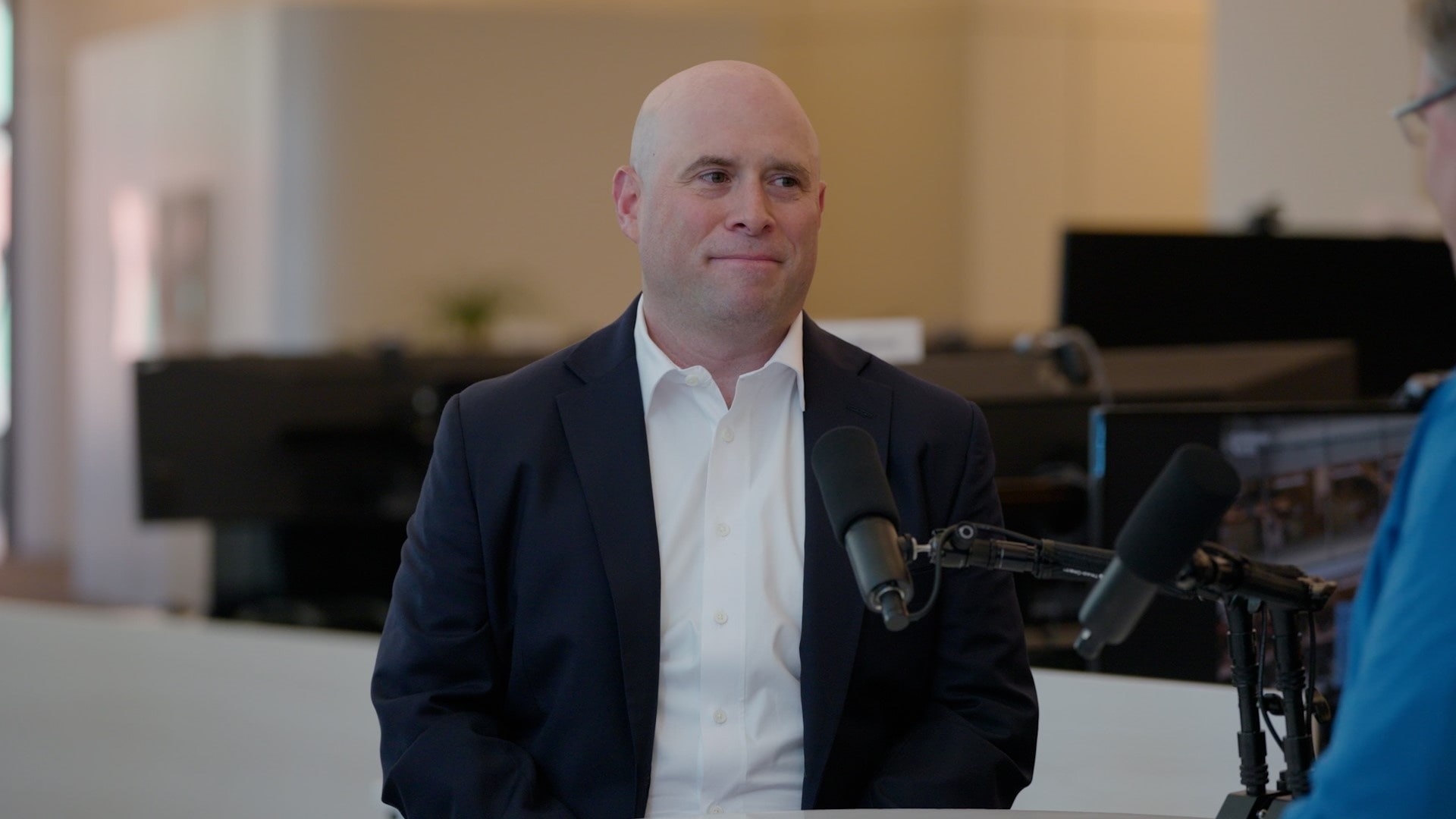
As US equities get more volatile, are the drivers of the rally still intact? John Flood, head of Americas Equities Execution Services in Goldman Sachs Global Banking & Markets, breaks down the market action, and explains why strong earnings and positive technicals could drive stocks higher, in this conversation with Chris Hussey.
Transcript:
Chris Hussey: This is The Markets. I'm Chris Hussey, and today is Thursday, June 25th, and I'm here on the Goldman Sachs trading floor with John Flood, who is head of America's Equity Sales Trading within Global Banking and Markets. Floody, thanks for joining us.
John Flood: Thank you for having me.
Chris Hussey: All right. I want to get into a whole lot of different things that I know are top of mind for you, but first I want to talk about the markets this week, because they've started to get volatile again. What do you make of it? Is the tech trade starting to show some cracks, or is this a time to buy any dips?
John Flood: I still think that we're in buy dip mode. Reminder that we're stepping into the Russell rebalance tomorrow, which we typically see bouts of volatility heading into. And a week ago, from today, as we were just talking about the Knicks parade, which was awesome- go Knicks, we actually had 34 billion shares trade across all US equity exchanges. That's the most active trading session in the history of the stock market. That broke the record made on Liberation Day in 2025. So what that tells me is that you have a lot of investors from all different cohorts, whether it be retail, institutional, corporate, moving portfolios around.
So I do think that the volatility will continue, but I do think general trend for this market is higher, and dips still present solid buying opportunities.
Chris Hussey: That's pretty awesome. I didn't appreciate that two million people downtown Manhattan watching the Knicks, and we get the biggest trading day in the history.
That pretty awesome, good thing that we no longer have to do the physical trading at the New York Stock Exchange. That would've been difficult.
All right. Let's get into the supply, because supply's a big factor here. We've got an IPO surge that's taking place here. What does this recent high-profile issuance mean for markets?
John Flood: Yeah, we saw two high-profile deals in a two-week period in June. Between the two of them, there was $140 billion notional. It was the first and second largest primary capital raise in the history of the US market in a two-week period. Wow. And the stock market didn't blink, and on our desk, we saw significant institutional demand for these offerings.
More importantly, I think that we talked about the retail bit a lot, in our conversations and with clients. Retail has been the most consistent buyer of stocks this year, and as we get through these high-profile IPOs, it feels like it is accelerating the retail bid, which I would expect to continue for the rest of this year.
Chris Hussey: All right. Another theme on the supply side, of course, is the flip side of issuance, and that is buybacks and M&A. You know, strong M&A environment, buybacks you're not so sure with the market up so much. Is it enough to offset all the issuance?
John Flood: Bottom line is yes, and that surprises people because we used to talk about buybacks and Mag Seven controlling a bulk of that buyback activity.
On our corporate buyback desk, we are seeing a broadening of that bid, which is w- which is a positive signal. You know, two years ago, an active day on our buyback desk, we would have 10 programs running. This year, it's more like 50 to 60. Wow. So throughout the S&P 500, you're seeing, you know, smaller cap companies relative to the S&P 500, in, with, relative to Mag Seven, also start to partake in these buybacks, and I think that trend continues.
A- and my gut is that this year, despite some Mag Seven names pausing buybacks, we'll have a record repurchase year from notional perspective and from a number of, companies that have bought back their own stock.
Chris Hussey: Yeah, makes sense. Okay, enough on supply, John. Let's go to themes. You are watching a lot of different themes, having to juggle everything. What's got your attention today?
John Flood: I'm still watching semis and semi equipment. it's where everyone is and continues to want to be. we've seen, a lot of this expressed through exposure in Asia, Korea and Taiwan. I think that, you know, as we said, as you have crowding, as you have popular trades that have worked, you're bound to see volatility, but I think that that trend higher will continue.
Semis, memory- Asia. And then we have seen supply in Mag Seven as a result of kind of making room for some, from some semis and other places in tech, and some other IPO type of, transactions. So I actually think that there's some attractive entry points within the Mag Seven complex right now, as you've, as you've seen hedge funds short Mag Seven and potentially use it as a source of supply to make room for some of this paper.
Chris Hussey: Yeah, no, it's a great point. Mag Seven has almost become a top 10. There are three, three big semi stocks now over a trillion dollars. okay, let's put your rates hat on. I know you're an equity specialist here, but another theme that's sort of in the market is, the Fed. Warsh had his first Fed chair-led June meeting.
What do you make of rates? Where, how is that going to impact equities?
John Flood: I actually started as a rates, trader at Lehman Brothers in 2006, which didn't- Ah. Didn't work out too well for me. No, no, I didn't know that. So that was a long time ago.
Chris Hussey: I started at Lehman as well.
John Flood: So the market right now is concerned that rates will move higher. I just walked back from my desk and, you know, the market's pricing in 40 basis points of hikes between now and year-end.
Wow.
Um, and I would say that is the number one concern of what could potentially break this market, higher inflation and higher than expected rates. I, I thought that the l- the Fed meeting was more hawkish than expected, but I think that we have the best economists on the street.
They do not think that we get a hike, and right now a hold between now and year-end will essentially act as a cut. The market will take it as a cut. But, but I do think that, I, I think we need to continue to follow rates very closely. it is what people are concerned about. I'm on the same page as our economists and think that, that we don't get a hike, which would be bullish for the stock market.
Chris Hussey: Yeah, super bullish I would imagine if you got 40 basis points of hikes, priced in already. All right, let's go to the here and now because believe it or not, next week we're going to close out the first half, the second quarter, the month of June, everything. Earnings momentum, what are people thinking as we go into earnings season?
John Flood: Earnings have been the driver of this bull market. Um, and we think it, earnings will continue to drive the market higher. That, that really is the linchpin behind our bull thesis. Q1 earnings, the median stock grew earnings at 14%. Okay. That was one of the best quarters we've seen in decades. Q2 earnings are around the corner.
median expectations are for 9% year over year growth. If we come close to that level and clear that hurdle, which we think we will, the earnings still paint the story of a, a fundamental backdrop that supports this move higher. So earnings have been fantastic. we think they'll continue to be very good. So let's see what Q2 brings us.
Chris Hussey: Yeah, it's such a great point. We had one of the best earnings growth quarters. If anybody's looking for why stocks are hitting all time highs, it's just that simple. All right, let's put a bow on it. What's your favorite trade?
John Flood: My favorite trade right now is to continue to lean into what's working.
high momentum is crowded right now. It's crowded for a reason. I think that's semis, I think that's semi equipment. I think that pockets of, Korea and Taiwan continue to work. So I, I like continuing to lean into trades that have worked between now and year end, and I do think that S&P 500 has a real chance to break above 8,000 in, in the near term, 'cause we said there's a whole lot of technicals that are a tailwind right now. Most important, earnings have been fantastic and they should continue to be.
Chris Hussey: Now I, I got to ask, 'cause you mentioned Korea. Down 10% w- in a day once this week. Didn't shake you?
John Flood: Nope.
Chris Hussey: I love it. That's the FOGO. Never get shaken. All right, what are you watching for next week? 'Cause we're going to end it all and we're going to start July.
John Flood: I don't want to not bring up anything bearish. So, so next week, as we said, we close out, first half of the year. There are some technicals that could act as a near term market headwind. Pension rebalances. Essentially, pensions need to tweak their portfolios to get the right mix of equities and fixed income.
And because equities have outperformed fixed income so much, there's actually 30 billion of US stocks for sale attached to this pension rebalance. We have June 29th, June 30th, the last two trading days of the half next week. That would act as a near term headwind. So I would not be surprised to see some early market weakness next week that again could present a solid buying opportunity.
Chris Hussey: That is a cool catalyst that not everybody watches. I love that one. All right, last question, 'cause July is going to bring us the World Cup championship. I know you love every sport there is on the Earth. Who you picking in the World Cup?
John Flood: USA all the way, baby.
Chris Hussey: Ah, yeah. Why not? 4th of July too next week.
That does it for this week's episode of The Markets. I'm Chris Hussey. Thanks for listening.
Recorded on June 25, 2026.
The opinions and views expressed herein are as of the date of publication, subject to change without notice, and may not necessarily reflect the institutional views of Goldman Sachs or its affiliates. The material provided is intended for informational purposes only, and does not constitute investment advice, a recommendation from any Goldman Sachs entity to take any particular action, or an offer or solicitation to purchase or sell any securities or financial products. This material may contain forward-looking statements. Past performance is not indicative of future results. Neither Goldman Sachs nor any of its affiliates make any representations or warranties, express or implied, as to the accuracy or completeness of the statements or information contained herein and disclaim any liability whatsoever for reliance on such information for any purpose. Each name of a third-party organization mentioned is the property of the company to which it relates, is used here strictly for informational and identification purposes only and is not used to imply any ownership or license rights between any such company and Goldman Sachs.
A transcript is provided for convenience and may differ from the original video or audio content. Goldman Sachs is not responsible for any errors in the transcript. This material should not be copied, distributed, published, or reproduced in whole or in part or disclosed by any recipient to any other person without the express written consent of Goldman Sachs.
Disclosures applicable to research with respect to issuers, if any, mentioned herein are available through your Goldman Sachs representative or at http://www.gs.com/research/hedge.html
Goldman Sachs does not endorse any candidate or any political party.
Subscribe to Briefings
Our weekly newsletter delivers the latest insights on economic forces shaping markets—from Goldman Sachs leaders, economists, and investors around the world.
You can unsubscribe at any time. For information about how your personal data will be used, visit Privacy Information and Resources.