Exchanges
US Midyear Outlook: Geopolitical Shocks, the New Fed Era, and Growth
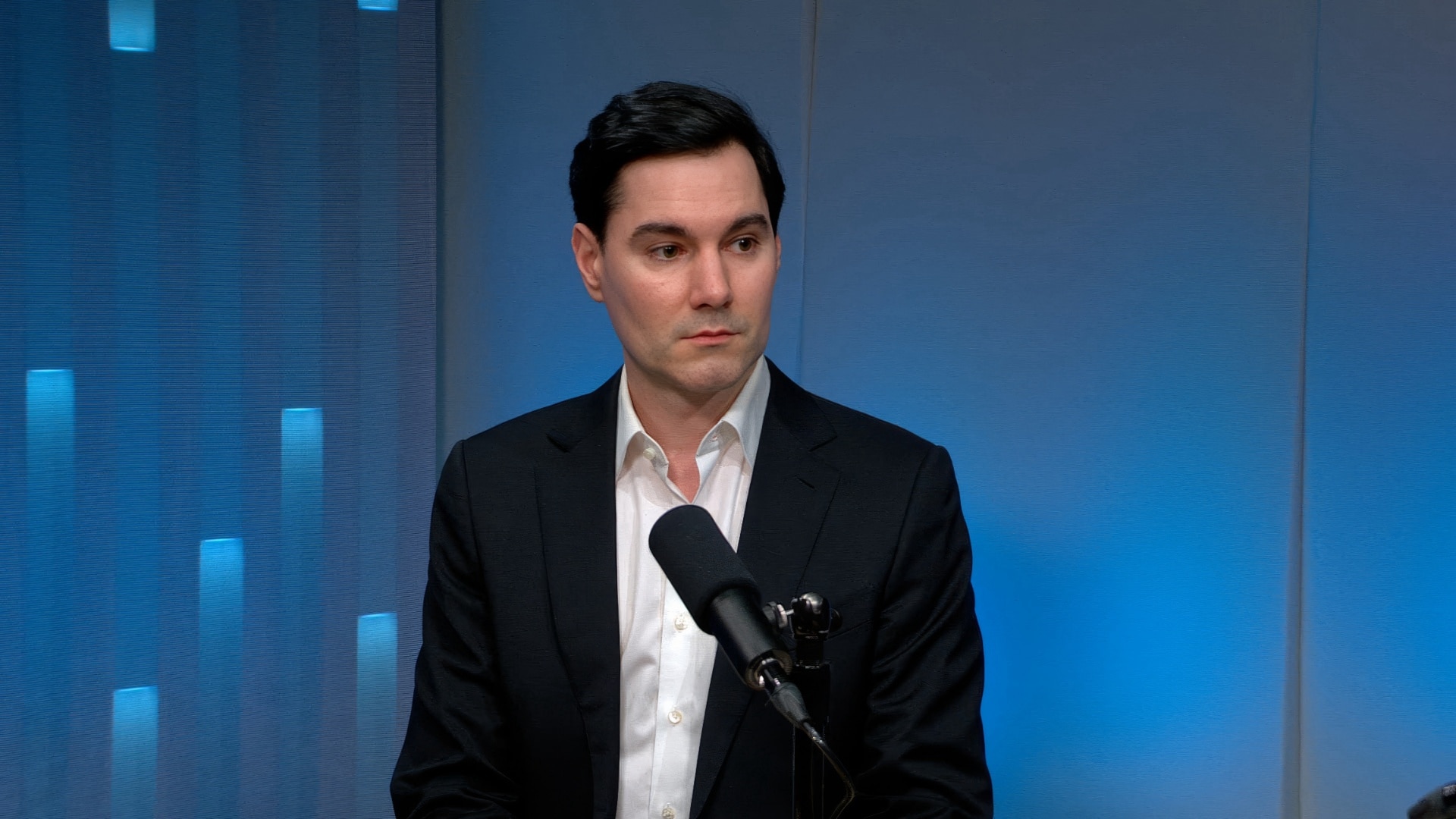
As a newly installed chairman takes the helm of the Federal Reserve, US monetary policy remains uncertain amid a soft inflation print and escalating tensions in the Middle East. David Mericle, chief US economist in Goldman Sachs Research, forecasts the Fed to keep interest rates unchanged this year before cutting its policy rate in 2027. He also unpacks the factors driving US inflation, highlights the surprising resilience of the US labor market, and explains why he expects US GDP to expand around 2% this year.
Transcript:
Allison Nathan: With a newly installed Fed chairman, a surprisingly soft inflation print, and persistent geopolitical tensions, what are the implications for US inflation, growth, and Fed policy ahead? I'm Allison Nathan, and this is Goldman Sachs Exchanges. Here to break it all down is my colleague from Goldman Sachs Research, David Mericle, our chief US economist.
David, welcome back to Exchanges.
David Mericle: Thanks, Allison.
Allison Nathan: It's been a little while since I've had you on the show, David, so thanks for joining.
And I just do, for that reason, really want to start wide. So here we are in July, if we think about the many twists and turns that we've had so far this year, maybe just start us out with what about the performance of the US economy has gone just as you expected, and maybe more interestingly, what has surprised you the most?
David Mericle: Sure, I don't know that anything's gone just as we expected, but on the surprises, let me give you a good one and a not so good one. On the good side, I would say maybe a big surprise was after we barely created any jobs for the better part of a year, all of a sudden, in the aftermath, somewhat puzzlingly, of a war breaking out and oil prices spiking, job growth has picked up a lot over the course of the last four months.
The labor market now looks fairly different than it did to us at the beginning of the year. That was something we had been a little bit worried about and now that concern, at least for now, is taken off the table. On the negative side, I would say the biggest surprise has been that whereas we started the year thinking inflation will get better for the very simple reason that the tariffs are behind us, they will drop out of the year-on-year inflation calculation.
We've unfortunately seen that because of the effects of the war and because of the effects of AI demand, which have been amplified in the price statistics by mismeasurement, now it looks like inflation will go more sideways, stay closer to three percent than to two percent.
Allison Nathan: Let's stick with inflation.
Of course, that is tremendously in focus. We actually did, though, have a pretty weak inflation print last week. The June CPI came in weaker than expected. What do you make of that? How much does that actually suggest to you an inflection point in inflation as you've been expecting, or is this just a mechanical shift that's going to reverse because gasoline prices, as we all know, went down and now they're headed up again?
David Mericle: I think that probably was a bit of an outlier print, and I wouldn't say it greatly changed our view on the inflation path. But for a number of reasons, we do think that is the start of what will be a run of softer inflation data than we saw, say, over the prior six months. One issue is that the tariff effects now seem pretty negligible on a go-forward monthly basis.
Another issue is that while there has been re-escalation recently in the war with Iran and higher oil prices, they are still down quite a bit from those late April-May peaks that we saw. And so it looks there too, like the biggest effects of the war on prices probably occurred in Q2, and in the third and fourth quarters of this year, the sequential effect should be smaller.
And then the third big inflation theme, these mismeasured, exaggerated effects of AI demand in the PCE index, there too, I would say not entirely behind us, but probably sequentially softer in the coming months than they've been over the course of the last half year. So for all of those reasons, coupled with the fact that the economy itself is not creating an inflation problem it's these other factors that have kept inflation higher for longer, we think we will see softer monthly inflation going forward.
And June, I think, is the start of that, but probably exaggerates the good news a bit.
Allison Nathan: But let me just dig in for one moment there on the re-escalation of the war. You're not concerned about the inflation risks?
David Mericle: I think if oil prices stay where they are, then we would continue to expect softer monthly sequential inflation. Absolutely, though, that is the key upside risk to inflation.
I would say net of the effects of tariffs, the war and these AI effects, actually inflation's been reasonably close to two percent for a while at this point. The CPI certainly, if you take out even just tariff effects, is running close to two percent on a core basis. These effects on PCE, I would say, are worth a little bit more than a percentage point.
So there too, I would say if it weren't for these factors, we'd be reasonably close to two percent. The one that seems to me like the biggest wildcard going forward is absolutely the war.
Allison Nathan: So we do have a Fed meeting next week, very much in focus.
It'll be the second meeting for new Fed Chairman Kevin Warsh. And despite this softer inflation data, and at least our expectation that inflation is going to continue to soften for the second half of the year, he has a pretty cautious tone right now, at least in terms of his congressional testimony last week.
And then you've seen other members of the Fed coming out, what some would characterize as somewhat hawkish relative to expectations. So what should investors make of all of this?
David Mericle: Sure. I think the June CPI data and their implications for the PCE inflation numbers, probably soft enough to keep the Fed on hold at the July meeting. That much seems pretty clear. In terms of subsequent meetings, though, the message that we get from the FOMC, from the Fed minutes, for example, is from this point forward, they're done litigating what exactly is causing inflation, asking the question of whether or not it's appropriate to look through the different factors causing high inflation. If we continue to see high inflation, many of them feel like at this point we really need to respond to that because this has just gone on for too long, and I think everyone agrees that at some point, in principle, even if this is a long series of one-time supply shocks, it would become dangerous.
It would risk making people a little bit too accustomed to high inflation and make it potentially take on a life of its own. So whereas normally you might say, "Well, tariffs are a one-time price level increase," you're supposed to look through an oil price spike caused by a war. You're probably not supposed to take inflation caused by mismeasurement in one price index at face value, and that would normally be how I would think about it too.
In this context, the message seems to be that they have downplayed different reasons for high inflation for too long, and whatever the source, they would not have a lot of further patience for it.
So I think the inflation path that we are expecting for the remainder of the year, where core PCE inflation stays at about 20 basis points or a touch higher, that would be soft enough to keep the Fed comfortable looking through this, staying on hold, but there's not a lot of margin for error at this point.
Allison Nathan: Right. So just to clarify, we expect the Fed, at least our mainline expectation is for the Fed to remain on hold this year and potentially the next move being a cut in 2027.
David Mericle: That's right. That is our forecast. I would say the debate about what we do at a 2027 horizon when these shocks are behind us and inflation's back to two percent, that's an entirely separate discussion.
What I would emphasize is for this year, we have the Fed on hold on the thought that the inflation problem we have is not a problem of macroeconomic overheating. There's not really a strong case for cutting in response, and we think the inflation data will improve enough that they'll feel comfortable looking through this.
Allison Nathan: Now, the market expectations, they've swung a bit back and forth, but right now they are still expecting the next move to be a hike and a hike later this year. So does that just look mispriced to you?
David Mericle: I would say it's a little bit less black and white than that. I would view market pricing of, call it, a hike and a half as maybe something like a 50/50 chance of two or three hikes.
Our own view is that the probability of hikes is less than 50%, more like 25%. But it's perhaps a not quite as black and white of a difference of opinion as hike versus no hike.
Allison Nathan: Let me spend one moment on the balance sheet. That was sort of a big issue potentially where Chairman Warsh had different views than his predecessors to some extent.
How do you see that factoring into Fed policy in the months and years ahead?
David Mericle: This is one of the questions on which Chairman Warsh has commissioned a task force to take a look. There’s really two issues here. There's the size of the Fed's balance sheet, which is bound up with the ample reserves framework that the Fed uses.
But then there's also the composition of the assets that the Fed is holding on its balance sheet. On the first issue, my impression is that there's really no interest within the Federal Reserve in reverting back to the old system of monetary policy implementation. And consequently, I don't think that there's very much room for shrinking the balance sheet.
Maybe a little bit of room through regulatory and supervisory changes, but not much. On the other question, though, of what assets the Fed should be holding on its balance sheet, my impression from the minutes is that is one where it's really still more of an open question and probably people could be talked into supporting either approach.
There are two arguments here. So one argument is: It's not our job to choose the composition of government debt. That's the Treasury's role. And so the Fed should just buy in proportion to what the Treasury issues. The other argument, the other position you could take is: The Fed should hold mostly bills in order to match the duration of its assets and liabilities and reduce the volatility of its profits to avoid becoming politicized if, say, Congress took notice of the fact that one year you have profits, the next year maybe you have losses.
I think both of those are coherent. I guess I would say it doesn't matter very much because whatever the option the Fed chooses, I would expect the Treasury to adapt to that, and in the end, it wouldn't really have any impact on the composition of the debt that's ultimately available to the public and therefore ultimately on interest rates.
So I don't know that it matters a ton but, you know, that's one where I could see them making changes.
Allison Nathan: The other change, though, that seems to be quite in focus that could potentially have a big impact is a change in communication of Fed policy. What are you hearing about that?
David Mericle: Sure. I think there are a few issues here. One, of course, is Warsh's kind of long-standing opposition to forward guidance.
Now, in the academic discussion of monetary policy, a distinction is drawn, an important one, I think, between forward guidance with commitment, where you say, "This is what we're definitely going to do," and you have to stick to that, which nobody at the Fed thinks they ought to be using outside of times when they're constrained by the zero lower bound, versus a softer form of forward guidance, where you say, "Look, this is our best forecast for the economy," and that would have implications for monetary policy.
I think as soon as you start talking about your view on the economy, whether you're more worried about risk to inflation or more worried about risk to employment, you hint at some lean for monetary policy for whether you're more likely to raise or lower the funds rate. And as soon as you start talking about your best guess of the neutral rate, you convey to markets an impression of where you're trying to get to in the long run.
So some level of soft, non-committal forward guidance I think is inevitable if you talk about your impressions of the economy. What seems to be up for grabs is to what degree the committee, the FOMC as a committee, should be giving forward guidance. Maybe participants say, "I'm more nervous about inflation," and we all infer from that participant is more likely to support rate hikes than rate cuts, but should the FOMC be giving forward guidance?
Now, of course, they've taken that out of the FOMC statement, that kind of soft forward guidance that suggested that going lower is more likely than going higher because they think we're above the neutral rate. One thing that they could do that I don't think would bother people on the FOMC too much is to adopt former Vice Chairman Don Kohn's proposal that they eliminate, that they stop publishing the medians in the SEP, the median projections.
Now, of course, most investors and your Bloomberg terminal would probably go on publishing the median for us even if the Fed doesn't tell us what the median is. But at least some people argue that way it wouldn't seem like the committee as a committee is giving its blessing to a particular forecast and a particular monetary policy path.
So, I would view that as a relatively minor change. I don't know that would have major implications for investors, but that's something I could see them changing. Dispensing with the summary of economic projections entirely would seem to me, and I think to most FOMC participants, like a big step away from monetary policy transparency, and I would be surprised if there was comfort taking a step away from transparency.
Allison Nathan: And that is the market concern, right? Because if markets don't have any indication or guidance of what they think the Fed might do, it's much more vulnerable to surprises, and that can create a lot of volatility.
David Mericle: I think that's right. If you leave it to the market to kind of form its own story, it might infer too much from policy moves, might run ahead of what the Fed intends to convey.
And as long as we're in an environment where the Fed's not moving in either direction, that's probably not a huge deal. But at a meeting where they were to make a policy change, especially a rate hike without giving us any sense of how they're thinking about the economy let alone appropriate monetary policy, I think there is a risk that markets could move more than they might want. And perhaps we saw a little bit of that at Warsh's first meeting, the June meeting.
Allison Nathan: All righty. Hopefully not a sign of what's more to come, but we will see.
Let me go back, David, to what you started with. One of the surprises that I want to unpack a little bit more, which is this resilience in the labor market.
We haven't really talked about growth at all in that context. Is the fact that we have a more resilient labor market than we expected a sign that growth is holding up better, or what do you make of it?
David Mericle: I think both are true. I don't know what exactly to make of job growth abruptly picking up over the last several months at a seemingly pretty unlikely time. Historically, what we found is that when oil prices go up, usually employment tends to decline in discretionary spending sectors.
The thinking being that if I'm spending more on my tank of gasoline, I'm spending less at a restaurant, and so restaurants hire, say, fewer waiters. Instead, we've seen the opposite. We've seen just as the war breaks out and oil prices rise, pretty impressive pickup in job growth to a point where we are now somewhat above what we would think of as what we call the break-even rate, the number of jobs that we need to keep the unemployment rate stable.
We think in an environment of diminished immigration, we only need 50-60,000 jobs a month, and we've been running above that.
Allison Nathan: So let me just go back to the growth view then. It seems as though we have a resilient labor market, inflation coming down. So are your expectations that growth holds up, or where do we go from here on the overall growth picture in the US?
David Mericle: So our growth forecast is, I would call it, a hair below potential, but pretty close. Coming into the year, we were a little bit above our estimate of potential growth at two and a half percent.
The main thinking is that while we have not seen much of an impact of higher oil prices on consumer spending yet, at this point, you're looking at an outlook of mediocre real income growth, an already low saving rate, and tax refund payments that have probably run their course. And so in the back half of the year, we're expecting to see somewhat softer consumption growth than we've seen over the last few months since gasoline prices first rose. Coupled with weakness in the housing sector, weakness in government spending but outsized strength in business investment, we think all of that adds up to a picture for GDP growth around two percent, not bad by any means, but somewhat worse than we would have had without the increase in oil and gasoline.
Allison Nathan: And the stock market has been up. So how does that factor into those views?
David Mericle: Yeah. The increase in the stock market boosts consumer spending through what we call a wealth effect. We estimate that that's been worth about three to four tenths of a percentage point over the last year and will be worth about the same over the coming year.
This is not the main thing driving consumer spending growth, but it has been a positive recently.
Allison Nathan: So let's just put it all together, David. We-- again, we have relatively soft-core inflation, and we expect inflation, the inflation picture to continue to improve. This new Fed Chairman, we'll see what more comes from him, and this Middle East escalation. What are the risks you're most focused on here?
David Mericle: I think the biggest risk, at least for what we focus on, is probably still the war, its potential impact on inflation, the potential impact of somewhat higher inflation on monetary policy, and the risk that all of that would pose to financial markets.
Allison Nathan: Thanks so much, David, for joining me again.
David Mericle: Thank you very much, Allison.
Allison Nathan: This episode of Goldman Sachs Exchanges was recorded on Monday, July 20th, 2026. If you enjoyed the show, we hope you'll subscribe on Apple Podcasts, Spotify, or wherever you listen to your podcasts, and leave us a rating and comment.
I'm Allison Nathan. Thanks for listening.
Recorded on July 20, 2026.
The opinions and views expressed herein are as of the date of publication, subject to change without notice, and may not necessarily reflect the institutional views of Goldman Sachs or its affiliates. The material provided is intended for informational purposes only, and does not constitute investment advice, a recommendation from any Goldman Sachs entity to take any particular action, or an offer or solicitation to purchase or sell any securities or financial products. This material may contain forward-looking statements. Past performance is not indicative of future results. Neither Goldman Sachs nor any of its affiliates make any representations or warranties, express or implied, as to the accuracy or completeness of the statements or information contained herein and disclaim any liability whatsoever for reliance on such information for any purpose. Each name of a third-party organization mentioned is the property of the company to which it relates, is used here strictly for informational and identification purposes only and is not used to imply any ownership or license rights between any such company and Goldman Sachs.
A transcript is provided for convenience and may differ from the original video or audio content. Goldman Sachs is not responsible for any errors in the transcript. This material should not be copied, distributed, published, or reproduced in whole or in part or disclosed by any recipient to any other person without the express written consent of Goldman Sachs.
Disclosures applicable to research with respect to issuers, if any, mentioned herein are available through your Goldman Sachs representative or at http://www.gs.com/research/hedge.html
Goldman Sachs does not endorse any candidate or any political party.
Subscribe to Briefings
Our weekly newsletter delivers the latest insights on economic forces shaping markets—from Goldman Sachs leaders, economists, and investors around the world.
You can unsubscribe at any time. For information about how your personal data will be used, visit Privacy Information and Resources.